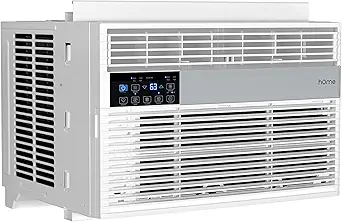
Homelabs vs Friedrich: Overview & Brand Philosophy
When shopping for air conditioning units, consumers frequently navigate a market polarized between budget-conscious modern innovators and established commercial-grade manufacturers. In this space, hOmeLabs and Friedrich represent two distinctly different philosophies regarding design, engineering, and price-to-performance ratio. Understanding these core philosophies is essential to making an informed investment that aligns with both your immediate cooling demands and your long-term ownership expectations.
hOmeLabs is a direct-to-consumer, digital-native lifestyle brand that has carved out a substantial share of the consumer market by providing clean, minimalist, and affordable home comfort appliances. Their air conditioning product lineup focuses heavily on ease of installation, modern intuitive aesthetics, and low initial acquisition costs. Engineering at hOmeLabs prioritizes straightforward functionality—offering digital controls, energy efficiency compliance, and user-friendly portables and small-to-midsize window units designed primarily for apartments, rental homes, and light residential use.
Conversely, Friedrich Air Conditioning Co. traces its heritage back to 1883 and is widely regarded within the HVAC industry as a premier, commercial-tier manufacturer. Based in San Antonio, Texas, Friedrich operates with an engineering ethos centered on rugged industrial durability, high-precision thermal management, and ultra-quiet acoustic insulation. Known for their ubiquitous presence in luxury residential buildings, hospitality suites, and demanding commercial settings, Friedrich units are over-engineered with heavy-gauge metals, superior multi-stage air filtration, and advanced compressor systems meant to perform under punishing ambient conditions over many years.
Key Differences & Technological Comparison
The structural and technological divergence between hOmeLabs and Friedrich is immediately evident across several critical engineering metrics, including compressor design, chassis construction, noise abatement, and smart integration.
- Chassis and Build Quality: hOmeLabs models rely predominantly on lightweight, injection-molded plastics and lighter-gauge galvanized sheet metal to keep retail costs and shipping weights low. Friedrich, notably in its Kühl and Chill Premier series, utilizes heavy-gauge steel, aluminum rear grilles, and dense structural dampening to prevent chassis flex, resist extreme outdoor weather, and reduce vibrational resonance.
- Compressor & Cooling Technology: Friedrich frequently utilizes commercial-grade rotary compressors paired with variable-speed inverter technology across several lines. This allows the unit to modulate cooling capacity dynamically, maintaining tighter room temperature tolerances and achieving higher CEER (Combined Energy Efficiency Ratio) metrics. hOmeLabs generally relies on traditional single-stage rotary compressors that cycle on and off completely, which provides reliable cooling but creates higher energy spikes and wider temperature swings.
- Noise Control and Acoustics: Noise level is one of Friedrich’s standout engineering domains. Many Friedrich units incorporate their proprietary QuietMaster technology—consisting of thick sound-blocking insulation, counterbalanced commercial fans, and isolated compressor compartments—resulting in operation sound levels as low as 32 dBA on lower fan settings. hOmeLabs units are reasonably quiet within the value segment, but typically hover between 50 and 58 dBA due to lighter internal sound baffling.
- Smart Controls and Ecosystem: hOmeLabs focuses on modern, simplified digital controls with basic LED readouts, standard multi-function remotes, and selected models featuring straightforward Wi-Fi pairing via consumer-friendly apps. Friedrich provides enterprise-grade scheduling capabilities, sophisticated Wi-Fi connectivity through FriedrichConnect, advanced multi-unit management integration, and full commercial Building Management System (BMS) compatibility in selected product tiers.
- Air Filtration: Standard hOmeLabs units include washable mesh filters intended strictly to capture macro-particulates like dust and pet hair. Friedrich incorporates advanced filtration architectures, offering washable antimicrobial filters with options to install commercial-grade carbon and MERV-rated filters for superior allergen and odor capture.
Pros & Cons Comparison
hOmeLabs
- Pros:
- Significantly lower upfront purchase price across all capacity tiers.
- Lightweight chassis designs make seasonal installation and removal much easier.
- Clean, modern, and unobtrusive industrial aesthetics.
- Simple, intuitive digital controls with minimal learning curve.
- Excellent value-to-cost ratio for renters or temporary living spaces.
- Cons:
- Higher operational noise levels due to minimal internal sound dampening.
- Single-stage compressor operation causes wider room temperature fluctuations.
- Lighter construction materials result in shorter expected product lifespans under continuous use.
- Limited capacity options for heavy-duty commercial or extra-large spaces.
Friedrich
- Pros:
- Commercial-grade build quality engineered for 10+ years of heavy service.
- Industry-leading QuietMaster acoustic insulation for ultra-low noise output.
- Advanced inverter technology maximizes energy savings and stabilizes temperatures.
- Sophisticated filtration systems that actively clean indoor air of smaller allergens.
- Comprehensive connectivity and advanced multi-schedule automation features.
- Cons:
- Substantially higher upfront price point (often double or triple the price of equivalent hOmeLabs units).
- Heavy structural design requires multiple people or professional assistance to install safely.
- Replacement parts and repairs can be costlier due to specialized components.
Performance, Durability & Value Analysis
From a strict performance and thermodynamic reliability perspective, Friedrich holds a clear mechanical advantage. Its heavy-duty components, anti-corrosive coatings on outdoor heat exchangers, and insulated motor housings mean the unit will maintain rated capacity even when outside temperatures exceed 100°F. In terms of long-term durability, a Friedrich unit installed in a demanding, coastal, or high-humidity environment typically outlasts standard residential-grade units by several seasons. The inclusion of commercial slide-out chassis designs in many Friedrich window models also allows for easier maintenance, deep cleaning, and serviceability without removing the entire cabinet from the wall or window frame.
However, pure engineering strength must be weighed against overall value and consumer utility. For many residential consumers, paying a substantial premium for an over-engineered Friedrich unit yields diminishing returns. hOmeLabs excels precisely in this calculation: it delivers certified, dependable cooling that satisfies the standard American consumer’s cooling requirements at a fraction of the cost. If a unit is only operated for two to three months out of the year during moderate summers, the lifecycle value of a hOmeLabs air conditioner is exceptionally high, allowing homeowners and renters to cool individual spaces without incurring substantial upfront capital expenditure.
Final Verdict: Which Brand Should You Choose?
Your choice between hOmeLabs and Friedrich ultimately comes down to your budget, your living situation, and how heavily you weigh acoustic comfort and long-term durability.
Choose hOmeLabs if: You are shopping on a clear budget, live in a rental property where lightweight and easy installation is critical, or only need supplemental cooling for a few weeks or months each year. hOmeLabs provides modern looks, reliable core cooling, and exceptional out-of-the-box value for bedrooms, home offices, and small apartments.
Choose Friedrich if: You are a property owner seeking a permanent or semi-permanent cooling solution, prioritize near-silent operation (especially in master bedrooms or media rooms), or require commercial-grade reliability in regions with prolonged, punishing summer heat waves. If you view your air conditioner as a serious home infrastructure upgrade rather than a temporary seasonal appliance, Friedrich is well worth the investment.
Customer Support & Warranty
When comparing warranty architecture and after-sales support infrastructure, Friedrich and hOmeLabs represent two fundamentally different tiers within the air conditioning industry. Friedrich operates as a premium, commercial-grade manufacturer with an established, multi-tiered warranty structure that reflects heavy-duty mechanical engineering. For flagship product lines such as the Kühl series, Friedrich typically provides a comprehensive one-year limited warranty covering parts and labor, coupled with an extended five-year coverage specifically on the sealed refrigeration system (compressor, condenser, and evaporator). Conversely, hOmeLabs adopts a modern direct-to-consumer (DTC) approach, offering a standard, straightforward one-year limited warranty across their portable and window AC units, with the option for consumers to register online to extend that warranty by an additional six months. While hOmeLabs covers baseline defects in materials and workmanship, it lacks the specialized, multi-year component-level protection for high-value mechanisms like the compressor that legacy brands like Friedrich routinely provide.
The operational execution of customer service further underscores the technical divide between these two brands. Friedrich utilizes a dedicated domestic network of authorized commercial and residential HVAC service providers. This allows for in-home technical diagnostics, component replacement, and localized warranty service without necessarily requiring the consumer to scrap or ship a heavy 80-pound appliance. However, navigating Friedrich’s institutional ecosystem can occasionally present logistical bottlenecks, as scheduling certified technicians often hinges on local parts availability and third-party contractor responsiveness. In contrast, hOmeLabs delivers a fast, digital-first support experience optimized for rapid resolution. Because hOmeLabs relies largely on imported, integrated units that are not designed for field repairs, their customer support strategy generally pivots to unit replacement rather than physical component servicing. While this eliminates the friction of waiting for a repair technician, it creates end-of-life disposal hurdles for the consumer if a catastrophic mechanical failure occurs outside the relatively short coverage window.
Ultimately, the trade-offs in customer support and warranty coverage depend on the consumer's expectations regarding appliance longevity and servicing convenience. Friedrich excels in sustained technical value, making it the superior choice for buyers seeking long-term engineering reliability backed by formal field-service networks and extensive coverage on critical sealed refrigeration systems. hOmeLabs provides an accessible, budget-friendly entry point with responsive web-based support, chat channels, and hassle-free unit exchanges during the initial warranty phase. However, hOmeLabs trades off deep, long-term post-warranty serviceability, leaving consumers with limited repair pathways once their coverage expires, whereas Friedrich's extensive commercial footprint ensures that technical documentation, schematics, and individual replacement components remain accessible for years down the line.
Energy Efficiency
When evaluating energy efficiency in the air conditioning sector, hOmeLabs and Friedrich operate under fundamentally different engineering philosophies, reflecting their respective budget-friendly and commercial-grade market positions. hOmeLabs approaches energy conservation primarily through solid-state compliance and baseline consumer optimization. Most hOmeLabs units, spanning their popular window and portable models, are built to satisfy basic Energy Star certification metrics, boasting Combined Energy Efficiency Ratios (CEER) that hover around the standard 11.0 to 12.0 mark. The brand relies on user-triggered features to curtail power consumption, including integrated Eco modes, 24-hour programmable timers, and sleep settings that incrementally adjust ambient temperatures overnight. While highly competent for everyday residential cooling on a budget, hOmeLabs models largely employ single-speed rotary compressors, meaning the units cycle strictly on and off to maintain temperatures—an architecture that introduces minor efficiency penalties and higher baseline kilowatt-hour draw during prolonged heatwaves.
Conversely, Friedrich approaches energy efficiency with advanced industrial engineering and cutting-edge compressor mechanics. As a premium manufacturer historically oriented toward commercial, hospitality, and high-end residential deployments, Friedrich significantly outpaces entry-level brands by incorporating variable-speed inverter compressors across flagship lines like the Friedrich Chill Premier Inverter and Kühl series. This variable-capacity technology allows the units to dynamically modulate cooling output in real-time, matching the thermal load of the room and reducing electrical consumption by up to 35% compared to traditional fixed-speed systems. Friedrich units consistently achieve exceptional efficiency ratings, frequently surpassing CEER thresholds of 15.0. Furthermore, their build quality incorporates heavy-duty insulation, architectural-grade cabinet sealing that minimizes air leakage, and expansive aluminum heat exchangers designed for maximum thermal dissipation, allowing their units to extract heat with vastly reduced mechanical strain.
Ultimately, the practical trade-off between the two brands centers on upfront expenditure versus long-term lifecycle savings. hOmeLabs offers entirely adequate efficiency for seasonal, moderate use, making it an economically pragmatic choice for renters or homeowners who only run their air conditioners during peak summer months and cannot justify a steep initial investment. However, for consumers in high-cost utility regions or warmer climates requiring sustained, round-the-clock cooling, Friedrich is the undisputed winner in electrical efficiency. Friedrich’s inverter platforms, commercial-grade components, and superior thermodynamic design yield substantial utility bill reductions over time, ultimately offsetting their higher acquisition price through sheer operational frugality and reduced thermal waste.
Noise Level
When evaluating acoustic engineering in the air conditioning sector, Friedrich stands in a significantly higher echelon compared to hOmeLabs. Renowned for commercial-grade durability, Friedrich integrates proprietary sound-dampening technology into their residential and light-commercial lines, most notably the QuietMaster technology featured in the Chill Premier and Kuhl series. This design philosophy utilizes dense, sound-blocking insulation, advanced counterbalanced fan wheels, and completely isolated rotary compressors mounted on heavy-duty grommets to minimize operational vibration. As a result, Friedrich window and through-the-wall units routinely operate as low as 42 to 45 decibels (dBA) on low fan settings. This produces a low-frequency, unobtrusive hum that easily blends into ambient household sounds, making Friedrich one of the gold standards for bedrooms, home offices, and noise-sensitive environments.
In contrast, hOmeLabs targets the budget-to-midrange direct-to-consumer market, primarily focusing on compact window and portable air conditioning systems where ultra-quiet operation is often compromised by cost and size constraints. The mechanical design of hOmeLabs units relies on standard consumer-grade rotary compressors and conventional blower assemblies that lack the dense acoustic barriers and heavy vibration isolation found in Friedrich's catalog. Consequently, hOmeLabs air conditioners generally produce decibel levels ranging between 50 and 56 dBA on low, often escalating past 60 dBA on maximum output. Beyond raw decibel ratings, the mechanical sound profile of a hOmeLabs unit frequently presents higher-frequency whines from high-velocity fan blades and noticeable clicking or shuddering during compressor cycling, which can be disruptive to light sleepers.
Ultimately, the practical trade-off between the two brands centers on acoustic performance versus price-to-performance value. hOmeLabs delivers accessible, highly functional cooling that is entirely acceptable for daytime living spaces, basements, or temporary rentals where noise is a secondary concern. However, for consumers who prioritize whisper-quiet cooling, uninterrupted sleep, or need to run an air conditioner in a space with sensitive acoustics, Friedrich’s robust acoustic engineering, higher component mass, and superior airflow aerodynamics justify its substantially higher price point.
Cooling Performance
When evaluating cooling performance, Friedrich operates in a distinctly higher tier of engineering and thermal dynamics compared to hOmeLabs. Known primarily for heavy-duty commercial and high-end residential climate control, Friedrich equips units like its Chill Premier and Kühl series with robust, oversized rotary compressors, dense aluminum fin arrays, and heavy-gauge copper tubing. This architectural focus enables Friedrich air conditioners to achieve exceptional British Thermal Unit (BTU) efficiency, maintaining stable, aggressive cooling curves even when ambient outdoor temperatures exceed 100 degrees Fahrenheit. Conversely, hOmeLabs targets the budget-to-midrange consumer segment, relying on standard-duty rotary compressors and lighter internal components. While hOmeLabs units deliver respectable and rapid cooling in small to mid-sized rooms under moderate heat loads, their thermal dissipation efficiency begins to plateau under extreme heat-wave conditions, resulting in longer run times to reach set temperatures.
The discrepancy in thermal performance is further amplified by airflow engineering and air-throw capacity. Friedrich leverages commercial-grade fan blowers and advanced centrifugal fan designs that generate high static pressure, driving air significantly farther across a room to eliminate warm stagnant pockets and ensure uniform thermal distribution. Coupled with integrated dehumidification modes capable of extracting massive volumes of moisture per hour, Friedrich creates a dry, deeply cooled environment that feels noticeably colder at higher thermostat settings. In contrast, hOmeLabs focuses on straightforward directional louvers and modest cubic feet per minute (CFM) output. While hOmeLabs units are impressively quiet and adequately cool direct zones, they struggle with deep circulation in open-concept floor plans, often leaving peripheral corners several degrees warmer than the area directly in the line of the exhaust.
Ultimately, the cooling performance trade-off centers on environmental demands versus consumer investment. Friedrich offers unrivaled cooling velocity, superior high-ambient pull-down speed, and high-capacity moisture removal, making it the superior choice for spaces with significant solar heat gain, poor insulation, or demanding regional climates. However, this level of performance carries a substantial price tag and higher power consumption at peak output. hOmeLabs provides an accessible, cost-effective cooling solution that is entirely sufficient for urban apartments, bedrooms, and moderately sized enclosed areas where steady, basic temperature maintenance is required without the necessity of industrial-strength heat rejection.