Asus vs Devolo: Overview
Comparing Asus and Devolo helps you determine which brand is best suited for your needs in Wi-Fi Extenders. Both brands offer strong choices depending on your budget and key feature requirements.
Key Features & Comparison
Evaluate factors such as build quality, warranty, customer satisfaction, and total value before making your final purchase choice between Asus and Devolo.
Features
From a feature perspective, Asus sets a high benchmark with its feature-rich administrative software and advanced wireless mesh capabilities. Most Asus extenders support the brand's proprietary AiMesh technology, allowing users to integrate the extender with compatible Asus routers into a centralized, single-SSID network. Furthermore, Asus provides an exhaustive management console via both a mobile application and an advanced web interface, giving enthusiasts granular access to operational modes (Access Point, Media Bridge, Repeater), channel width configuration, parental controls, and occasionally basic network security options powered by Trend Micro.
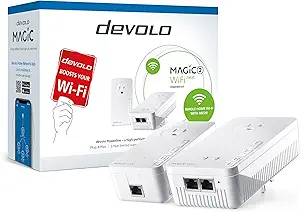
Devolo focuses on practical utility, ease of deployment, and modern Powerline standards such as G.hn Wave 2 combined with Wi-Fi 6. Key Devolo features include Mesh Wi-Fi with Fast Roaming (802.11k/v/r standards), band steering, and Airtime Fairness to balance client traffic across congested airwaves. Devolo’s Home Network app is intentionally streamlined for rapid pairing and network diagnostics without overwhelming the user. While Devolo lacks the granular routing and security customizations found in Asus devices, it offers unique advantages like integrated electrical pass-through sockets on many units, ensuring the user does not sacrifice valuable wall outlets.
Performance
In pure throughput and latency evaluations over clear airspace, Asus typically claims an advantage, especially with its high-end Wi-Fi 6 and tri-band extender units. By deploying dedicated backhaul channels and high-gain external antenna arrays, Asus devices minimize the throughput halving that traditionally plagues standard wireless repeaters. Gamers and 4K/8K streaming users will appreciate Asus’s ability to sustain low ping times and high burst speeds when operating within a reasonable range of the primary router, making them formidable nodes for active media consumption.
Devolo’s performance profile shines in architectural scenarios where Asus wireless extenders suffer significant packet loss and attenuation. By using the building's copper electrical wiring as a physical backhaul via G.hn technology, Devolo bypasses structural obstructions, delivering stable jitter and predictable bandwidth to remote rooms or detached garages. While Devolo's maximum theoretical Wi-Fi speeds might be lower than Asus's flagship wireless extenders under laboratory conditions, its real-world performance is remarkably consistent and immune to common airborne radio interference, delivering reliable, rock-solid connectivity in difficult environments.
Design
The aesthetic and physical design approaches of Asus and Devolo reflect their core audiences. Asus designs often skew aggressive and utilitarian, featuring prominent external antennas, angular chassis designs, and bold LED status indicators that cater to tech enthusiasts and gamers. While these physical attributes contribute to better thermal dissipation and optimized RF radiation patterns, the larger, external-antenna footprints can make Asus extenders somewhat obtrusive in shared living spaces, occasionally blocking adjacent wall receptacles unless deployed using desktop-style extender chassis.
Conversely, Devolo embraces a clean, minimalist European industrial design that integrates discreetly into standard domestic interiors. Most Devolo units utilize compact, wall-plug form factors with internal antenna arrays and understated white finishes. A critical engineering triumph in Devolo’s portfolio is the inclusion of pass-through power sockets on many of their wall-plug models, effectively eliminating the common consumer grievance of lost wall outlets. The result is a clean, unobtrusive design that prioritizes everyday ergonomics and unobtrusive installation over the performance-centric, aggressive aesthetic of Asus.