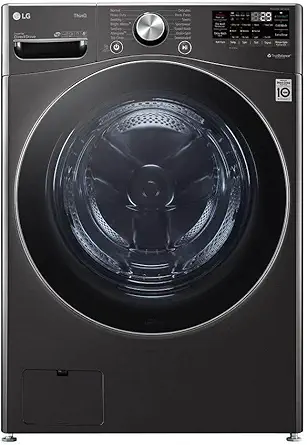
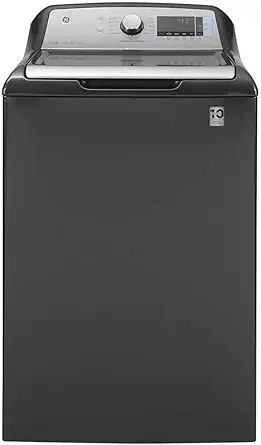
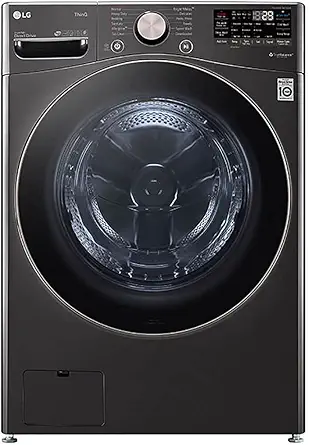
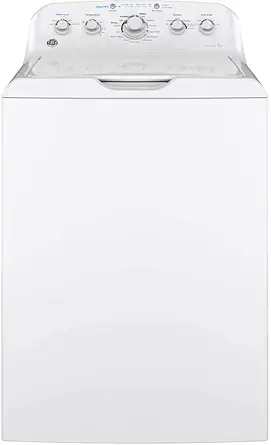
LG vs GE: Overview
Comparing LG and GE helps you determine which brand is best suited for your needs in Washing Machines. Both brands offer strong choices depending on your budget and key feature requirements.
Key Features & Comparison
Evaluate factors such as build quality, warranty, customer satisfaction, and total value before making your final purchase choice between LG and GE.
Energy Efficiency
When evaluating energy efficiency in modern laundry appliances, LG consistently establishes itself as the industry benchmark, frequently sweeping the EPA’s ENERGY STAR "Most Efficient" rankings. The foundation of LG’s efficiency lies in its proprietary Inverter Direct Drive motor architecture, which mounts the motor directly to the drum, eliminating the belts, pulleys, and friction points inherent to conventional systems. This mechanical layout drastically reduces electrical loss and enables higher Integrated Modified Energy Factor (IMEF) ratings across both front- and top-load portfolios. GE competes aggressively with an extensive lineup of ENERGY STAR-certified models—most notably within its front-load GFW and Profile series—utilizing variable-speed motors designed for longevity and steady consumption. However, across standard Department of Energy (DOE) testing metrics, comparable GE units generally consume slightly more kilowatt-hours (kWh) and gallons of water per year than LG’s class-leading alternatives, giving LG the baseline advantage in pure electrical and thermal engineering.
Beyond motor mechanics, cycle optimization technologies dictate real-world energy expenditures, an area where both brands deploy sophisticated but distinct approaches. LG integrates AI Direct Drive (AI DD) sensors that measure load weight and fabric softness in real-time, dynamically adjusting cycle duration, water levels, and motion patterns to eliminate excessive power use. This is amplified by LG's TurboWash 360 system, which utilizes high-pressure variable sprays to achieve full saturation and soil removal in under 30 minutes, cutting water-heating energy—the largest variable in washing machine power draw—by up to a third. GE counters with practical, feature-driven conservation tools such as SmartDispense technology, which precisely doses detergent to prevent over-sudsing and the subsequent energy-intensive rinse cycles required to clear residue. While GE’s SmartHQ ecosystem provides robust scheduling to run loads during off-peak utility hours, its active features—such as the UltraFresh Vent System fan designed to dry the door gasket post-cycle—introduce minor parasitic power draws that LG avoids through passive moisture drainage designs.
The total energy footprint of a washing machine also hinges on its water extraction capability, which directly dictates the run time and energy burden placed on the clothes dryer. LG front-load washers reliably deliver maximum spin speeds between 1,300 and 1,400 RPM with exceptional vibrational damping, leaving fabrics with lower residual moisture levels and substantially shortening subsequent drying cycles. GE machines typically cap spin speeds around 1,100 to 1,200 RPM in mid-tier models; while gentler on certain delicate textiles, this disparity shifts a measurable thermal load onto the dryer. For consumers prioritizing absolute operational efficiency, lowest lifetime utility overhead, and cutting-edge sensor optimization, LG remains the superior engineering choice. GE remains a highly competitive, respectable alternative that delivers solid efficiency gains alongside practical workflow conveniences, but it falls just short of matching LG’s relentless optimization of water and watt consumption.
Programs Variety
When evaluating program variety between LG and GE washing machines, the core distinction lies between algorithmic fabric optimization and practical, problem-solving utility. LG’s cycle architecture is anchored in its proprietary 6Motion technology and AI Direct Drive (AI DD), which dynamically adjusts mechanical tumbling patterns based on load weight and fabric softness. LG machines generally feature a streamlined primary dial—including staples like TurboWash 360, Allergiene (certified by the Asthma and Allergy Foundation of America), Bedding, and Speed Wash—while offloading extensive niche profiles to its ThinQ smart platform. Through the app, LG users can download dozens of bespoke cycles such as Gym Clothes, Denim, Single Garment, and Swimwear. This delivers an exceptionally deep, customizable catalog for fabric care purists, though it introduces a slight practical trade-off: consumers who prefer purely manual, offline operation may find the physical console’s standalone program list somewhat consolidated compared to the machine's true software capabilities.
GE takes a more hardcoded, immediate approach to program diversity, directly engineering targeted household solutions into the physical control interface. Most notably, GE and GE Profile units incorporate comprehensive on-console options such as the dedicated Stain Removal Guide—which modifies wash temperature, soak duration, and mechanical action to target specific stains like grass, blood, grease, and wine at the touch of a button. Furthermore, GE excels in hybrid and hygiene-centric programs, offering cycles like Sanitize + Allergen, dedicated Towels/Sheets routines, and the innovative UltraFresh Vent or 1 Step Wash + Dry cycles that eliminate the need to transfer small loads to a dryer. While GE also offers Wi-Fi connectivity and downloadable capabilities via SmartHQ, its technical strength is ensuring that complex soil-fighting and sanitation programs are instantly accessible on the dial without requiring smartphone intervention.
Ultimately, both manufacturers offer superior cycle variety, but they serve distinct consumer philosophies. LG is the superior choice for users seeking gentle fabric preservation, whisper-quiet micro-adjustments in drum motion, and a modern, modular ecosystem where new wash cycles can be downloaded over time. Conversely, GE offers the stronger, more accessible toolset for busy, high-mess households, delivering specialized stain-fighting algorithms, automated venting routines, and robust heavy-duty programs directly on the control panel with minimal operational friction.
Noise Level
LG holds a distinct engineering advantage in baseline acoustic management, primarily stemming from its pioneered Inverter Direct Drive motor system. By affixing the motor directly to the drum rather than utilizing a traditional belt-and-pulley mechanism, LG eliminates multiple points of mechanical friction, belt squeal, and high-frequency vibrational noise. This drivetrain is reinforced by LG's TrueBalance Plus Anti-Vibration System, which integrates dual-action dynamic balancing rings containing steel ball bearings to neutralize drum eccentricity during high-speed rotation. In contrast, GE relies on its proprietary Dynamic Balancing Technology (dBT) across its core and GE Profile lineups, utilizing load-sensing algorithms and advanced suspension dampers to counteract rotational instability. While GE’s dBT system capably mitigates extreme out-of-balance shuddering, standard GE platforms generally register a higher-pitched mechanical harmonic and a slightly more aggressive motor drone during high-spin cycles (approaching 1,300 to 1,600 RPM) than LG’s equivalent LoDecibel-certified machines.
Beyond the primary wash motor, the practical acoustic profiles of both brands diverge significantly in secondary mechanical components, such as drain pumps and cycle transitions. GE units, including models integrated with the UltraFresh Vent System, feature robust, heavy-gauge steel cabinets that absorb low-frequency thumps effectively, but their drain pumps and water recirculation jets produce sharp, audible gurgling and relay clicks that pierce through closed doors. LG engineers its fluid paths and intake valves with smoother acoustic baffling, resulting in a more uniform, low-drone white noise that rarely exceeds 45 to 48 dBA during wash operations and stays comfortably near 65 to 68 dBA at peak spin. For utility rooms, basements, or ground-floor installations with solid concrete subfloors, GE provides more than adequate sound suppression; however, for open-concept living spaces or upper-floor installations where structural vibration transfer is a primary concern, LG’s superior harmonic dampening and rotational balance deliver a measurably quieter everyday experience.
Fabric Care
When evaluating fabric care, LG holds a decisive engineering advantage through its motor design and sensor-driven motion architecture. At the heart of LG's gentle treatment is its Direct Drive motor, which eliminates traditional belts and pulleys to enable the brand's proprietary 6Motion technology. Rather than relying on uniform tumbling or harsh back-and-forth oscillations, LG machines execute six distinct wash motions—including stepping, swinging, and rolling—tailored to specific textile requirements. In newer models, this is enhanced by AI DD (Artificial Intelligence Direct Drive), which uses real-time sensors to assess both load weight and the relative softness of the fabrics. By autonomously adjusting stroke patterns and water impact, LG drastically minimizes mechanical friction, significantly reducing pilling, stretching, and fiber fraying on delicate weaves and performance synthetics over extended wash lifecycles.
GE approaches fabric preservation from an environmental and chemical balance perspective, emphasizing optimal saturation and precise additive management. A standout feature in GE’s lineup is the SmartDispense system, which automatically releases the exact amount of detergent required based on soil level and load mass. Because excess detergent residue is a primary contributor to fabric stiffness and premature fiber degradation, GE’s dosing precision directly extends garment lifespan. Furthermore, GE addresses fabric hygiene via its UltraFresh Vent System with Microban antimicrobial technology, which eliminates the standing moisture and mildew odors that often compel users to re-wash fabrics excessively. However, GE’s mechanical cleaning action—particularly in its top-load units featuring dual-action agitators or deep-fill options—relies more heavily on water volume and vigorous kinetic friction, which can be tougher on fragile seams and knitwear than LG's nuanced drum dynamics.
Ultimately, the practical trade-off between the two brands centers on kinetic precision versus chemical and hygienic optimization. LG is the superior choice for households with extensive collections of delicate garments, woolens, and modern elastane-heavy activewear, as its micro-tuned drum movements and smooth NeveRust stainless steel lifters treat fragile fibers with exceptional gentleness. Conversely, GE excels at protecting heavy-duty textiles, workwear, and household linens where deep fiber penetration, allergen eradication, and detergent regulation are paramount. While GE prevents the chemical wear associated with user error, LG provides the superior mechanical engineering required to protect fragile fabrics from structural wear and tear.