INSIGNIA vs Kenmore: Overview & Brand Philosophy
When shopping for laundry appliances, consumers routinely weigh upfront purchase costs against long-term operational reliability. The comparison between INSIGNIA and Kenmore represents a classic clash between modern budget private-label engineering and a storied legacy brand built on multi-tiered consumer trust. INSIGNIA, Best Buy’s house brand, focuses strictly on utilitarian functionality, stripping away extraneous smart features to deliver baseline home essentials at the lowest accessible price point. In the laundry space, INSIGNIA provides straightforward, cost-effective top-load and compact washing machines engineered primarily for entry-level homeowners, rental property managers, and consumers seeking no-frills utility.
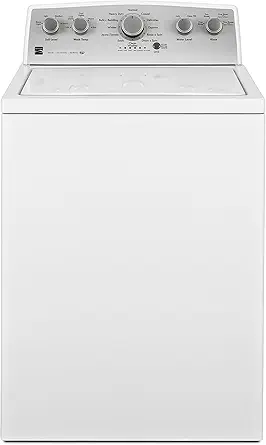
Conversely, Kenmore operates as one of the most recognized household names in American appliance history. Originally the flagship brand of Sears and now managed via Transformco, Kenmore does not manufacture its own machines; instead, it licenses specifications through major original equipment manufacturers (OEMs) such as LG, Whirlpool, and formerly Daewoo. Kenmore’s philosophy centers on broad accessibility paired with higher-tier technological innovations. The brand spans everything from traditional agitator-based workhorses to premium front-load units equipped with steam cycles, deep sanitization, and heavy-duty drive systems, aiming to serve high-volume households that demand comprehensive cycle customization.
Key Differences & Technological Comparison
The foundational difference between INSIGNIA and Kenmore lies in design architecture, mechanical sophistication, and component sourcing. INSIGNIA machines prioritize mechanical simplicity. Most INSIGNIA top-load washers rely on traditional suspension rods, mechanical belt-drive or light-duty direct-drive setups, and basic electronic control boards. Their cycle options cover standard load parameters—such as Heavy, Delicates, and Normal—relying on standard cold/hot water inlet mixing valves rather than internal water heaters. This limits INSIGNIA’s ability to perform true allergen reduction or high-temperature sanitization, but it also reduces the likelihood of complex electronic failure modes.
Kenmore, by contrast, leverages the engineering strengths of major appliance giants. In its mid-to-high-tier lines (including Kenmore Elite), buyers often benefit from advanced direct-drive inverter motors (frequently derived from LG platforms), advanced multi-motion wash motions, and high-efficiency impellers or dual-action agitators. Kenmore appliances frequently integrate internal water-heating elements capable of TrueSteam™ or certified NSF sanitizing cycles, which actively eliminate bacteria and allergens. Furthermore, Kenmore models usually exhibit superior vibration reduction systems (VRT), dynamic load balancing, and more robust stainless steel drum construction compared to the lighter-gauge stainless or porcelain-coated tubs found in entry-grade alternatives.
User interface design also bifurcates sharply. INSIGNIA employs straightforward membrane buttons alongside LED progress indicator lights, maintaining an accessible, low-friction interface. Kenmore leans toward capacitive-touch interfaces, digital cycle-countdown timers, and, on higher-end configurations, smart diagnostics and connectivity options that facilitate troubleshooting via mobile devices.
Pros & Cons Comparison
INSIGNIA Washing Machines
- Pros:
- Extremely competitive entry-level pricing across all available models.
- Intuitive, uncomplicated controls with minimal learning curve.
- Fewer proprietary electronic subsystems, simplifying routine mechanical repairs.
- Good selection of space-saving and portable compact configurations.
- Cons:
- Limited capacity options, generally capping out for large family loads.
- Lacks high-end wash features such as internal water heaters or steam cycles.
- Higher operational noise levels and less sophisticated vibration dampening.
- Shorter anticipated operational lifespan under continuous heavy usage.
Kenmore Washing Machines
- Pros:
- Extensive product catalog spanning basic agitator models to high-capacity front loaders.
- Advanced wash technologies, including allergen sanitation and steam-infusion cycles.
- High spin speeds across upper-tier models, leading to better moisture extraction and lower dryer times.
- High-efficiency ratings (many models carry Energy Star certification) that lower annual utility costs.
- Cons:
- Significantly higher purchase price compared to entry-level budget brands.
- Parts sourcing and warranty fulfillment can vary depending on which OEM produced the specific chassis.
- More complex electronics introduce higher potential repair costs outside of warranty coverage.
Performance, Durability & Value Analysis
When assessing stain removal, cycle consistency, and fabric care, Kenmore routinely demonstrates superior operational performance. Thanks to advanced wash actions—such as multi-directional tumbling in its front loaders and triple-action impellers in top loaders—Kenmore machines achieve superior mechanical cleaning efficiency with less physical wear on fabrics. Additionally, Kenmore’s higher spin cycles (often reaching 1,200 to 1,300 RPM on front-load configurations) extract substantially more water before clothes hit the dryer, reducing overall household energy footprints. INSIGNIA performs adequately on everyday lightly soiled laundry, but its lower spin speeds and less nuanced wash motions struggle against ground-in mud, heavy grease, and large bulky items like down comforters.
From a longevity and value standpoint, the two brands serve entirely different return-on-investment profiles. An INSIGNIA washer represents exceptional short-term value: for a fraction of the price of an average laundry pair, you secure working machinery that handles baseline laundry requirements. However, its lightweight components and plastic structural elements indicate an average lifespan of roughly 5 to 7 years under regular use. Kenmore units, particularly those built upon reputable tier-one OEM direct-drive platforms, regularly achieve 10 to 13 years of service life when properly maintained. For households handling daily or heavy laundry loads, Kenmore’s lower operational utility costs and extended lifespan offset its steeper initial investment.
Final Verdict: Which Brand Should You Choose?
Select an INSIGNIA washing machine if your primary priority is strict upfront budget adherence. It is the optimal solution for budget-constrained buyers, landlords outfitting starter rental units, vacation homes, or small households that process modest amounts of laundry each week. If you desire straightforward dials and buttons without paying for complex sensors, app connectivity, or sanitizing steam cycles you rarely intend to use, INSIGNIA provides completely serviceable utility at an unbeatable price.
Select a Kenmore washing machine if you have an active family, require high-capacity drums, or demand advanced stain treatment and fabric preservation. If your household washes bedding regularly, handles athletic gear, or requires hypoallergenic sanitization, Kenmore’s superior motor technology, higher spin speeds, and versatile cycle profiles make it the superior long-term investment. While the barrier to entry is higher, Kenmore's efficiency, cleaning capability, and build quality justify the premium for busy, heavy-use homes.
Energy Efficiency
When evaluating energy efficiency, Kenmore typically maintains a distinct technological edge over INSIGNIA due to its broader integration of Tier-rated innovations and Energy Star certifications. Kenmore designs its mid-to-high tier front-load and high-efficiency (HE) top-load models with advanced load-sensing algorithms and high-torque direct drive motors that significantly limit both kilowatt-hour consumption and gallons per cycle. By optimizing water levels to match precise dry-weight readings and incorporating high-speed spin extraction—often reaching upward of 1,200 to 1,300 RPM—Kenmore units effectively reduce subsequent electric usage in the dryer, yielding measurable utility savings across long-term household usage.
INSIGNIA, positioning itself primarily as an accessible, budget-conscious house brand, approaches efficiency with more functional, baseline engineering. While select INSIGNIA models carry Energy Star ratings, many of their budget-friendly top-load units utilize more conventional impeller or traditional belt-driven mechanisms that are less aggressive in energy conservation. These units deliver standard water levels and modest spin speeds that leave heavier moisture retention in fabrics, thereby transferring some of the energy burden to the drying phase. For consumers tracking operational overhead, Kenmore represents a smarter technological investment, whereas INSIGNIA offers lower upfront retail pricing at the expense of maximized resource efficiency.
Programs Variety
In terms of cycle specialization and wash menu depth, Kenmore offers a vastly superior suite of options designed to cater to modern laundry requirements. Kenmore washers frequently include specialized modes such as NSF-certified Sanitize cycles, Steam Refresh, Allergen reduction, and deep-cleaning Accela Wash cycles that accelerate agitation patterns without compromising performance. Furthermore, Kenmore allows for extensive granular control over wash parameters, permitting users to independently adjust soil levels, rinse temperatures, and extended soaking phases, which appeals directly to consumers dealing with varied household fabrics and heavy-duty soiled garments.
Conversely, INSIGNIA prioritizes user simplicity through a streamlined, utilitarian programming profile. Most INSIGNIA washers are equipped with the foundational cycles required for daily operation—such as Normal, Heavy Duty, Delicates, Quick Wash, and Bulky—without the advanced thermodynamic or steam-infused options found in its competitor's lineup. Customization on INSIGNIA machines is mostly limited to basic manual water temperature and spin speed selections. While this minimalist approach ensures an intuitive, low-friction interface suitable for rentals or uncomplicated wash needs, it lacks the versatility required for handling delicate synthetic blends, athletic wear, or heavily contaminated items with precision.
Noise Level
Acoustic management highlights a substantial engineering divergence between the two brands, with Kenmore leading the category through dedicated sound-dampening architecture. Many Kenmore machines feature proprietary quiet operation systems, such as QuietPak sound insulation, liquid-filled dynamic balance rings, and direct-drive inverter motors. These components collectively eliminate the intrusive humming, mechanical gear shifting, and belt friction common in entry-tier washers. Additionally, their electronic dampening software actively counteracts drum wobbling during spin transitions, maintaining low decibel levels that make Kenmore well-suited for second-floor installations or open-plan living areas.
INSIGNIA appliances deliver adequate acoustic control for their price bracket, but they lack the heavy mechanical dampening found in Kenmore's premium lineup. Utilizing more conventional suspension rods, lighter chassis gauge metals, and standard motor-and-belt assemblies, INSIGNIA washers exhibit more noticeable vibration and motor whine during high-velocity spin cycles and rapid drain phases. Although modern INSIGNIA impeller models are considerably quieter than vintage agitator machines, the lack of sophisticated anti-vibration balancing means they are more likely to transmit structural vibrations across hardwood or unreinforced subfloors, making them better suited for isolated laundry closets, garages, or basements.
Fabric Care
Fabric preservation is fundamentally influenced by drum mechanics and wash motion control, an area where Kenmore demonstrates superior engineering refinement. Kenmore utilizes specialized drum textures—such as smooth stainless steel wash baskets with micro-perforations—combined with complex multi-motion tumbling routines that gently lift and drop garments rather than subjecting them to friction. Furthermore, the inclusion of integrated water heaters on advanced Kenmore units ensures that detergent enzymes are activated at precise thermal thresholds, allowing for effective stain removal without requiring excessive mechanical agitation that can fray threads, induce pilling, or stress delicate weaves.
INSIGNIA provides respectable fabric care through its use of contemporary, low-profile impellers in modern models, which avoid the aggressive snagging traditionally associated with central post agitators. However, the mechanical action in INSIGNIA units relies heavily on basic vortex water movement and standard friction to dislodge soils, which can occasionally lead to uneven garment circulation and twisting in crowded loads. Additionally, without internal water heating elements to moderate cold-water wash efficacy, users are reliant on municipal tap temperatures, which can negatively impact detergent dissolution and gentle cleaning efficacy. For wardrobe longevity and fine fabric preservation, Kenmore provides substantially higher textile protection.