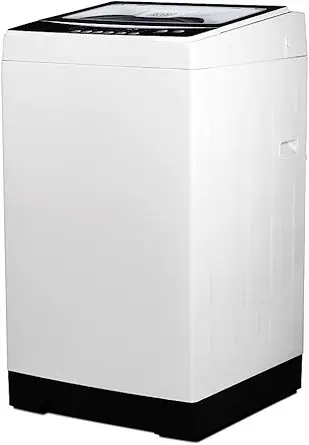
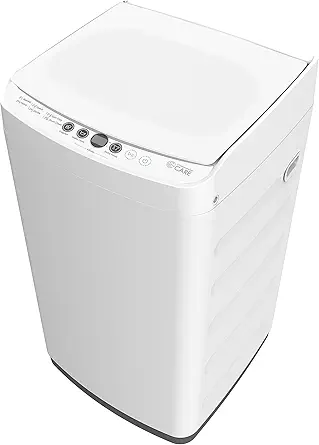
BLACK+DECKER vs Frigidaire: Overview
Comparing BLACK+DECKER and Frigidaire helps you determine which brand is best suited for your needs in Washing Machines. Both brands offer strong choices depending on your budget and key feature requirements.
Key Features & Comparison
Evaluate factors such as build quality, warranty, customer satisfaction, and total value before making your final purchase choice between BLACK+DECKER and Frigidaire.
Energy Efficiency
When evaluating energy efficiency, Frigidaire holds a clear advantage due to its focus on full-sized, high-efficiency laundry appliances designed to meet stringent residential standards. Most of Frigidaire's contemporary front-load and top-load washers carry ENERGY STAR certifications, utilizing advanced inverter-driven motors, automatic load-sensing technology, and optimized water level monitoring. By dynamically calculating the precise amount of water and thermal energy required per cycle weight, Frigidaire significantly curtails kilowatt-hour consumption and utility bills over prolonged household use, making it an economically sustainable choice for medium to large families.
Conversely, BLACK+DECKER specializes predominantly in portable, compact top-load washers engineered for smaller footprints such as apartments, RVs, and dorms. While their diminutive drum sizes naturally require less water per fill compared to a 4.5 cubic foot residential drum, they rarely carry formal ENERGY STAR ratings and rely on basic cycle mechanics. The traditional motor configurations found in many BLACK+DECKER models draw less sophisticated power profiles, meaning their energy-to-load ratio is often higher than Frigidaire's advanced systems. However, for a single user doing minimal weekly laundry, the aggregate energy draw remains modest simply due to the limited scale of operation.
Programs Variety
Frigidaire provides a robust and multifaceted suite of wash cycles tailored to handle diverse household demands. Equipped with specialized programs like Sanitize, Activewear, Quick Wash (often clocking under 20 minutes), Heavy Duty, and dedicated Allergen cycles, Frigidaire appliances offer nuanced control over water temperature, spin speeds, and soil levels. The inclusion of steam-assist technology in select models allows for deeper stain penetration and allergen removal, catering directly to users who need granular customization for everything from muddy children's clothing to delicate workwear.
In contrast, BLACK+DECKER streamlines its programming down to essential functionality suited for quick, no-nonsense portable laundry care. Their units typically feature between five and eight preset programs, such as Heavy, Normal, Delicate, Rapid, and Spin Only, supplemented by manual water level selections. While this minimalist configuration makes the interface straightforward and intuitive for users living in temporary or compact dwellings, it lacks advanced micro-adjustments, steam integration, and high-heat sanitizing options. Consumers trading off for BLACK+DECKER's convenience must accept a standard cycle menu that cannot fine-tune for complex stain treatments or specialized technical fabrics.
Noise Level
Acoustic performance heavily favors Frigidaire, which incorporates sophisticated structural damping and vibration reduction systems into its full-size chassis. Designed for integrated placement in utility rooms or near living spaces, Frigidaire uses brushless direct-drive or premium belt-drive inverter motors that minimize mechanical hum. Enhanced suspension rods, counterweights, and dynamic balancing algorithms keep drum vibration in check even during high-velocity 1200+ RPM spin cycles, resulting in a muted, non-disruptive hum that easily blends into household background noise.
BLACK+DECKER portable units face inherent acoustic challenges due to their lightweight construction and standard universal motors. Lacking the dense internal insulation and hefty stabilizing counterweights of permanent residential machines, these compact units can exhibit noticeable chassis rattle and higher decibel spikes during the drain and spin phases. While rubber leveling feet help stabilize the unit on uneven apartment floors, unevenly distributed wet garments can cause the drum to knock against the casing, demanding manual intervention to rebalance the load and prevent excessive operational noise.
Fabric Care
Frigidaire delivers superior, gentle fabric care through refined drum architecture and fluid dynamics. Utilizing smooth, stamped stainless steel drum interiors—often engineered with micro-perforations to prevent snagging—Frigidaire ensures clothes glide rather than scrape during agitation. Furthermore, their front-load designs use gravitational tumbling rather than harsh mechanical fins, while their modern top-load variants frequently substitute traditional pole agitators for gentle low-profile impellers. This gentler action, combined with precise automatic water-temperature mixing, significantly reduces textile pilling, stretching, and color fading over time.
BLACK+DECKER models generally utilize a central pulsator or bottom impeller in a smaller stainless steel tub, which moves water aggressively to compensate for the limited wash volume. While effective at lifting surface debris from daily cottons and synthetic blends, this rapid rotational churn can introduce higher friction and mechanical stress on delicate garments. Users must rely heavily on protective laundry bags when washing fine knits, lingerie, or lace in a BLACK+DECKER unit to avoid premature fiber degradation, making it less optimal for wardrobe preservation compared to Frigidaire's gentler wash dynamics.