LG vs Bosch: Overview
Comparing LG and Bosch helps you determine which brand is best suited for your needs in Wall Ovens. Both brands offer strong choices depending on your budget and key feature requirements.
Key Features & Comparison
Evaluate factors such as build quality, warranty, customer satisfaction, and total value before making your final purchase choice between LG and Bosch.
Features
In terms of feature sets, LG excels by integrating modern, culinary-lifestyle options directly into their wall ovens. High-end LG units frequently feature integrated Air Fry, Air Sous Vide, and the brand’s proprietary InstaView glass doors, which allow users to illuminate the interior simply by knocking twice. Furthermore, LG’s ThinQ ecosystem is one of the most mature smart appliance platforms available, supporting remote preheating, status notifications, and integration with dynamic recipe services like Innit and SideChef, effectively automating complex cooking routines for the everyday cook.
Bosch approaches features through the lens of functional precision and culinary control rather than lifestyle gadgetry. While higher-tier Bosch ovens include Home Connect Wi-Fi integration, the core appeal lies in mechanical enhancements such as the QuietClose door hinges, integrated meat probes that monitor internal temperatures down to the single degree, and specialized proofing or dehydrating environments. Most notably, Bosch's Benchmark Series offers innovative side-opening doors, a commercial-style feature that drastically improves physical access and ergonomics compared to LG's traditional drop-down doors.
Performance
Performance evaluations reveal notable differences in airflow dynamics and heat distribution between the two manufacturers. LG employs its ProBake Convection system in many premium models, which relocates the primary heating element from the oven floor to the back wall around the convection fan. This commercial-style thermal delivery reduces hot spots and provides exceptionally rapid preheat times, excelling in multi-rack roasting and heavy-duty baking tasks, although temperature variance can occasionally be slightly broader than premium European competitors during delicate pastry baking.
Bosch establishes the gold standard in thermal stability with its Genuine European Convection (often branded as Genuine Convection with an advanced third heating element). The airflow management in Bosch ovens is meticulously calculated to distribute heat evenly across all racks, virtually eliminating the need to rotate baking sheets during delicate culinary processes like baking soufflés, macarons, or artisan breads. Bosch ovens cycle their heating elements with tighter tolerance bands, delivering superior temperature accuracy and repeatability over long cooking durations.
Design
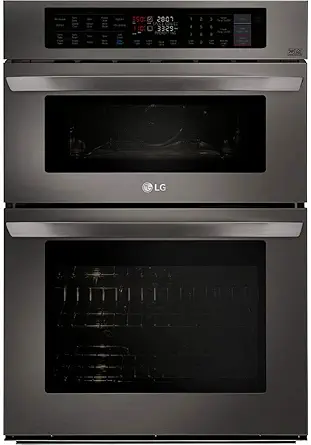
From an aesthetic and structural perspective, LG embraces a bold, high-tech design language characterized by vibrant blue interior porcelain, sleek capacitive touch controls, and wide-format viewing windows. Their exterior finishes—predominantly PrintProof stainless steel and black stainless steel—are engineered to resist smudges and blend effortlessly into contemporary American kitchen layouts. However, LG’s prominent digital interfaces and signature branding can occasionally overpower more understated or custom kitchen cabinetry designs.
Bosch, on the other hand, embodies a sleek, understated European aesthetic designed to integrate flush with cabinetry for a truly seamless, high-end appearance. Utilizing brushed stainless steel, heavy-duty metal control dials on select models, and low-profile capacitive panels, Bosch units project an aura of architectural permanence. The fit-and-finish of Bosch wall ovens—from the structural rigidity of the telescoping extension racks to the dampened door hinges—feels distinctly more industrial and robust than LG, appealing strongly to luxury kitchen renovations.
Compare current retail pricing, active promotions, and verified stock availability directly from authorized stores: