Panasonic vs DJI: Overview
Comparing Panasonic and DJI helps you determine which brand is best suited for your needs in Video Cameras. Both brands offer strong choices depending on your budget and key feature requirements.
Key Features & Comparison
Evaluate factors such as build quality, warranty, customer satisfaction, and total value before making your final purchase choice between Panasonic and DJI.
Features
In terms of internal toolsets, Panasonic cameras are virtually unrivaled in providing broadcast-grade capture utilities within consumer and prosumer bodies. Models like the Lumix GH7 and S5IIX offer features typically reserved for high-end cinema rigs: internal Apple ProRes recording, open-gate shooting modes (allowing flexible reframing for vertical and horizontal deliverables), shutter angle options, waveforms, vector scopes, and advanced anamorphic de-squeeze. Panasonic also integrates physical timecode synchronization, full-sized HDMI ports, and robust XLR audio expansions, making their hardware seamlessly integrate into multi-camera professional production environments where audio and sync reliability cannot be compromised.
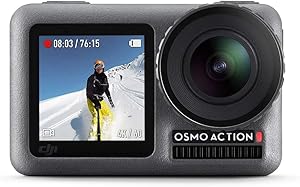
DJI counters not with traditional cinema metrics, but with disruptive intelligent automation and tight mechanical-electronic integration. Features across the DJI ecosystem prioritize rapid execution, such as ActiveTrack subject following, built-in motorized 3-axis gimbals, LiDAR-based continuous autofocus, and wireless video transmission directly baked into the hardware architecture. The Osmo series introduces creative modes like hyperlapses, story templates, and native vertical shooting with physical sensor rotation, while the high-end Ronin 4D revolutionizes stabilization with an integrated Z-axis arm. While DJI may offer fewer traditional video monitoring scopes on entry models, its intelligent assist features drastically reduce the crew size needed to achieve complex camera maneuvers.
Performance
Performance benchmarks showcase the operational divergence between these two manufacturers. Panasonic excels in continuous optical and sensor performance, maintaining zero thermal throttling through active internal cooling fans even during extended 4K or 6K recording sessions. Their full-frame sensors (like the Lumix S1H or S5II) deliver exceptional low-light performance with dual native ISO architectures, offering clean shadow detail, wide dynamic range, and Panasonic’s lauded V-Log/V-Gamut science that requires minimal color grading correction. Their newer Phase Hybrid Autofocus systems have dramatically closed the gap in subject tracking, providing dependable focus pulls that satisfy demanding videographers.
DJI’s performance envelope is defined by mechanical stability, mobility, and rapid acquisition. Because most DJI cameras rely on mechanical motorized gimbals rather than purely in-body sensor shift (IBIS), their footage remains completely smooth during vigorous walking, running, or vehicle-mounted shots where traditional optical stabilization often exhibits micro-jitters or warping. However, smaller-sensor DJI offerings (like the Pocket series) struggle to match Panasonic’s dynamic range and noise performance in challenging high-contrast or low-light scenarios. At the flagship level with the Ronin 4D's Zenmuse X9 sensor, DJI matches cinema-grade imagery, but across their general consumer lines, Panasonic retains the upper hand in raw optical quality and color grading flexibility.
Design
From an industrial design standpoint, Panasonic adheres to the battle-tested, weather-sealed ergonomic ethos of professional cameras. Their magnesium-alloy bodies feature deep, secure handgrips, physical locking dials, customizable function buttons, and dual card slots (often pairing CFexpress with SD) designed for high-stress production environments. Panasonic also leads the industry in cooling design, cleverly integrating quiet cooling vents beneath the viewfinder hump to ensure unlimited record times without compromising dust and moisture resistance. The modularity of their bodies allows them to be comfortably stripped down for gimbal work or fully rigged out with matte boxes, external monitors, and follow focus systems.
DJI reimagines camera design through minimalism, modularity, and integration. Devices like the Osmo Pocket emphasize extreme pocketability, condensing a 3-axis stabilized 4K camera into a handheld wand that operates instantly with one thumb. Higher up the spectrum, the Ronin 4D integrates the camera body, 4-axis gimbal, wireless transmitter, and monitor into a cohesive carbon-fiber-and-aluminum unibody that eliminates the cable mess associated with balancing traditional camera rigs. While DJI’s designs are significantly faster to set up and transport, they offer less tactile manual control and can be more susceptible to mechanical wear and tear due to their numerous moving motorized joints.
Compare current retail pricing, active promotions, and verified stock availability directly from authorized stores: