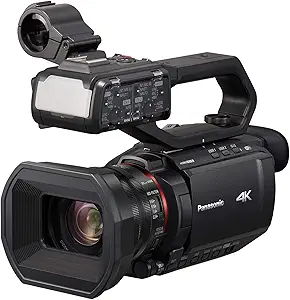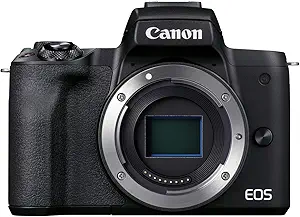




Panasonic vs Canon: Overview
Comparing Panasonic and Canon helps you determine which brand is best suited for your needs in Video Cameras. Both brands offer strong choices depending on your budget and key feature requirements.
Key Features & Comparison
Evaluate factors such as build quality, warranty, customer satisfaction, and total value before making your final purchase choice between Panasonic and Canon.
Features
In terms of feature sets, Panasonic often delivers superior value and versatility per dollar compared to Canon. Panasonic's camera ecosystems—exemplified by systems like the Lumix S5IIX, GH6, and BGH1—come standard with advanced video-centric monitoring tools that Canon frequently omits on sub-cinema bodies. Videographers using Panasonic enjoy native waveform monitors, vectorscopes, false color display, customizable shutter angles, and full-sensor open-gate recording that provides immense flexibility for multi-aspect social delivery. Additionally, Panasonic offers internal Apple ProRes recording, robust anamorphic de-squeeze options, and timecode sync capabilities that rival standalone high-budget cinema rigs.
Canon takes a more curated approach, deliberately delineating features between its hybrid EOS R bodies and dedicated Cinema EOS cameras like the C70 and C200. Canon's strongest feature card is its unmatched autofocus performance, driven by Dual Pixel CMOS AF technology with sophisticated subject-tracking algorithms that make manual focus pulling optional in many fast-paced run-and-gun environments. While modern Canon cameras offer high-end formats such as Canon Cinema RAW Light and standard 10-bit C-Log3 profiles, users must often step into higher pricing tiers to unlock essential production utilities like built-in motorized ND filters, assignable waveform monitors, and unrestricted recording times without thermal cutoffs.
Performance
Performance benchmarks reveal sharp contrasts in image stabilization, sensor readout, and autofocus reliability. Panasonic sets the gold standard for in-body image stabilization (I.S.), combining sensor-shift stabilization with lens optical stabilization to produce gimbal-like handheld footage that Canon struggles to match mechanically. Panasonic cameras also excel in sustained performance; thanks to active internal cooling fans in models like the Lumix S1H, GH6, and S5II, they exhibit zero thermal throttling during extended 4K or 6K takes. Sensor readout speeds are consistently competitive, reducing rolling shutter artifacts, while their V-Log profile provides up to 14+ stops of dynamic range that retains remarkable shadow latitude and highlight retention.
Where Canon asserts its performance dominance is in high-pressure shooting scenarios requiring instant focus acquisition and effortless post-production turnaround. Canon’s Dual Pixel AF remains noticeably more decisive than Panasonic's recently adopted phase-detection autofocus (PDAF), hunting far less in low light and tracking human faces with uncanny precision. In terms of color rendering, Canon sensors yield natural, warm skin tones that often require minimal color grading to look broadcast-ready, saving valuable turnaround time. Low-light performance on Canon’s full-frame sensors is also exceptional, displaying clean, filmic noise patterns at elevated ISO values that give it an edge in uncontrolled ambient lighting.
Design
From an ergonomic and physical design perspective, Canon video cameras prioritize tactile familiarity and operational intuition. Canon’s grip architecture is widely regarded as among the most comfortable in the industry, distributing weight effectively during long handheld shoots. The menu system is logically organized, highly responsive, and navigates easily via physical dials or high-resolution vari-angle touchscreens. For dedicated cinema shooters, bodies like the EOS C70 balance a compact hybrid form factor with dedicated physical switches for audio gains, assignable custom buttons, and robust full-sized audio interfaces, reflecting an understanding of field production realities.
Panasonic counters with an industrial, workhorse design that emphasizes structural durability and technical practicality. Their bodies are slightly blockier and heavier, owing to weather-sealed magnesium alloy chassis and built-in heat dissipation vents, but this architecture allows for sustained professional reliability in extreme environments. Panasonic also excels in physical I/O connectivity, regularly outfitting cameras with full-sized HDMI ports, dual SD/CFexpress card slots, and dedicated tally lamps even on consumer-priced models. While Panasonic's menus are dense and feature-rich, requiring a steeper learning curve, they offer unrivaled customizability for operators who prefer mapping precise video functions to custom hardware buttons.