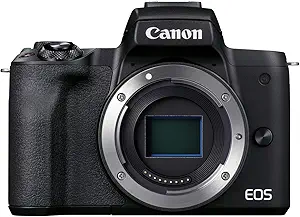




Sony vs Canon: Overview
Comparing Sony and Canon helps you determine which brand is best suited for your needs in Video Cameras. Both brands offer strong choices depending on your budget and key feature requirements.
Key Features & Comparison
Evaluate factors such as build quality, warranty, customer satisfaction, and total value before making your final purchase choice between Sony and Canon.
Features
In terms of operational feature sets, Sony excels in delivering maximum technical flexibility and automated assistance. Sony video systems offer exceptionally wide dynamic range profiles (S-Log3/S-Gamut3.Cine), extensive custom picture profiles, and revolutionary hardware features such as electronic variable neutral density (e-ND) filters, found on cameras like the FX6 and FX9, which allow seamless exposure transitions without altering shutter angles or depth of field. Furthermore, Sony leads the market in AI-driven subject tracking and real-time eye autofocus across human, animal, and vehicle modes, significantly reducing focus-pulling overhead for solo content creators and event videographers.
Canon counters with features tailored specifically toward workflow efficiency and cinema standardization. Their Dual Pixel CMOS AF technology remains among the most natural and organically responsive autofocus systems available, offering intuitive touchscreen target selection and customizable focus transition speeds that mirror human focus-pulling. On the recording side, Canon provides versatile internal Raw recording options (Cinema RAW Light) along with robust 10-bit and 12-bit XF-AVC codecs, granting post-production teams exceptional latitude without demanding astronomical storage footprints. Additionally, Canon's inclusion of built-in mechanical ND filters and comprehensive audio connectivity (full-sized XLR inputs) across mid-tier cinema cameras offers an immediate, ready-to-shoot broadcast experience.
Performance
Sony’s performance metrics are defined by class-leading low-light sensitivity, minimal rolling shutter artifacts, and exceptional thermal management. Utilizing advanced back-illuminated (BSI) and stacked Exmor R sensor architectures, Sony cameras deliver remarkably clean high-ISO performance, often featuring native dual-base ISOs (such as ISO 800 and 12,800) that allow operators to shoot in near-dark conditions with negligible chroma noise. With dedicated internal heatsinks and ultra-quiet cooling fans integrated into bodies like the FX3 and FX30, Sony guarantees virtually uninterrupted recording times in high ambient temperatures, making them dependable workhorses for marathon live events and extended documentary shoots.
Canon's performance strength lies predominantly in its organic color rendering, highlight roll-off, and image texture. The brand's legendary color science produces skin tones with warmth and natural gradation that often require minimal grading compared to Sony's traditionally cooler, more clinical output. In high-contrast environments, Canon’s Dual Gain Output (DGO) sensor technology dynamically combines two separate amplification paths in real-time, resulting in expansive dynamic range exceeding 16 stops with remarkably clean shadows and filmic highlight retention. While Canon bodies historically suffered from higher rolling shutter readouts compared to stacked-sensor Sony rivals, their dynamic fidelity and highlight preservation remain benchmark standards for cinematic imagery.
Design
From an industrial design standpoint, Sony prioritizes modularity, compact dimensions, and functional minimalism. Sony cinema and hybrid bodies are engineered with dense, weather-sealed magnesium alloy chassis that integrate multiple threaded 1/4-20 mounting points, drastically reducing the necessity for heavy third-party cages. This streamlined approach makes Sony cameras exceptionally well-suited for gimbal stabilization, drone mounts, and discreet street cinematography. However, Sony’s menu architecture, while significantly overhauled in recent generations, still leans heavily toward dense technical parameter lists that can introduce a steeper operational learning curve for novice users.
Canon prioritizes ergonomic perfection, tactile feedback, and instantaneous operational access. Cinema EOS bodies feature deep, sculpted handgrips, physical rotating dials, and dedicated switchgear for essential functions like zebra stripes, peaking, ND control, and audio gain adjustments. Canon’s graphical user interface and menu hierarchy are widely regarded as the most intuitive in the broadcast industry, designed for rapid navigation via touchscreen or joystick even while wearing production gloves. Although Canon bodies are frequently bulkier and heavier than their Sony counterparts, their physical layout significantly enhances operator comfort during long handheld production days.