Blackmagic vs DJI: Overview
Comparing Blackmagic and DJI helps you determine which brand is best suited for your needs in Video Cameras. Both brands offer strong choices depending on your budget and key feature requirements.
Key Features & Comparison
Evaluate factors such as build quality, warranty, customer satisfaction, and total value before making your final purchase choice between Blackmagic and DJI.
Features
From a feature standpoint, Blackmagic prioritizes granular sensor manipulation, audio fidelity, and professional codec flexibility. Its cameras are renowned for recording in 12-bit Blackmagic RAW (BRAW) and various flavors of Apple ProRes, offering unmatched latitude for exposure recovery and tonal manipulation. Professional I/O is a major strength across the Blackmagic ecosystem, with standard inclusions such as full-sized HDMI or 12G-SDI ports, mini-XLR audio inputs with phantom power, and dedicated timecode generators. Furthermore, every cinema camera purchase includes a full studio license for DaVinci Resolve, creating an integrated hardware-to-software ecosystem that eliminates licensing friction for editors and colorists. However, Blackmagic cameras notably eschew continuous autofocus, in-body image stabilization (IBIS), and automated shooting modes, enforcing a strictly manual operational paradigm.
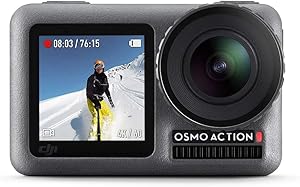
DJI counters with groundbreaking electro-mechanical features and intelligent automation that redefine physical camera handling. The flagship Ronin 4D, for instance, introduces active four-axis stabilization that neutralizes vertical Z-axis camera bounce, paired with a sophisticated LiDAR focusing system that delivers manual-lens autofocus capabilities in pitch-black conditions. Across its consumer and prosumer lines, DJI embeds automated subject tracking (ActiveTrack), wireless video transmission systems, and integrated motorized gimbals that eliminate the need for third-party stabilization rigs. While DJI devices often rely on compressed 10-bit H.264/H.265 or ProRes flavors that provide less post-production flexibility than BRAW, their intelligent operational toolset allows a single creator to execute complex camera movements and tracking shots that would traditionally require a multi-person camera crew.
Performance
In terms of pure optical and sensor performance, Blackmagic excels in dynamic range, natural skin tone reproduction, and high-fidelity texture retention. By utilizing dual-native ISO sensors across much of its lineup, Blackmagic cameras maintain remarkably low noise floors in low-light environments while preserving critical highlight detail up to 13 or 14+ stops of dynamic range. The proprietary Blackmagic Generation 5 Color Science renders organic, film-like roll-off that competes directly with cinema bodies costing three times as much. The primary performance limitation rests in its operational endurance; Blackmagic cameras draw substantial power to process uncompressed raw video, leading to rapid battery depletion, and their lack of weather sealing can pose challenges in adverse production environments.
DJI delivers exceptional mechanical and operational performance, excelling where movement and responsiveness are critical. Its gimbal-stabilized sensors produce buttery-smooth, cinematic footage on the fly, completely free of the micro-jitters that plague handheld mirrorless or non-stabilized cinema rigs. In low-light scenarios, DJI relies heavily on advanced computational processing to clean images, which delivers clean web-ready files but can occasionally look digitally over-sharpened compared to Blackmagic's organic sensor output. Thermally, DJI engineering is exceptionally reliable, boasting active cooling and optimized power management that delivers extended battery runtimes. For projects requiring continuous tracking, rapid framing transitions, and flawless movement, DJI outperforms Blackmagic's manual operational boundaries, whereas Blackmagic maintains the advantage in pure, unadulterated visual fidelity.
Design
The industrial design of Blackmagic hardware leans toward utilitarian, studio-centric form factors that prioritize tactile familiarity and monitoring comfort. The Pocket Cinema Camera series features an expansive, DSLR-style chassis defined by a massive, high-brightness 5-inch touchscreen interface. This display runs Blackmagic OS, universally lauded as one of the most intuitive, responsive, and uncluttered menu systems in the camera industry. However, the physical body is wide and lacks ergonomics for extended handheld shooting without third-party cages, top handles, and external battery solutions. In essence, Blackmagic designs its cameras as modular core bricks intended to be built up according to the specific spatial and technical demands of a film set.
DJI approaches hardware design from an integrated, aerodynamic, and ergonomic perspective, combining carbon fiber, aluminum alloys, and high-precision motors. Whether looking at the hyper-compact, pocket-sized Osmo series or the modular, space-age silhouette of the Ronin 4D, DJI units are purposefully designed to be balanced, self-contained filming rigs straight out of the box. Key controls, joysticks, and high-bright wireless monitors are engineered for seamless single-user interaction, with quick-release systems that facilitate rapid transitions between car mounts, jibs, and handheld configurations. While DJI's deeply integrated mechanical designs make internal repairs and third-party customizations more complex than Blackmagic's open, standard-thread modularity, they provide an unmatched level of out-of-the-box readiness and physical portability.
Compare current retail pricing, active promotions, and verified stock availability directly from authorized stores: