Yamaha vs Elac: Overview
Comparing Yamaha and Elac helps you determine which brand is best suited for your needs in Speakers. Both brands offer strong choices depending on your budget and key feature requirements.
Key Features & Comparison
Evaluate factors such as build quality, warranty, customer satisfaction, and total value before making your final purchase choice between Yamaha and Elac.
Product Selection
Yamaha maintains one of the most expansive and versatile speaker catalogs in the consumer audio industry, leveraging its century-long legacy in musical instruments and electronics. Their portfolio ranges from ultra-compact desktop monitors and weather-resistant outdoor speakers to architectural in-ceiling units, studio-grade active monitors like the iconic HS series, and high-end Hi-Fi floorstanders in the NS series. Yamaha also dominates the lifestyle and multi-room categories with integrated MusicCast wireless systems and soundbars. This broad spectrum makes Yamaha a one-stop ecosystem for commercial spaces, recording studios, home theaters, and casual listeners alike, ensuring solutions for nearly every imaginable acoustic scenario.
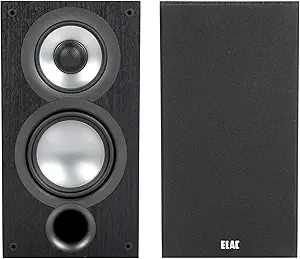
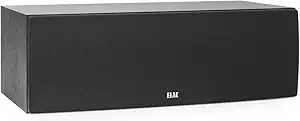
Elac, while possessing a much more targeted catalog, focuses intensely on high-performance home audio, audiophile stereo listening, and specialized home theater arrays. Rather than spreading its engineering resources across lifestyle audio and pro-sound rigs, Elac directs its development into passive and active bookshelf speakers, floorstanders, center channels, and subwoofers across distinct tiers, such as the Debut, Uni-Fi, and premium Vela series. While Elac does provide select architectural in-wall speakers and active wireless streaming monitors like the Navis lineup, they lack the outdoor utility, budget soundbar prevalence, and studio-grade market saturation of Yamaha. Consumers choosing Elac benefit from a refined, audio-centric selection that prioritizes acoustic engineering over diverse lifestyle form factors.
Affordability
Yamaha is exceptional at servicing the entry-level and mass-market price segments, making hi-fi sound accessible to consumers on tight budgets. Through vast economies of scale, Yamaha produces highly capable all-in-one speaker packages, entry-level bookshelf pairs, and subwoofers at price floors Elac rarely attempts to touch. For budget-conscious home theater enthusiasts, Yamaha’s packaged 5.1 systems and low-cost soundbars offer high functionality, bundled amplification, and low initial costs. Even their renowned HS studio series delivers professional-grade performance at an approachable per-unit price, solidifying Yamaha as a brand with an accessible entry ramp across multiple audio categories.
Elac approaches affordability through a distinct value-engineering philosophy, spearheaded famously by acoustics engineer Andrew Jones in lines like the Debut and Debut Reference series. Elac rarely competes in the ultra-budget, sub-$150 territory; instead, the brand excels in the critical $300 to $1,500 'giant killer' sweet spot. In this tier, Elac speakers routinely offer acoustic performance, complex cabinet bracing, and custom-designed transducers that rival competitors costing twice as much. While upfront costs for an Elac pair are generally higher than Yamaha’s entry-level fare, Elac represents higher performance-per-dollar for pure high-fidelity audio, though listeners must also budget for capable outboard amplification to drive them properly.
Quality/Durability
Yamaha’s engineering ethos reflects its industrial manufacturing muscle, characterized by rigorous quality control and resilient mechanical designs. From the reinforced MDF enclosures of their reference monitors to the weatherized, UV-resistant ABS plastics used in their outdoor models, Yamaha hardware is built to endure diverse real-world demands. Internally, Yamaha speakers benefit from proprietary driver technologies, such as Advanced PMD (Polymer-injected Mica Diaphragm) cones, which provide excellent thermal stability and resistance to mechanical fatigue. The brand’s active components, crossovers, and proprietary power stages boast remarkably low failure rates, making Yamaha a stalwart choice for long-term commercial and home installations.
Elac achieves high durability through precision German engineering and meticulous internal bracing designed to withstand high acoustic energy. Elac cabinets, particularly from the Uni-Fi and Vela series, feature thick MDF construction with specialized internal perimeter bracing that virtually eliminates cabinet resonance and structural wear over time. While Yamaha often focuses on robust utilitarian construction, Elac pairs physical durability with artisanal finishes, using high-grade wood veneers, brushed aluminum accents, and lacquered surfaces. The primary durability trade-off for Elac lies in driver delicacy; the intricate JET folded-ribbon tweeters and soft-dome components used in higher-end models require careful handling compared to Yamaha's ruggedized dome designs.
Sound Quality
Yamaha’s sound profile is famously anchored in neutrality, analytical precision, and transparency, a legacy derived from the legendary NS-10 studio monitors. Across their Hi-Fi and studio ranges, Yamaha speakers prioritize flat frequency response, clean transient attacks, and precise imaging. Highs are crisp, airy, and revealing, allowing listeners to dissect mix layers or acoustic arrangements with surgical accuracy. However, this clinical transparency can be polarizing; when paired with lower-quality source recordings or bright amplifiers, Yamaha speakers can occasionally sound dry or fatigue-inducing in the upper treble, while low-end extension on their passive monitors tends to be tight and controlled rather than richly authoritative.
Elac pursues a warmer, more musical, and deeply immersive acoustic presentation that emphasizes expansive soundstaging and dynamic presence. Known for their intricate concentric/coaxial midrange-tweeter arrays in the Uni-Fi series and lightning-fast JET folded ribbon tweeters in higher lines, Elac delivers superb phase coherence, liquid-smooth mid-frequencies, and non-fatiguing, detailed highs. Bass reproduction in Elac speakers is notably punchier and more substantial than Yamaha’s comparably sized cabinets, providing a lush, room-filling foundation. For critical two-channel music listening where emotional engagement, warmth, and soundstage depth take precedence over surgical clinicality, Elac consistently edges out Yamaha.