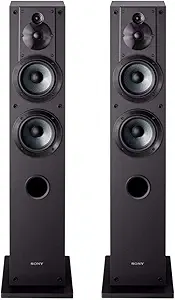
Sony vs Ultimate Ears: Overview & Brand Philosophy
In the portable and home audio landscapes, few rivalries illustrate differing engineering philosophies as clearly as Sony and Ultimate Ears (UE). Sony, a titan of consumer electronics with over seven decades of acoustic heritage, approaches speaker design from a perspective of high-fidelity broad-spectrum performance and technological integration. From pocket-sized travel units to earth-shaking party towers, Sony’s lineup leverages proprietary audio codecs, digital signal processing (DSP), and advanced driver topologies to cater to both casual listeners and audiophiles alike.
Conversely, Ultimate Ears—a subsidiary of Logitech—carved out its reputation by revolutionizing custom in-ear stage monitors for touring musicians before fundamentally redefining the rugged portable speaker category. UE’s philosophy centers squarely on lifestyle integration, democratized sound, and extreme durability. Rather than competing across every home theater and professional audio segment, Ultimate Ears directs its engineering focus toward ultra-portable, 360-degree, weather-sealed Bluetooth speakers built to survive drops, water, and dirt while delivering high-energy acoustic output.
When choosing between these two industry leaders, consumers are not merely selecting a set of specifications; they are deciding between Sony’s expansive ecosystem of bass-forward, feature-dense audio equipment and Ultimate Ears’ streamlined, utilitarian focus on outdoor resilience and omnidirectional playback. Understanding how each brand implements acoustic architecture and structural engineering is vital to determining which will better serve your listening environment.
Key Differences & Technological Comparison
The core divergence between Sony and Ultimate Ears begins with sound dispersion. Ultimate Ears relies almost universally on cylindrical enclosures that house paired active drivers and dual passive radiators arranged opposingly to produce authentic 360-degree sound. This ensures consistent tonal balance regardless of the listener's position relative to the unit. Sony primarily utilizes directional acoustic arrays, often implementing non-circular diaphragms (such as their proprietary X-Balanced Speaker Units) that maximize surface area, reduce driver excursion, and lower harmonic distortion to deliver concentrated sound with deeper sub-bass extension.
Acoustic processing and codec support also highlight distinct engineering pathways. Sony equips many of its premium portable and home speakers with high-resolution codec capabilities, most notably LDAC, which allows data transfer rates up to 990 kbps over Bluetooth. This is paired with proprietary sound-enhancement engines like DSEE (Digital Sound Enhancement Engine) to restore compressed tracks. Ultimate Ears deliberately eschews advanced codecs, relying strictly on standard SBC and occasionally AAC. UE prioritizes low-latency DSP tuning that pushes mid-range clarity and vocal presence, ensuring sound carries effectively across open outdoor spaces rather than chasing subtle acoustic details in quiet environments.
Hardware durability and practical field use mark another critical battleground. Ultimate Ears leads the market in sheer survivability; models like the Wonderboom, Boom, and Megaboom series feature IP67 ratings, drop resistance onto hard surfaces, buoyant casings that float in water, and stain-resistant acoustic fabric wraps. Sony has made notable strides in ruggedization with recent portable additions matching IP67 dust and water resistance, but their enclosures lean heavily toward dense silicones and matte plastics, which show scuffs more readily. However, Sony outpaces UE in versatility by frequently integrating line-in auxiliary inputs, microphone inputs for karaoke, onboard speakerphone capabilities, and customizable LED light shows.
Pros & Cons Comparison
Sony: Advantages
- Superior low-frequency extension and punch, particularly on models with dedicated Mega Bass modes.
- Support for high-bitrate codecs (LDAC) and proprietary upscaling (DSEE) for higher fidelity listening.
- Broad product portfolio encompassing everything from compact travel speakers to colossal high-output party systems.
- Extensive feature sets often including onboard speakerphones, USB power-bank output, audio-in jacks, and party lighting.
Sony: Disadvantages
- Predominantly directional sound profiles require careful speaker placement for the optimal acoustic sweet spot.
- Enclosures constructed with silicone coatings tend to collect lint, dust, and scuff marks over extended use.
- Companion applications can be unintuitive and fragmented across different speaker tiers.
Ultimate Ears: Advantages
- Industry-leading build durability: impact-resistant, fully waterproof, dustproof, and buoyant in water.
- True 360-degree omnidirectional sound projection makes them ideal for open outdoor spaces and social circles.
- Intuitive physical design with iconic, oversized volume buttons and the convenient "Magic Button" for playback control.
- Streamlined companion apps offering reliable remote power control, customizable EQs, and expansive multi-speaker linking via PartyUp.
Ultimate Ears: Disadvantages
- No support for advanced audio codecs (LDAC, aptX), limiting analytical high-fidelity listening.
- Total absence of auxiliary 3.5mm inputs and integrated microphones on modern models, restricting use strictly to Bluetooth streaming.
- Sub-bass roll-off is more aggressive on compact units compared to similarly priced Sony counterparts.
Performance, Durability & Value Analysis
From an acoustic performance standpoint, both brands deliver distinct profiles that align closely with their design intent. Sony speakers consistently produce a warm, full-bodied sound signature characterized by deep sub-bass and smooth highs. For indoor environments, private desktop listening, or bass-heavy music genres like hip-hop and electronic dance, Sony's specialized drivers deliver superior depth and dynamic impact. In contrast, Ultimate Ears tunes their hardware for forward projection, placing emphasis on upper-bass punch, clear midrange projection, and crisp highs. This tuning prevents UE speakers from sounding muddy in noisy outdoor environments, though it occasionally results in a slightly clinical or thin tone at lower listening volumes.
In terms of lifecycle durability and return on investment, Ultimate Ears generally outlasts the competition in harsh conditions. Their tough fabric weave, heavy rubber bumpers, and thoroughly tested drop-proofing make them the premier choice for pool parties, camping excursions, and beach trips where cosmetic and physical damage is a real threat. Sony provides equal electronic resilience against moisture and dust in its outdoor models, but the aesthetic finishes are more fragile. Regarding pure value, Ultimate Ears offers exceptional pricing consistency for pure, fuss-free Bluetooth functionality, whereas Sony justifies slightly higher price points by delivering multi-functional utilities such as power delivery charging, varied connectivity ports, and higher-grade internal audio processing.
Final Verdict: Which Brand Should You Choose?
Your choice between Sony and Ultimate Ears should ultimately be dictated by where and how you listen to your music most frequently.
Choose Ultimate Ears if: Your priority is an indestructible, go-anywhere speaker that thrives in rugged conditions. If you spend significant time outdoors, host gatherings where the speaker will sit in the center of a table, or need a device that can survive drops on concrete and dips in a pool without a second thought, UE is the benchmark. Speakers like the Wonderboom 4 or Megaboom 4 provide unmatched portability, intuitive operation, and reliable 360-degree sound.
Choose Sony if: You value acoustic nuance, deeper bass response, and multi-functional versatility over sheer ruggedness. If you want a speaker that primarily lives indoors or on a patio, serves as an audio hub via wired connections, supports high-resolution streaming codecs, or needs to double as a speakerphone and power bank, Sony is the superior platform. From the compact SRS-XB line up to their massive XV-series party monitors, Sony delivers an engaging, bass-forward sound signature that audiophile-leaning listeners will appreciate.
Product Selection
Sony presents an expansive and technologically diverse product catalog that spans virtually every segment of the consumer audio market. Their lineup extends far beyond conventional Bluetooth units, encompassing compact ultra-portables (like the SRS-XB100), rugged lifestyle cylinders (such as the ULT FIELD series), massive AC-powered party monoliths (the ULT TOWER series), specialized home-theater soundbars, and bespoke glass tube accent speakers. From an engineering standpoint, this vast selection allows Sony to incorporate wide-ranging acoustic architectures, from X-Balanced speaker units that maximize diaphragm area for punchier bass to high-resolution LDAC codec support and modular Party Connect ecosystems. The technical strength of Sony’s breadth is versatility; consumers can select tailored solutions engineered specifically for high-fidelity critical listening, immersive spatial TV audio, or high-decibel outdoor entertainment. However, the practical trade-off to this expansive selection is an inconsistent user experience across product tiers, where companion app integration, supported Bluetooth codecs, and environmental durability ratings fluctuate heavily depending on the model chosen.
In contrast, Ultimate Ears (UE) operates with a sharply focused, lifestyle-centric design philosophy that deliberately trades catalog breadth for specialized optimization. Rather than competing in home theater or audiophile stationary categories, UE concentrates almost exclusively on ruggedized, 360-degree cylindrical Bluetooth speakers—ranging from the ultra-compact Wonderboom and mid-sized Boom/Megaboom up to the portable-party Hyperboom and outdoor Epicboom. UE’s engineering quality shines through this hyper-focused selection, offering uniform class-leading durability (IP67 waterproof and drop-proof ratings), floatable builds, buoyant acoustics, and uniform dsp-tuned omnidirectional sound stages across their entire lineup. The primary technical advantage is consistency; UE’s Magic Button controls, long-range Bluetooth radios, and PartyUp ecosystem function reliably across different generations. The obvious limitation, however, is a lack of high-fidelity wired inputs, advanced wireless codecs (often capped at basic SBC), Wi-Fi streaming options, and soundbar solutions, effectively alienating home audio enthusiasts who require stationary, latency-free, or multi-channel acoustic setups.
When evaluating overall product selection, the decision between Sony and Ultimate Ears hinges on the specific operational environment and technical flexibility the consumer demands. Sony is the superior choice for buyers seeking deep product diversity, specialized form factors, and elevated acoustic performance, providing tailored options that bridge the gap from personal audio to professional-grade party and home entertainment sound systems. Ultimate Ears remains the definitive choice for users seeking purpose-built, highly durable portable audio, where a streamlined, predictable product line guarantees rugged dependability and hassle-free, go-anywhere performance, albeit within the strict confines of standard Bluetooth portability.
Affordability
When assessing affordability in the portable and home speaker categories, Sony and Ultimate Ears (UE) approach the cost-to-performance ratio with fundamentally different philosophies. Ultimate Ears focuses on rugged durability and omnidirectional acoustic performance, positioning its lineup—such as the Wonderboom, Boom, and Megaboom series—in a distinct mid-to-high tier of the mainstream market. From an engineering perspective, UE justifies its pricing by over-indexing on build resilience, offering IP67 ratings, drop-proofing, and buoyant enclosures. However, UE rarely competes at ultra-budget price points, and their feature sets strictly prioritize playback: they largely omit auxiliary inputs, speakerphone functionality, and advanced codec support. Consequently, while a UE speaker delivers high value in terms of lifecycle longevity and sustained volume-to-size performance, consumers pay a premium for physical engineering rather than technological versatility, making entry-level adoption less financially accessible.
Conversely, Sony leverages its massive global manufacturing scale to offer a far broader price-to-performance spectrum, effectively dominating both true budget tiers and the ultra-premium market. From accessible micro-transducers like the SRS-XB100 up to expansive party speakers and high-fidelity shelf units, Sony provides clear entry paths for price-sensitive buyers without sacrificing baseline audio quality. Technically, Sony delivers superior functional value per dollar by integrating complex DSP (such as their proprietary Extra Bass and Sound Diffusion Processor), backwards-compatible analog connectivity, and advanced wireless codecs like LDAC—a feature virtually absent in competing UE models. The practical trade-off is that Sony’s budget-oriented plastic chassis designs do not always match the near-indestructible fabric and rubberized builds of equivalent UE units. Nevertheless, in terms of sheer financial flexibility, Sony represents the more comprehensively affordable brand, delivering greater acoustic and technological utility across lower, middle, and high-end spending limits.
Quality/Durability
When evaluating engineering quality and material durability, Ultimate Ears (UE) has established itself as the gold standard for rugged, adventure-ready speaker design. Built explicitly to withstand the harshest outdoor conditions, UE speakers—such as the Wonderboom, Boom, and Megaboom series—are enveloped in an ultra-dense, two-tone acoustic fabric originally engineered for motorcycle jackets and fire equipment. This exterior provides exceptional abrasion resistance and tensile strength, complemented by thick, shock-absorbing rubberized end caps and bumpers. Most modern UE speakers boast an IP67 rating, meaning they are completely dust-tight and can survive immersion in up to one meter of water for 30 minutes. Furthermore, UE distinctively engineers several models to naturally float, drastically reducing the risk of loss in aquatic environments, while their internal components are rigorously drop-tested from heights of up to five feet onto solid concrete without functional failure.
Sony approaches quality and durability through high-precision consumer electronics engineering, prioritizing premium finishes, advanced acoustic architecture, and versatile ingress protection. Sony’s portable line—ranging from the compact SRS-XB series to the larger XG series—frequently matches UE’s IP67 ratings, with certain outdoor models like the SRS-XE200 even offering salt-water resistance and anti-rust properties. However, Sony’s structural composition relies more heavily on tactile silicone coatings and rigid polycarbonate plastics. While these materials impart a sophisticated, modern aesthetic suitable for both living rooms and backyards, they are practically more vulnerable to cosmetic wear: the matte silicone can attract lint, collect scratches, and show scuffs after moderate physical impact. Where Sony unequivocally triumphs in quality, however, is in its acoustic hardware and signal processing engineering, integrating rigid proprietary X-Balanced Speaker Units, dual passive radiators, and high-fidelity LDAC codec support that deliver far richer fidelity, structural acoustic damping, and lower harmonic distortion at elevated volumes.
The practical trade-off between the two brands centers on whether you prioritize physical survivability or refined acoustic-electronic longevity. Ultimate Ears offers peerless mechanical durability, creating speakers that are nearly indestructible, forgiving of rough drops, and structurally resilient against severe elements, though their non-replaceable batteries and absence of high-resolution Bluetooth codecs slightly date their technical shelf life. Conversely, Sony provides superior audio fidelity, sophisticated internal DSP engineering, and premium build quality that holds up remarkably well against dust and water, but requires more gentle handling to avoid cosmetic degradation. For extreme outdoor enthusiasts, poolside utility, and family environments prone to accidental drops, Ultimate Ears delivers unmatched physical endurance; for consumers seeking an audiophile-adjacent build with robust, weather-resistant protection for everyday indoor-outdoor transitions, Sony remains the technically superior choice.
Sound Quality
When evaluating sound quality, Sony and Ultimate Ears (UE) take divergent engineering approaches that cater to different acoustic priorities. Sony leverages decades of high-resolution audio heritage and proprietary acoustic innovations, such as its unique non-circular X-Balanced Speaker Units. These custom drivers maximize diaphragm area to produce deep, authoritative bass response with substantially reduced distortion at high excursion levels. Sony’s sound signature leans warm, full-bodied, and dynamic, heavily emphasizing sub-bass extension via dedicated features like the "Mega Bass" or "ULT Power Sound" modes. Additionally, Sony models often integrate premium codec support, notably LDAC, allowing for high-bandwidth Bluetooth streaming that preserves micro-details, vocal textures, and instrumental separation that audiophiles appreciate in controlled listening environments.
Conversely, Ultimate Ears engineers its portable lineup around maximum dispersion, tonal clarity, and outdoor intelligibility. UE speakers—such as the Boom, Megaboom, and Hyperboom—are renowned for their true 360-degree omnidirectional sound projection, which eliminates the traditional "sweet spot" and ensures consistent frequency response regardless of listener placement. Acoustically, UE emphasizes an energetic, forward mid-range and crisp treble, engineered specifically to pierce through ambient environmental noise like wind, water, and party chatter. While models like the Hyperboom deliver immense low-end punch, UE’s standard cylinder models trade deep sub-bass resonance for punchy upper-bass that avoids muddying the vocal frequencies. The inclusion of an "Outdoor Boost" mode further pushes mid-to-high frequencies for louder volume outputs, though it occasionally introduces compression and harshness at maximum decibels.
The practical trade-off between the two brands centers on acoustic fidelity versus environmental versatility. Sony delivers superior musicality, richer bass depth, and a more nuanced, hi-fi listening profile that excels indoors or for focused listening sessions, though directional models require precise placement for optimal stereo imaging. Ultimate Ears sacrifices high-bitrate codec capabilities and the ultra-low sub-bass rumble of Sony in exchange for an indestructible, uniform soundstage that reliably fills dynamic outdoor spaces without distortion. For listeners demanding clinical detail and chest-thumping bass richness, Sony is the superior sonic choice, whereas UE holds the edge for users needing robust, room-filling volume and balanced mid-range clarity for social and open-air activities.