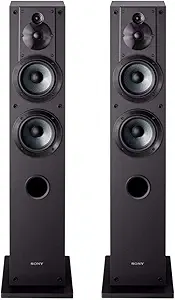
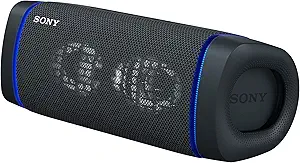
Sony vs Sonos: Overview & Brand Philosophy
When selecting a premium audio ecosystem, Sony and Sonos represent two fundamentally distinct approaches to sound reproduction and consumer hardware. Sony, an established titan of the consumer electronics industry with over seven decades of acoustic engineering heritage, views speakers as an extension of its broader audio-visual empire. Its brand philosophy centers on versatile hardware performance, cutting-edge proprietary codecs, and sheer breadth of choice—spanning portable rugged Bluetooth cylinders, high-power party boxes, and immersive Dolby Atmos home theater setups.
In contrast, Sonos disrupted the traditional audio landscape in the early 2000s by pioneering whole-home multi-room wireless audio. Sonos operates with a philosophy reminiscent of modern software companies, prioritizing seamless ecosystem integration, minimalist aesthetic design, and network-based streaming fidelity. Rather than competing in every consumer electronics category, Sonos concentrates strictly on creating an interconnected, effortless acoustic environment where software updates continually refine hardware that is meant to remain stationary within the home.
Understanding these differing foundational philosophies is critical for consumers. Sony designs for dynamic adaptability, personal listening, and format versatility, making it a favorite for users who want high-resolution playback on the go or deep integration with televisions and gaming consoles. Sonos targets the homeowner who values architectural elegance, effortless multi-room synchronization, and a platform-agnostic smart home architecture that operates independently of a smartphone's immediate proximity.
Key Differences & Technological Comparison
The primary technical divide between Sony and Sonos lies in their connectivity architecture. Sonos relies predominantly on Wi-Fi protocols (utilizing local network streaming via Apple AirPlay 2, Spotify Connect, and the proprietary Sonos S2 app), ensuring uncompressed audio transmission that is not interrupted by phone calls or notification alerts. Sony, while offering Wi-Fi and network capabilities in its higher-end soundbars, leans heavily into advanced Bluetooth technology across its standalone speaker lineups, notably deploying its proprietary LDAC codec which allows streaming of high-resolution audio up to 990 kbps at 24-bit/96kHz.
Acoustic profiling and equalization also reveal substantial differences. Sony speakers generally feature a warmer, bass-forward sound signature right out of the box, frequently augmented by hardware-level digital signal processing like "Mega Bass" or "Extra Bass." Sonos opts for a flatter, more neutral reference-grade frequency response. Furthermore, Sonos leverages Trueplay tuning technology, which uses the microphones on iOS devices (or built-in microphones on newer models like the Era series) to analyze room acoustics and automatically recalibrate the speaker’s output to neutralize acoustic reflections and dead spots.
From an ecosystem standpoint, scalability diverges sharply. Sonos excels at modular expansion: you can begin with a single Sonos One or Era 100, add a Sub Mini later, integrate an Arc soundbar, and effortlessly route distinct or synchronized audio streams across dozens of rooms. Sony offers multi-speaker pairing (such as "Party Connect" for portable units or 360 Spatial Sound Mapping for home theater systems), but its ecosystem feels more fragmented, requiring different companion applications (like Sony Music Center or the Headphones/Bravia Connect apps) depending on the specific product tier.
Pros & Cons Comparison
Sony: Advantages
- Codec Superiority: Support for high-bitrate LDAC allows audiophiles to stream significantly higher resolution over Bluetooth compared to standard SBC/AAC.
- Portability & Ruggedness: Vast catalog of IP67-rated waterproof, dustproof, and shockproof portable speakers with extensive battery life.
- Extensive Variety: Offers products across every price point, from affordable compact speakers to towering, high-decibel party systems with dynamic lighting.
- Physical Connectivity: Frequent inclusion of 3.5mm auxiliary jacks, USB playback ports, and broader hardware inputs across lineups.
Sony: Disadvantages
- Fragmented App Experience: Software integration lacks the unified polish of Sonos, with fragmented controls across multiple mobile applications.
- Multi-Room Inconsistency: Network-based whole-home streaming is cumbersome compared to dedicated multi-room wireless platforms.
Sonos: Advantages
- Class-Leading Multi-Room Audio: Industry gold standard for synchronized, zero-latency multi-room playback across an entire residence.
- Trueplay Room Calibration: Intelligently measures room dimensions and materials to optimize acoustic output for specific environments.
- Unified Software Platform: The Sonos app aggregates dozens of streaming services, local network storage, and internet radio stations into a single search interface.
- High Resale & Longevity: Hardware retains value exceptionally well and receives continuous firmware updates for years after release.
Sonos: Disadvantages
- Premium Price Point: Significantly higher barrier to entry, with minimal budget or entry-level options.
- Bluetooth & Codec Limitations: Relies primarily on Wi-Fi; while newer models include Bluetooth, support for advanced high-res Bluetooth codecs like LDAC or aptX is absent.
- Network Dependency: Traditional home units require an active Wi-Fi network and a stable broadband connection for optimal functionality.
Performance, Durability & Value Analysis
When assessing long-term durability, the mechanical build quality of both manufacturers is demonstrably high, but tailored to different operational environments. Sony portable models (such as the SRS-XG and ULT Field series) are engineered for physical abuse, boasting heavy rubberized bumpers, sealed chassis ports, and robust ingress protection ratings that easily withstand outdoor moisture, sand, and accidental drops. Sonos products (like the Era 300, Five, and Sub) feature premium, museum-grade matte polycarbonate enclosures and precision-machined acoustic grilles intended for modern interior spaces. While less suited for outdoor exposure—excluding the ruggedized Sonos Move 2 and Roam 2—Sonos interior hardware exhibits remarkable thermal management and internal component longevity, often operating reliably for a decade or more.
Value retention depends heavily on individual use cases. Sony delivers exceptional value per dollar in terms of sheer acoustic volume, battery longevity, and portable utility. If you spend $150 to $300 on a Sony speaker, you acquire a self-contained, highly durable, travel-ready audio device that pairs seamlessly with any modern smartphone via Bluetooth. Sonos, conversely, represents an infrastructure investment. While initial costs are higher and hardware rarely goes on deep discount, Sonos hardware retains software support and resale value far longer than consumer Bluetooth hardware. Its value compound over time as you expand the system incrementally throughout your living space without rendering older models obsolete.
Final Verdict: Which Brand Should You Choose?
The choice between Sony and Sonos ultimately hinges on whether your priority is portable versatility or synchronized domestic listening.
Choose Sony if: You want durable, battery-powered portability, a bass-rich sound profile, or outdoor utility. Sony is the superior choice for consumers who travel frequently, host backyard gatherings, demand high-resolution Bluetooth transmission via LDAC, or want standalone audio performance without relying on a dedicated home Wi-Fi network.
Choose Sonos if: You want an expandable, whole-home audio network that blends seamlessly into interior decor. Sonos is the undisputed winner for consumers seeking a centralized, app-driven streaming experience throughout multiple rooms, reference-style balanced audio, and a modular home theater system that can be expanded over time with zero cabling clutter.
Product Selection
When evaluating product selection in the speaker market, Sony and Sonos operate under fundamentally different engineering and portfolio philosophies. Sony leverages its vast industrial footprint to offer an expansive, highly diversified catalog that spans nearly every conceivable acoustic category. Consumers can select from ultra-portable Bluetooth models like the rugged SRS-XB series, massive high-SPL party speakers such as the SRS-XV line, Dolby Atmos soundbars, high-fidelity wireless home theater systems, and niche form factors like neckband speakers and ambient glass sound resonators. Technically, Sony prioritizes versatile standalone engineering, equipping its hardware with high-resolution wireless codecs like LDAC, multi-source Bluetooth multipoint, dedicated low-frequency passive radiators, and IP67-rated chassis for outdoor resilience. This broad-spectrum strategy ensures a solution for virtually any budget, environment, or playback scenario, though it results in a fragmented ecosystem where devices across different sub-lines often rely on disparate companion apps and protocol standards.
Conversely, Sonos pursues a highly curated, ecosystem-first catalog engineered around unified whole-home audio architecture. Instead of saturating the market with minor model variations, Sonos offers a tightly controlled lineup divided into focused categories: modular soundbars (Ray, Beam, Arc), stationary smart speakers (Era 100, Era 300), battery-powered portables (Roam, Move 2), and architectural/installation amplifiers. Sonos excels in technical convergence, engineering spatial audio capabilities, customized waveguides, and advanced acoustic calibration via its proprietary Trueplay tuning across its range. While Sonos features significantly fewer standalone SKUs than Sony and historically avoids high-bitrate Bluetooth codecs in favor of uncompressed Wi-Fi streaming, its product selection is engineered for seamless scalability. Every device integrates into a synchronized multi-room mesh network, allowing consumers to pair disparate models into surround configurations, stereo pairs, or whole-house arrays through a single software interface.
The practical trade-off between the two brands centers on acoustic versatility versus ecosystem coherence. Sony is the superior choice for buyers seeking specialized, standalone hardware—whether that means an indestructible speaker for outdoor adventures, a high-SPL party rig with integrated inputs for microphones and guitars, or an audiophile-grade Bluetooth device capable of 24-bit/96kHz wireless streaming. However, this diversity comes at the expense of seamless multi-room expansion and cross-device synergy. Sonos sacrifices extreme budget flexibility and niche outdoor-party utility to deliver a coherent product selection where every speaker acts as an upgradeable node within a unified home system. Ultimately, consumers prioritizing standalone portability, hardware features, and varied price tiers will find Sony’s vast catalog compelling, whereas those planning a cohesive, scalable home audio infrastructure will benefit from Sonos’s disciplined portfolio.
Affordability
When evaluating affordability in the speaker market, Sony presents a vastly more accessible and tiered pricing architecture compared to the premium, closed-ecosystem approach of Sonos. Sony leverages its massive global manufacturing footprint and extensive catalog to cater to virtually every budget, offering ultra-portable Bluetooth models like the SRS-XB series for under fifty dollars, spanning up to audiophile-grade wireless towers and Dolby Atmos soundbars. This broad spectrum provides immediate financial entry points for casual listeners who need standalone performance without a heavy upfront investment. In contrast, Sonos positions itself exclusively as a mid-to-high-tier brand; its entry-level hardware, such as the Roam or Era 100, requires a significantly higher capital outlay. Sonos products are engineered not as isolated speakers, but as foundational nodes within a cohesive multi-room network, meaning their initial ticket price reflects integrated Wi-Fi streaming capabilities, proprietary acoustic tuning (Trueplay), and architectural modularity rather than simple Bluetooth playback.
The practical trade-offs regarding affordability manifest intensely in feature sets and long-term cost of ownership. Sony speakers emphasize localized, high-value technical capabilities at lower price points—delivering industry-leading ingress protection (high IP ratings for dust and water resistance), party lighting, native LDAC Bluetooth codec support for high-resolution audio, and immense battery life right out of the box. Conversely, Sonos demands a premium for seamless software infrastructure, pristine driver integration with minimal cabinet distortion, and direct integration with music streaming APIs over home Wi-Fi. While a consumer pays considerably more upfront for Sonos, the investment buys longevity via sustained over-the-air firmware upgrades and modular scalability, allowing users to build a high-fidelity surround sound system over several years. Sony's budget models, by comparison, risk functional obsolescence sooner as battery chemistry degrades, and their ecosystem lacks the inter-generational software coherence that Sonos guarantees.
Ultimately, determining the more "affordable" brand depends on whether one calculates value per dollar strictly at the checkout counter or through systemic utilization over time. Sony easily wins the raw price-to-performance ratio for everyday, standalone use cases, making it the superior choice for budget-conscious buyers seeking durable, portable sound without recurring financial commitments. Sonos cannot compete on bare affordability metrics, yet its hardware maintains higher residual resale value and mitigates the need to replace entire audio setups when upgrading home entertainment. If immediate affordability, flexibility, and physical ruggedness are paramount, Sony is the undisputed victor; for those viewing audio as a permanent, upgradeable home utility, Sonos justifies its premium by amortizing its steep cost across a superior, interconnected user experience.
Quality/Durability
When assessing engineering quality and durability, Sony and Sonos represent fundamentally different design philosophies that directly reflect their intended use cases. Sony excels in physical, environmental resilience, particularly in its portable and outdoor speaker lines. Utilizing high-grade, impact-resistant polymers, shock-absorbing rubber bumpers, and specialized fabric weaves, Sony products consistently achieve robust IP ratings—often reaching IP67 for comprehensive dust resistance and water submersion capabilities, alongside rust-proof and saltwater-tolerant engineering. The internal acoustic architecture employs proprietary X-Balanced Speaker Units with non-circular diaphragms that maximize surface area to reduce physical excursion and prevent voice coil distortion over prolonged, high-volume use. In contrast, Sonos prioritizes architectural-grade home integration, employing thick, acoustically inert polycarbonate enclosures, precision-drilled micro-hole grilles, and heat-dissipating metallic base plates. While portable offerings like the Sonos Move 2 and Roam offer rated weatherproofing, the brand's core engineering is optimized to mitigate structural resonance and internal vibration rather than survive severe external mechanical shock.
The technical trade-offs between the two brands surface prominently when evaluating operational longevity versus physical toughness. Sonos dominates in software durability and long-term ecosystem stability, which is a critical aspect of modern speaker quality. Sonos components feature substantial on-board RAM, high-performance processing chipsets, and thermal management systems designed to support dynamic Trueplay acoustic calibration and continuous, over-the-air firmware upgrades for a decade or more. However, Sonos products—particularly their flagship soundbars and multi-room units—are vulnerable to power surges, lack comprehensive moisture sealing, and can be rendered non-functional if their proprietary network protocols become obsolete or degraded by network interference. Sony trades some of this synchronized software elegance for pragmatic, standalone endurance. Many Sony speakers feature physical bass radiators designed to withstand severe air pressure without mechanical fatigue, analog input redundancies (such as 3.5mm auxiliary jacks) that bypass software obsolescence, and battery-care charging algorithms designed to mitigate lithium-ion degradation over multi-year cycles. Ultimately, consumers seeking rugged, battle-tested hardware that withstands the elements and physical mishandling will find superior durability in Sony, whereas those investing in premium indoor acoustic resonance, immaculate fit-and-finish, and long-term digital lifecycle support are better served by Sonos.
Sound Quality
When evaluating sound quality, Sony and Sonos cater to fundamentally different acoustic philosophies, rooted in their distinct engineering heritages. Sony focuses heavily on energetic, high-impact tuning driven by proprietary physical acoustic hardware and advanced digital signal processing (DSP). Their speaker lineup—spanning high-end party monitors to ultra-portable units—is characterized by deep, visceral bass response powered by their Extra Bass architecture and dual passive radiators. Sony excels at handling high-resolution playback, frequently incorporating their proprietary LDAC codec alongside DSEE (Digital Sound Enhancement Engine) upscaling technology. This allows Sony speakers to reconstruct compressed audio formats and reproduce high-frequency micro-details with striking clarity and warmth, making them an audiophile-friendly choice for dynamic, bass-heavy genres and solo, close-proximity listening.
Conversely, Sonos prioritizes architectural acoustic precision, neutral frequency response, and spatial coherence. Rather than relying on exaggerated low-end, Sonos engineering emphasizes a balanced, mid-forward sound profile where vocals and dialogue remain impeccably distinct, supported by custom-designed woofers and angled high-frequency tweeters. The technological pillar of Sonos' sound quality is Trueplay tuning, an algorithmic calibration feature that analyzes the reflective surfaces and acoustic geometry of a room to dynamically adapt the speaker's EQ profile. This automated boundary equalization eliminates muddy bass nodes and harsh reflections, delivering an acoustically balanced soundstage regardless of placement. Furthermore, in architectural home cinema setups, Sonos outshines Sony in multi-channel coherence and native Dolby Atmos spatial imaging, crafting an immersive, realistic soundfield without phase cancellation.
Ultimately, the sound quality trade-off between the two brands hinges on listening environments and personal sonic preference. Sony provides richer, tactile warmth, customizable EQ parameters, and superior low-latency high-resolution streaming that thrives in open-air, dynamic, or portable contexts, though it can sometimes overwhelm delicate mid-frequencies with bloated bass if uncalibrated. Sonos demands a controlled indoor ecosystem, trading high-bitrate Bluetooth codecs for rock-solid Wi-Fi transmission that avoids compression artifacts. While Sonos can sound comparatively sterile or lean in the lowest sub-bass octaves without a companion subwoofer, its unmatched acoustic neutrality, low-distortion drivers at high volumes, and intelligent room compensation make it the superior acoustic choice for precise, long-session home listening.