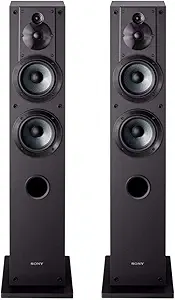
Sony vs Samsung: Overview & Brand Philosophy
The global audio landscape is anchored by a handful of titans, but few carry the historic resonance and technical pedigree of Sony and Samsung. Sony's philosophy in audio engineering is rooted in decades of professional acoustic heritage, dating back to the foundational days of studio recording equipment, high-resolution consumer gear, and personal listening revolutions like the Walkman. Sony approaches the speaker market as an acoustic purist with a deep appreciation for frequency separation, proprietary digital signal processing, and warm, immersive sound signatures. Their objective is to reproduce audio with musical fidelity and cinematic depth, whether designing a portable Bluetooth speaker for rugged outdoor use or an architectural multi-component home theater array.
Samsung, by contrast, has strategically built its audio dominion through a combination of relentless modern ecosystem integration and targeted technological acquisition. While historically viewed primarily as a consumer electronics and display powerhouse, Samsung fundamentally transformed its acoustic trajectory by acquiring Harman International—bringing revered audio engineering institutions like JBL, AKG, and Harman Kardon under its corporate umbrella. Samsung’s philosophy focuses heavily on the modern connected home: frictionless pairing, intelligent acoustic room-calibration, and seamless inter-device synergy, particularly through proprietary sound-sharing technologies integrated with their industry-leading televisions.
Consequently, the competition between these two conglomerates is not merely a matter of decibels, but a clash of conceptual priorities. Sony leans heavily into specialized audio codecs, standalone performance, and dedicated consumer-lifestyle segmentation. Samsung emphasizes cutting-edge audio processing algorithms, sleek aesthetic design, and an interconnected smart-home experience that maximizes acoustic clarity while eliminating the complexity traditionally associated with high-end speaker systems.
Key Differences & Technological Comparison
When dissecting the technological approaches of Sony and Samsung in the speaker market, the divergences become stark across hardware implementation, connectivity protocols, and acoustic tuning:
- Acoustic Hardware & Driver Configuration: Sony frequently utilizes proprietary driver architectures, such as its X-Balanced Speaker Units. These non-circular diaphragms maximize cone area to increase sound pressure and reduce distortion, resulting in punchier bass and clearer vocals without expanding the speaker's footprint. Samsung relies extensively on the engineering prowess of the Samsung Audio Lab in California, employing wide-range tweeters and acoustic beam technology designed to disperse sound evenly across broad listening angles, preventing dead zones in standard living environments.
- Spatial Audio & Immersive Formats: Both brands support Dolby Atmos and DTS:X, but their proprietary spatial rendering models differ fundamentally. Sony pushes its 360 Spatial Sound Mapping technology, which synthesizes "phantom" speakers in the room using precise time-of-flight measurements to create an extraordinarily convincing sound bubble. Samsung counters with SpaceFit Sound Pro, which uses built-in microphones to continuously analyze structural reflections, room geometry, and even furniture density to dynamically retune the equalization and subwoofer crossover in real time.
- Ecosystem Synchronization: Samsung holds a distinct advantage for owners of its television displays through Q-Symphony technology. Rather than muting the TV speakers when a soundbar or home theater speaker system is connected, Q-Symphony harmonizes the TV speakers with the external hardware, utilizing the display's top and side channels for dialogue clarity while directing bass and ambient surround channels to the dedicated speaker unit. Sony offers a comparable feature—Acoustic Center Sync—which turns compatible Sony BRAVIA TVs into the dedicated center channel, though it is generally restricted to higher-tier, premium television models.
- Wireless Codecs & High-Resolution Streaming: Sony dominates high-fidelity wireless transmission with its proprietary LDAC codec, capable of streaming at up to 990 kbps over Bluetooth—roughly three times the data bandwidth of standard SBC codecs. This makes Sony the undisputed choice for audiophiles who stream high-resolution audio files. Samsung favors broader interoperability and frictionless casting via Wi-Fi (Apple AirPlay 2, Chromecast, and Spotify Connect), alongside its proprietary Seamless Codec (SSC), which optimizes fidelity primarily within the native Samsung Galaxy device ecosystem.
- Product Category Dominance: Sony maintains a significantly stronger presence in the ultra-portable and party speaker categories with its SRS-XB, ULT Power Sound, and SRS-XG lineups, which feature high IP67/IP68 weather resistance ratings and robust shock-proofing. Samsung, on the other hand, directs the bulk of its consumer audio resources into premium home cinema soundbars (the HW-Q series) and design-forward lifestyle speakers (the Music Frame), prioritizing interior aesthetics over portable ruggedness.
Pros & Cons Comparison
Sony Speakers
- Pros:
- Superior high-resolution audio support featuring the proprietary LDAC codec.
- Class-leading portable and party speaker lineups with exceptional battery longevity and durability ratings (waterproof, dustproof, and rustproof).
- Warm, rich, and dynamic bass profiles enabled by X-Balanced hardware architecture.
- Advanced spatial audio mapping that creates realistic multi-dimensional soundstages.
- Cons:
- Premium pricing tiers often result in lower feature-per-dollar value compared to competitors.
- Mobile companion software (Sony Music Center) can be unintuitive and fragmented.
- Soundbar-to-TV center-sync features are largely locked behind expensive BRAVIA display models.
Samsung Speakers
- Pros:
- Exceptional soundbar ecosystem featuring market-leading price-to-performance value.
- Flawless hardware integration with Samsung SmartThings, Q-Symphony, and Tap Sound.
- Accurate, balanced acoustic tuning backed by the world-class Samsung Audio Lab and Harman patents.
- Innovative lifestyle audio options (such as the Music Frame) that blend invisibly into home décor.
- Cons:
- Extremely limited footprint in the rugged, battery-powered portable Bluetooth speaker category.
- Maximum ecosystem benefits (e.g., Q-Symphony, low-latency gaming modes) require ownership of modern Samsung TVs.
- Absence of universal audiophile-grade Bluetooth codecs like LDAC or aptX HD.
Performance, Durability & Value Analysis
From an acoustic performance standpoint, both brands exhibit distinct master signatures. Sony speakers deliver an engaging, physical listening experience characterized by authoritative low-end resonance and smooth, rolled-off highs that prevent listener fatigue during extended sessions. When evaluating durability, Sony's portable hardware consistently outclasses the broader market; their outdoor units feature dual-layer fabrics, specialized silicone coatings, and rigorous testing against saltwater corrosion and direct impacts. Conversely, Samsung approaches performance through the lens of acoustic balance and spatial cohesion. In living room environments, Samsung’s high-end soundbars consistently achieve near-perfect frequency response linearity straight out of the box, offering crystal-clear vocal intelligibility and precise directional cues that bring cinematic audio tracks to life.
When assessing long-term value, the calculation depends heavily on the deployment scenario. Samsung represents an outstanding value proposition in home theater audio. The company routinely undercuts Sony's flagship multi-channel soundbar setups by several hundred dollars while including wireless subwoofers and discrete rear surround channels directly in the box—hardware that Sony frequently sells as high-priced modular add-ons. However, Sony retains its value far more effectively in the standalone and portable categories. A high-end Sony wireless or portable speaker maintains its utility, battery health, and acoustic relevance for years without relying on manufacturer-specific television pairings, making it a safer long-term investment for consumers who upgrade their peripheral electronics across disparate hardware brands.
Final Verdict: Which Brand Should You Choose?
The choice between Sony and Samsung fundamentally hinges on your primary listening environment, hardware ecosystem, and lifestyle demands.
Choose Sony if: You prioritize on-the-go versatility, rugged durability, or audiophile-grade music reproduction. If you are shopping for a robust portable speaker for the beach, a high-output party system with deep bass response, or a standalone wireless speaker capable of processing high-bitrate LDAC audio streams from high-resolution platforms like Tidal or Apple Music, Sony is the definitive selection. Their independent acoustic engineering ensures that whether you are connected to an iPhone, Android, or PC, the audio quality remains uncompromising and unencumbered by platform exclusivity.
Choose Samsung if: Your primary objective is home theater enhancement, interior aesthetic cohesion, or maximizing an existing Samsung device ecosystem. If you own a modern Samsung television, pairing it with a Q-Series soundbar or a Music Frame creates an acoustic synergy via Q-Symphony and SpaceFit Sound that is virtually impossible to replicate at the same price point with any competing brand. For users seeking an immersive, cinematic, multi-channel surround experience with minimal setup friction and exceptional dialogue clarity, Samsung stands as the superior, more cost-effective home audio solution.
Product Selection
When evaluating product selection in the speaker market, Sony demonstrates unmatched acoustic breadth, covering virtually every consumer and professional niche. Sony's portfolio spans ultra-portable Bluetooth units (such as the rugged SRS-XB and premium SRS-XE series), massive high-output party speakers with integrated PA inputs, specialized neckband speakers, 360 Reality Audio spatial home units, and dedicated high-fidelity audiophile gear. This extensive engineering range allows Sony to deploy proprietary technologies—such as the non-circular X-Balanced Speaker Units for reduced distortion and LDAC codec support for high-resolution wireless streaming—across diverse form factors. Consumers seeking hyper-specific use cases, like beach-ready dustproof portables or personal wearable sound, will find Sony’s catalog far more structurally diverse than most competitors.
Conversely, Samsung approaches the speaker category with an acute, hyper-focused emphasis on home entertainment and connected living room ecosystems. While Samsung does produce niche lifestyle devices such as the Music Frame and high-wattage Sound Tower party speakers, the overwhelming majority of its acoustic engineering is directed toward home theater soundbars. Through its acquisition of Harman International, Samsung leverages the acoustic R&D of the Harman Luxury Audio Group to dominate the soundbar space with its Q-Series and ultra-slim lineups. These systems excel technically in multi-channel Dolby Atmos decoding, Room Calibration via SpaceFit Sound, and seamless television integration using proprietary Q-Symphony technology, which synchronizes the soundbar with Samsung TV speakers for an expanded soundstage.
The trade-off between the two brands fundamentally centers on standalone versatility versus ecosystem-driven home theater design. Sony is the superior choice for buyers needing standalone personal audio, portable outdoor speakers, or dedicated high-resolution mobile gear that performs independently of any specific display hardware. Samsung, however, intentionally streamlines its standalone portable selection to focus on being the market leader in living room acoustics. While Samsung sacrifices market share in traditional battery-powered Bluetooth speakers, its product lineup offers superior depth, modularity, and integration for consumers building an interconnected, TV-centric multimedia space.
Affordability
When evaluating affordability in the speaker category, Samsung generally presents a more value-optimized pricing structure, particularly within the home theater and soundbar segments. Leveraging its massive manufacturing scale and strategic acquisition of Harman International, Samsung consistently undercuts competitors by delivering high-channel-count, Dolby Atmos-enabled systems at mid-tier price points. While their entry-level soundbars and wireless party speakers occasionally utilize lighter plastics and simpler acoustic enclosures to keep costs low, the return on investment in raw audio performance and software integration is exceptional. Consumers on a budget frequently find that Samsung provides premium technological features—such as integrated upward-firing drivers, automatic room calibration, and multi-channel surround configurations—at retail tiers where rival brands typically only offer basic stereo setups.
Sony, conversely, commands an intentional price premium across both its portable Bluetooth lineup and its architectural home audio products, reflecting a different philosophy on cost versus engineering return. While Sony does offer budget-friendly options, such as its entry-level XB-series portable speakers, these units often carry a higher price tag than similarly sized alternatives from Samsung or other competitors. Sony justifies this markup through rigorous industrial design, superior component longevity, proprietary codecs like LDAC for high-resolution streaming, and advanced digital sound enhancement engines (DSEE). Consequently, the practical trade-off for budget-conscious buyers is apparent: Sony delivers higher acoustic refinement, better low-end driver stability at maximum volumes, and superior weatherproofing, but at a distinct cost penalty that reduces its pure economic value compared to Samsung's aggressively priced offerings.
Ultimately, the determination of affordability depends on whether a consumer measures value through feature saturation or component fidelity. Samsung is the clear victor for budget-driven shoppers who want the most expansive feature set, physical channels, and smart-home compatibility per dollar spent, making it an accessible gateway to cinematic sound. Sony appeals to buyers willing to absorb a higher cost-per-feature ratio in exchange for sophisticated acoustic tuning, durable materials that resist long-term degradation, and niche audiophile capabilities. While Samsung wins on pure price competitiveness across almost every parallel product category, Sony remains an attractive investment for those who prioritize long-term build quality over immediate short-term savings.
Quality/Durability
When assessing engineering quality and build durability in the speaker market, Sony demonstrates a distinct edge in ruggedization, physical component integrity, and portable longevity. Sony leverages its deep acoustic heritage to construct cabinets and chassis that minimize structural resonance, whether in its flagship home theatre lines or its portable Bluetooth devices. In the portable and party speaker sectors—such as the SRS-XG and ULT series—Sony rigorously engineers for harsh environments, frequently incorporating IP66 to IP67 dust and water resistance ratings, reinforced shock-resistant corner bumpers, and water-repellent woven fabrics that resist fraying over years of mobile use. Furthermore, Sony’s transducers are built with durable mica-reinforced cellular (MRC) or carbon-fiber cones, which withstand high excursion and heat dissipation better than conventional paper cones, yielding superior resilience against diaphragm distortion, voice-coil degradation, and long-term mechanical wear.
Samsung, while primarily focusing its audio investments through its Harman acquisition (leveraging the engineering prowess of the Harman Kardon and JBL labs), concentrates its build quality on sleek, living-room aesthetics and home integration rather than outdoor ruggedness. Samsung’s speaker lineup—heavily weighted toward premium soundbars like the Q-Series and design-centric units like the Music Frame—employs rigid, acoustically treated acoustic plastics, refined metal grilles, and brushed finishes designed for stationary longevity. These enclosures effectively resist warping and thermal stress in climate-controlled indoor settings. However, Samsung soundbars frequently rely on soft-touch outer fabrics that are notoriously prone to snagging, dust accumulation, and discoloration over prolonged exposure to sunlight. Additionally, while Samsung’s internal circuitry and microchip engineering are exceptional—ensuring reliable low-latency wireless transmission via Wi-Fi and Bluetooth—their enclosures generally lack the high ingress protection (IP ratings) and drop protection that characterize Sony’s multi-use audio gear.
Ultimately, the durability trade-off between the two brands hinges on the user’s intended deployment and environmental demands. Sony delivers far superior real-world survivability for active users who require mobile audio equipment capable of enduring drops, outdoor moisture, sand, and extended high-output playback without physical or acoustic decay. Samsung, conversely, excels in architectural durability for the home, offering rock-solid stationary construction, reliable multi-driver integration, and seamless structural coupling designed to sit permanently beneath modern displays. While both brands achieve exceptional quality control with low failure rates in their electronic boards and power stages, Sony represents the superior choice for overall physical endurance and mechanical toughness, whereas Samsung is engineered specifically for premium, sedentary home entertainment environments.
Sound Quality
When evaluating sound quality, Sony and Samsung represent two fundamentally distinct acoustic philosophies shaped by their respective engineering heritages. Sony leverages decades of traditional high-resolution audio expertise, utilizing proprietary technologies like LDAC high-fidelity Bluetooth codecs, S-Master digital amplification, and X-Balanced speaker units designed to maximize diaphragm area and minimize distortion. Consequently, Sony speakers—from their portable SRS line to high-end architectural systems—deliver a warm, natural, and rich sound signature with authoritative low-end impact. Their bass response is deep yet controlled, avoiding the muddiness that often plagues bass-heavy profiles, while the midrange retains exceptional clarity, making vocals sound organic and intimate. In contrast, Samsung’s modern acoustic engineering is spearheaded by the California-based Samsung Audio Lab, blending psychoacoustics with advanced algorithmic processing. Utilizing technologies like adaptive sound tuning, wide-range tweeters, and SpaceFit room calibration, Samsung targets an ultra-clean, clinical, and expansive soundstage that optimizes itself dynamically based on the listening environment and content type.
The technical trade-offs between the two brands become apparent across different listening use cases and product categories. Sony’s physical tuning prioritizes musicality, acoustic depth, and dynamic range, which audiophiles and discerning music listeners often prefer because it reproduces the subtle micro-details and natural decay of live instruments with minimal artificial intervention. However, Sony can occasionally struggle with sound dispersion in standard omnidirectional formats, where specific sweet spots are required for the best experience. Samsung, on the other hand, excels brilliantly in spatial accuracy, channel separation, and high-frequency sparkle—strengths heavily reinforced by their ownership of Harman Kardon. In the soundbar and multi-room segment, Samsung’s Q-Symphony and acoustic beam technology create an engulfing, directional soundfield that outperforms Sony in cinematic dialogue projection and immersive atmospheric height channels, though pure stereo music tracks can sometimes sound slightly over-processed or lean in the lower midrange.
Ultimately, the superior brand for sound quality depends on whether the consumer values musical warmth or spatial precision. Sony takes the lead for dedicated music playback and portable listening, offering an engaging, low-fatigue acoustic profile with class-leading bass depth and codec support that preserves audio fidelity. Samsung wins the analytical and home-entertainment battle, offering superior spatial imaging, room-adapting intelligence, and vocal intelligibility that make their speakers exceptionally versatile for multi-media consumption and modern home theater environments.