Sony vs Marshall: Overview
Comparing Sony and Marshall helps you determine which brand is best suited for your needs in Speakers. Both brands offer strong choices depending on your budget and key feature requirements.
Key Features & Comparison
Evaluate factors such as build quality, warranty, customer satisfaction, and total value before making your final purchase choice between Sony and Marshall.
Product Selection
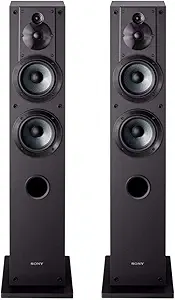
Sony dominates the consumer audio space with one of the most comprehensive and technologically varied speaker portfolios in the industry. Their lineup spans from ultra-portable micro units like the SRS-XB100 to mid-tier rugged outdoor cylinders, massive high-output party towers equipped with integrated DJ effects and LED lighting arrays (such as the MHC and SRS-XV series), and sophisticated architectural soundbars paired with wireless subwoofers. Furthermore, Sony actively integrates cross-ecosystem capabilities, offering multi-room Wi-Fi speakers, wearable neckband monitors, and marine-ready outdoor speakers. This breadth ensures that whether a consumer requires a pocketable commuter companion, an advanced Dolby Atmos home theater hub, or a commercial-grade event blaster, Sony provides a purpose-built hardware solution.
In contrast, Marshall—manufactured under license by Zound Industries—exercises a far more concentrated, lifestyle-oriented product strategy anchored entirely in its iconic vintage rock-and-roll heritage. Marshall's catalog is partitioned primarily into two categories: portable Bluetooth speakers (such as the Willen, Emberton, and Middleton) and mains-powered home Bluetooth units (like the Acton, Stanmore, and Woburn). While Marshall covers micro-portable to large tabletop tiers, they completely bypass specialized form factors like party towers, floating pool pods, or dedicated surround-sound home theater packages. Consumers choosing Marshall receive a tightly curated selection that favors aesthetic uniformity and singular sonic intent over the sprawling, feature-diversified catalog offered by Sony.
Affordability
When analyzing pricing tiers and value retention, Sony presents an exceptionally accessible entry barrier alongside an expansive price spectrum. Sony manufactures budget-friendly compact speakers that regularly retail well under fifty dollars, ensuring that entry-level consumers can access reputable engineering without a substantial financial commitment. Across their mid-range and premium segments, Sony’s pricing architecture closely tracks measurable technical specifications, such as multi-driver arrays, high-grade ingress protection, proprietary DSP modes, and proprietary LDAC Bluetooth codecs. This makes Sony exceptionally competitive on a pure feature-per-dollar metric, frequently offering robust firmware features and accessory bundles at prices that undercut design-forward boutique manufacturers.
Marshall occupies a distinct mid-to-high premium tier where retail pricing incorporates brand cachet and boutique physical design elements alongside audio hardware. The most compact Marshall speaker typically carries a price tag that competes with Sony’s mid-tier hardware, making the brand generally inaccessible to budget-restricted buyers. However, Marshall speakers demonstrate exceptional secondary market value retention, depreciating far more slowly than mass-market electronics due to their timeless guitar-amplifier styling and tactile materials. While consumers pay a demonstrable premium upfront for brass accents, faux-leather wraps, and tactile analog control knobs, the investment represents an aesthetic centerpiece rather than a disposable plastic gadget.
Quality/Durability
Sony approaches build quality and structural durability from an aggressive, utilitarian engineering perspective. Most of Sony’s portable lineup features heavy-duty silicone, impact-resistant ABS plastics, and multi-layered fabric weaves designed to withstand severe mechanical shock, drops, and environmental exposure. A significant portion of their outdoor lineup boasts IP67 or IP68 ratings, rendering them completely dust-tight, shockproof, and capable of total water submersion or even saltwater resistance. The tradeoff lies in aesthetics: Sony’s finish tends to look strictly functional and modern, with rubberized coatings that can attract lint or scuffs over years of heavy outdoor abuse, though the structural integrity beneath remains virtually impervious to field hazards.
Marshall focuses heavily on premium tactile materials, utilizing textured vinyl enclosures, heavy-gauge woven fret grilles, metal badging, and precision-machined brass analog potentiometers. Their tabletop home lineup is constructed with rigid acoustic cabinets that damp resonance far better than typical plastic shells, resulting in an exceptionally solid, furniture-grade feel. However, durability is heavily bifurcated between their portable and home segments. While portable models like the Emberton II and Middleton feature robust IP67 ratings with ruggedized silicone wrappers, their primary home mains-powered units lack any certified water resistance or ruggedized impact defenses. Marshall prioritizes luxury, repairability, and living-room longevity, whereas Sony designs for aggressive real-world abuse and varied weather environments.
Sound Quality
Sony’s acoustic profile is fundamentally modern, dynamic, and heavily anchored in powerful, responsive low-end reproduction. Utilizing custom non-circular diaphragms (X-Balanced Speaker Units) and dual passive radiators, Sony achieves remarkably high sound pressure levels and deep sub-bass extension without immediate harmonic distortion. Through the Sony Headphones/Music Center companion app, users can leverage granular equalization alongside proprietary algorithmic enhancements like ClearAudio+ and DSEE, which actively interpolates compressed digital audio files. Furthermore, Sony’s inclusion of the proprietary LDAC codec allows for high-resolution audio streaming over Bluetooth at up to 990 kbps, delivering pristine detail to audiophiles streaming lossless tracks, though out-of-the-box tunings can lean overly dark or bass-heavy for purists.
Marshall distinguishes itself with an energetic, mid-forward acoustic tuning optimized for instrument separation, raw vocal reproduction, and crisp electric transients. Rather than processing audio into a bass-heavy club profile, Marshall utilizes multi-directional stereophony (True Stereophonic) to project an expansive 360-degree soundstage that belies the cabinet's physical dimensions. The midrange is naturally punchy and transparent, allowing guitars and percussive snare strikes to cut through the mix with exceptional presence. While Marshall generally eschews advanced high-res Bluetooth codecs like LDAC or aptX HD on many models in favor of standard SBC and AAC (with emerging support for LE Audio and LC3), the inclusion of physical analog bass and treble knobs enables instantaneous, organic acoustic sculpting that many analog purists prefer over navigating software digital signal processors.