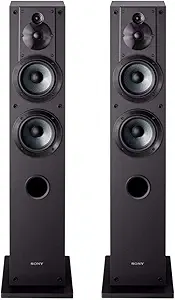
Sony vs Harman Kardon: Overview & Brand Philosophy
When navigating the modern loudspeaker landscape, few names carry the historical weight and technical pedigree of Sony and Harman Kardon. Sony, a titan of Japanese consumer electronics, has spent decades driving mainstream audio innovation. From the genesis of portable audio to pioneering high-resolution digital processing, Sony approaches the speaker market with an emphasis on versatility, durability, and proprietary technology. Whether engineering festival-grade party speakers or rugged, dust-proof Bluetooth portables, Sony balances mass-market consumer appeal with advanced DSP (Digital Signal Processing) to deliver energetic, bass-forward, and feature-rich acoustic experiences.
Conversely, Harman Kardon—a pillar of the American high-fidelity movement and a crown jewel of the Samsung-owned Harman International portfolio—operates under a fundamentally different design philosophy. Harman Kardon focuses heavily on acoustic purity, refined industrial design, and seamless home integration. Rather than chasing the rugged, outdoor adventure demographic, the brand frequently treats its speakers as architectural art pieces. By leveraging decades of psychoacoustic research from the legendary Harman research facilities, Harman Kardon aims to deliver an uncolored, balanced, and expansive soundstage that honors the artist's original recording without unnecessary acoustic exaggeration.
Ultimately, this matchup represents a fascinating philosophical divergence in the speaker category: Sony champions cutting-edge functional utility, portability, and visceral sound profiling, while Harman Kardon prioritizes sculptural elegance, home luxury, and audiophile-leaning acoustic balance.
Key Differences & Technological Comparison
The technical divergence between Sony and Harman Kardon is evident across several critical engineering parameters, ranging from acoustic architecture and driver deployment to digital processing and connectivity ecosystems.
Acoustic Tuning and Sound Signature: Sony speakers are renowned for their signature low-end punch, often reinforced by dedicated tuning modes like "MEGA BASS" or the modern "ULT Power Sound" engine. Sony utilizes proprietary non-circular driver diaphragms (X-Balanced Speaker Units) that maximize cone area within compact enclosures, reducing distortion while increasing sound pressure levels. Harman Kardon adopts a more traditional, high-fidelity acoustic topology. Utilizing downward-firing subwoofers paired with ring arrays of mid-to-high frequency transducers (as seen in the iconic SoundSticks and Aura Studio series), Harman Kardon produces a pristine 360-degree soundfield characterized by transparent highs, natural mids, and smooth, tight, non-boomy bass response.
Industrial Design and Build Quality: Sony designs its hardware primarily for the real world. Many of their portable speakers feature IP67 or IP66 ratings, rendering them waterproof, dustproof, rustproof, and shock-resistant. The materials used consist of dense, impact-absorbing silicones, durable plastics, and ruggedized woven fabrics. Harman Kardon, by contrast, focuses on bespoke interior integration. Using smoked acrylic domes, premium acoustic fabrics, and brushed aluminum accents, their hardware is designed to serve as a centerpiece in a modern living space. However, this aesthetic focus means most Harman Kardon units have little to no ingress protection (IP ratings) and are vulnerable to drops and scratches.
Connectivity and Codec Support: Sony consistently outperforms the competition in wireless bandwidth thanks to its proprietary LDAC codec, which enables high-resolution audio streaming over Bluetooth at up to 990 kbps (nearly triple the data rate of standard SBC). Sony also excels in mobile app integration, offering granular EQ customization, multipoint switching, and massive multi-speaker chaining via "Party Connect." Harman Kardon takes a more minimalist, plug-and-play approach. While select home models feature Apple AirPlay, Chromecast built-in, and Wi-Fi streaming, their standard Bluetooth line often sticks to standard SBC and AAC codecs, frequently lacking companion app support or deep EQ adjustment tools.
Pros & Cons Comparison
Sony Speakers
- Pros:
- Exceptional physical durability with class-leading IP67 water, dust, and shock resistance.
- Proprietary LDAC codec delivers true high-resolution wireless streaming capability.
- Class-leading battery life across portable lines, often exceeding 24 to 30 hours.
- Feature-rich companion application (Sony Music Center) with extensive parametric EQ options.
- Energetic, bass-forward sound signature that excels in outdoor environments.
- Cons:
- Default sound signatures can sometimes sound muddy or overly warm in the midrange.
- Utilitarian, ruggedized designs lack the high-end luxury appeal suited for formal decor.
Harman Kardon Speakers
- Pros:
- Striking, museum-tier industrial design that elevates room aesthetics.
- Refined, neutral sound tuning based on extensive psychoacoustic research.
- Exceptional 360-degree omnidirectional sound projection on Aura and Onyx series.
- Superior mid-range and vocal clarity with sparkling, detailed high frequencies.
- Seamless integration into desktop and home entertainment setups.
- Cons:
- Minimal or nonexistent water/dust resistance on the vast majority of consumer models.
- Subpar battery performance on portable models (often limited to 5-8 hours).
- Lack of companion app support and detailed onboard EQ customization.
Performance, Durability & Value Analysis
In terms of longevity and operational durability, Sony presents an unmatched proposition for users demanding hardware resilience. A Sony portable speaker can withstand pool submersions, beach sand, and accidental drops without compromising internal acoustic seal integrity. Furthermore, Sony’s lithium-ion power cells are backed by aggressive battery-care algorithms that prevent overcharging, ensuring long-term shelf-life retention even after hundreds of charge cycles. From a cost-per-feature standpoint, Sony provides exceptional value, packaging high-tier codecs, party lighting, power bank capabilities, and rugged materials into competitively priced hardware across every price bracket.
Harman Kardon approaches value through the lens of aesthetic longevity and acoustic fidelity. While their speakers are fragile relative to Sony's—making them poorly suited for outdoor excursions—their internal bi-amplified architecture, premium voice coils, and bespoke crossovers provide an acoustic sophistication rarely matched at their price point. However, Harman Kardon's reliance on integrated power supplies for desktop systems, coupled with mediocre battery capacities in their "portable" Onyx Studio line, limits their utility as all-in-one everyday devices. They represent a high-value investment for stationary indoor listeners seeking near-audiophile clarity without the complex footprint of traditional component hi-fi setups.
Final Verdict: Which Brand Should You Choose?
The decision between Sony and Harman Kardon ultimately hinges on your lifestyle, physical environment, and acoustic preferences:
Choose Sony if: You lead an active lifestyle and need an all-weather speaker that transitions seamlessly from the living room to the backyard, pool, or campsite. Sony is the definitive winner for buyers who demand military-grade durability, days of battery life, deep and resonant bass profiles, and advanced customization features through high-bandwidth streaming codecs and mobile companion apps.
Choose Harman Kardon if: Your speaker is intended primarily to stay indoors as a stationary luxury showpiece. If your audio preferences favor jazz, classical, acoustic, or vocal-heavy genres where spatial imaging, midrange transparency, and accurate instrument separation take precedence over raw bass output, Harman Kardon will deliver a superior, more refined listening experience that doubles as an architectural statement.
Product Selection
When evaluating product selection, Sony adopts an expansive, multi-tiered catalog strategy designed to capture nearly every conceivable audio use case and budget bracket. From the ultra-portable, clip-on SRS-XB100 to the massive, festival-ready SRS-XV900 party tower, Sony’s lineup is meticulously segmented to satisfy casual listeners, outdoor enthusiasts, and home entertainers alike. Engineering-wise, this extensive breadth is powered by Sony’s proprietary acoustic technologies, including X-Balanced Speaker Units that maximize diaphragm area for reduced distortion, LDAC codec support for high-resolution wireless streaming, and IP67-rated ruggedized chassis featuring shockproof and saltwater-resistant builds. Furthermore, Sony seamlessly bridges the gap between personal audio and home theater with modular soundbar ecosystems (such as the HT-A series) and specialized niche products like neckband speakers, offering consumers an unmatched variety of form factors unified by robust software customization through the Sony Music Center app.
In stark contrast, Harman Kardon maintains a curated, design-centric portfolio that prioritizes high-end home aesthetics and interior acoustic integration over mass-market volume and outdoor utility. Harman Kardon’s catalog is dominated by sculptural statement pieces—most notably the transparent, dome-shaped SoundSticks and Aura Studio series—alongside sophisticated tabletop systems like the Onyx Studio and Citation lines. Rather than engineering for environmental durability or extreme portability, Harman Kardon channels its technical expertise into omnidirectional acoustic architectures, utilizing multi-transducer arrays, sealed acoustic chambers, and built-in subwoofers engineered for wide dispersion and audiophile-grade tonal balance. While the Citation family introduces modern networked audio capabilities such as Google Assistant, Apple AirPlay, and multi-room Wi-Fi streaming, the brand deliberately avoids ultra-rugged, dustproof, or specialized active-lifestyle form factors, resulting in a significantly narrower, albeit highly polished, selection.
The practical trade-offs between the two brands ultimately center on lifestyle adaptability versus sculptural, acoustically dedicated indoor listening. Consumers prioritizing versatility will find Sony’s selection vastly superior; whether an end-user requires an ultra-durable speaker to survive beach conditions, a dynamic lighting setup for outdoor gatherings, or a system with ultra-low-latency Bluetooth connectivity, Sony offers a tailored engineering solution. Conversely, Harman Kardon’s constrained catalog appeals directly to consumers seeking refined domestic audio where visual elegance is as vital as sonic performance. While Harman Kardon sacrifices the rugged outdoors and entry-level accessibility that define a large portion of Sony’s market share, it provides a distinctive, premium alternative for users seeking cohesive home decor integration, making Sony the undisputed winner in sheer breadth and utility, while Harman Kardon commands the niche of upscale, contemporary home audio.
Affordability
When evaluating affordability in the speaker category, Sony adopts a tiered, democratized approach designed to capture consumers across virtually every price bracket, whereas Harman Kardon positions itself strictly within the upper-midrange to premium spectrum. Sony’s engineering philosophy leverages massive economies of scale, allowing them to deliver entry-level Bluetooth models (such as the SRS-XB series) under $60, alongside feature-dense mid-tier and ultra-premium party towers. Sony delivers exceptional value-per-dollar by prioritizing versatility; budget and midrange models routinely pack high-durability features including IP67 dust/waterproofing, multi-speaker Daisy-Chaining (Party Connect), extensive battery endurance, and native support for proprietary, high-bitrate codecs like LDAC. Consumers investing in Sony get access to class-leading digital signal processing (DSP) and companion app equalizers even at modest price points, maximizing the functional return on their investment.
Conversely, Harman Kardon bypasses the entry-level budget market entirely, focusing on industrial design, luxury materials, and refined acoustic architecture that carry a steeper initial cost of entry. Products like the Aura Studio and Onyx Studio lines command premium price tags, generally starting north of $150 to $200 and extending well beyond. While Harman Kardon’s engineering prioritizes high-fidelity bi-amplified drivers, passive radiators, and sculptured, living-room-ready aesthetics, the brand frequently trades off utilitarian features for sonic elegance. Most of their offerings lack rugged IP-rated weatherproofing, ultra-long battery life, or advanced codec flexibility found on comparably priced or cheaper Sony models. Consequently, Harman Kardon’s affordability equation is not driven by accessible price tags, but rather by long-term prestige and specialized acoustic performance that appeals to stationary, design-conscious audiophiles rather than pragmatic, on-the-go consumers.
Ultimately, the practical trade-off hinges on whether a buyer measures affordability through a low barrier to entry and rugged feature saturation or through high-end home-audio aesthetics. Sony is the definitive winner for absolute affordability and functional utility, engineering rugged, feature-packed speakers that cater to strict budgets without severely compromising on bass response or DSP quality. Harman Kardon offers poorer value on a purely technical feature-per-dollar basis, requiring buyers to pay a luxury tax for minimalist visual appeal and warmer, uncolored acoustics. For the vast majority of consumers seeking the highest performance and durability per dollar spent, Sony provides a far more economical and versatile ecosystem.
Quality/Durability
When assessing engineering quality and durability in the speaker category, Sony adopts an utilitarian, abuse-ready design philosophy, whereas Harman Kardon focuses on interior, luxury-grade structural execution. Sony’s portable lineup—spanning the popular SRS-XB and ULT Field series—is famously over-engineered to withstand hostile environments. Employing impact-absorbing silicone rubbers, dense polycarbonate skeletons, and anti-abrasion woven textiles, Sony models frequently carry IP67 or even IP68 ratings. This level of ingress protection guarantees complete dust impermeability and immersion resistance, while select models like the ULT Field 7 boast saltwater resistance and rustproofing. Internally, Sony’s transducers leverage mica-reinforced cellular (MRC) and foamed mica diaphragms, which resist deformation under extreme humidity, thermal fluctuations, and intense acoustic excursion. By contrast, Harman Kardon speakers, such as the Onyx Studio and Aura Studio series, utilize premium brushed aluminum, smoked acrylic domes, and tailored acoustic fabrics. While Harman Kardon’s industrial finishes offer exceptional bench rigidity and internal acoustic isolation, they are decidedly vulnerable to surface abrasions, UV bleaching, and impact cracking.
The technical trade-offs between the two brands directly reflect these structural architectures. Harman Kardon’s hardware choices are tailored for desktop and home environments where acoustic volume and visual elegance eclipse physical resilience. Most Harman Kardon units feature no ingress protection whatsoever, with only select models like the Go + Play 3 or Luna offering basic splash resistance (IPX4 to IP68 in very specific, travel-oriented SKUs). The delicate plexiglass domes of the Aura and SoundSticks lines, while acoustically inert and visually iconic, attract micro-scratches and are structurally prone to fracturing if dropped. Conversely, Sony’s trade-off manifests in cosmetic longevity rather than mechanical failure; the matte, soft-touch silicone coatings and woven speaker grilles can stain, harbor fine dust, or wear down over years of exposure to grease, sunscreen, and outdoor grime. However, Sony’s active port sealing, shock-mounted circuit boards, and chemically treated passive radiators ensure that internal electrical components and voice coils survive aggressive real-world use and environmental degradation far longer than the lifestyle-oriented architecture of Harman Kardon.
In terms of component-level longevity and lifecycle durability, both brands deliver robust audio electronics, but Sony exhibits a distinct edge in firmware maintenance and battery management. Sony’s mobile companion apps (Sony Music Center) consistently integrate programmable battery-care features, such as capping maximum charge states at 80% or 90% to forestall lithium-ion degradation—a critical longevity metric for portable units. Harman Kardon often treats their speakers as plug-and-play minimalist appliances, which often results in poorer app support, limited battery longevity management, and more aggressive wear on internally sealed battery cells when left continuously on mains power. Ultimately, consumer priority dictates the winner: Harman Kardon provides superior acoustic furniture with flawless stationary build quality designed to endure undisturbed for a decade in a climate-controlled room, while Sony supplies unmatched all-terrain survivability, superior ingress protection, and rugged mechanical engineering built to endure the rigors of heavy daily transport.
Sound Quality
When evaluating sound quality, Sony and Harman Kardon represent two distinctly different acoustic philosophies, rooted in their engineering heritage. Sony designs its speakers—particularly the SRS and ULT lineups—with modern, bass-forward, and energetic sound profiles. Utilizing proprietary hardware like dual passive radiators and custom non-circular "X-Balanced" speaker units, Sony maximizes diaphragm area to produce deep, punchy low-end without introducing severe chassis distortion. Supported by advanced digital signal processing (DSP) like DSEE (Digital Sound Enhancement Engine) and LDAC codec integration, Sony speakers excel at reproducing compressed streaming tracks with added warmth, crisp highs, and high-bitrate clarity. However, this consumer-centric tuning can sometimes result in a slightly congested midrange where vocals and acoustic instruments take a backseat to the aggressive lower frequencies, unless extensively adjusted via the companion app's equalizer.
Conversely, Harman Kardon adheres closely to the scientifically backed "Harman Curve," prioritizing acoustic transparency, balanced frequency response, and refined spatial imaging. Found in iconic designs like the SoundSticks, Aura Studio, and Onyx Studio series, Harman Kardon utilizes multi-driver arrays—combining dedicated dome tweeters with robust downward-firing subwoofers—to create a wide, immersive soundstage with distinct stereo separation. The technical strength of Harman Kardon lies in its pristine midrange accuracy and articulate, non-fatiguing treble, rendering jazz, classical, and vocal-heavy genres with exceptional fidelity and realism. While their bass output is remarkably deep and tightly controlled, it generally lacks the visceral, chest-thumping slam that casual listeners and party-goers often prefer from Sony's high-excursion radiators.
The practical trade-off between the two brands ultimately hinges on listening environments and musical preferences. Sony’s sound engineering is built for versatility, outdoors, and dynamic volume scaling, ensuring audio maintains its impact and dynamic punch even at high volumes in open spaces. Harman Kardon trades outdoor ruggedness and intense low-end coloration for indoor audiophile sensibility, delivering superior linearity, harmonic purity, and detail retrieval at moderate listening levels. Consumers seeking an energetic, customizable soundstage tailored for modern pop, hip-hop, and dynamic outdoor playback will gravitate toward Sony, whereas listeners demanding articulate instrument separation, rich vocal clarity, and hi-fi balance inside the home will find Harman Kardon to be the acoustically superior choice.