Sonos vs Elac: Overview
Comparing Sonos and Elac helps you determine which brand is best suited for your needs in Speakers. Both brands offer strong choices depending on your budget and key feature requirements.
Key Features & Comparison
Evaluate factors such as build quality, warranty, customer satisfaction, and total value before making your final purchase choice between Sonos and Elac.
Product Selection
When examining product selection, Sonos and Elac approach the audio market from fundamentally different design philosophies. Sonos concentrates almost entirely on modern, networked digital ecosystems. Their catalog spans compact wireless smart speakers like the Era 100, spatial audio units like the Era 300, and integrated home theater components such as the Arc and Sub, alongside portable Bluetooth/Wi-Fi hybrids like the Move 2 and Roam. Sonos excels at plug-and-play multi-room convergence, offering users an end-to-end proprietary streaming framework that requires no external amplification or outboard DACs to function, making it ideal for streamlined contemporary living spaces.
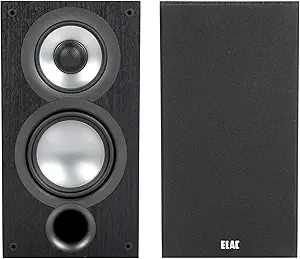
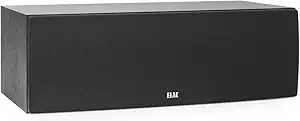
In contrast, Elac caters primarily to the traditional high-fidelity audio spectrum, offering a vastly deeper range of passive loudspeaker topologies across various budget tiers. From their universally acclaimed, Andrew Jones-designed Debut 2.0 and Debut Reference series to the artisanal, high-end Uni-Fi and Vela collections, Elac provides dedicated floorstanding towers, bookshelf monitors, center-channel speakers, and active subwoofers. While Elac does offer active wireless platforms and integrated streaming amplifiers via their Connex and Alchemy lines, their primary catalog caters to audiophiles and custom home theater builders looking to tailor component-based systems featuring external AV receivers, stereo amplifiers, and analog sources.
Affordability
Affordability between these two brands must be contextualized by total system deployment costs rather than just the initial price tag. Sonos maintains a premium, relatively inflexible price floor; their entry-level standalone speakers command an enthusiast price point, and fully outfitting a 5.1-channel wireless surround system with an Arc, Sub, and Era rears represents a significant upfront capital investment. However, because Sonos units integrate the digital streamer, digital signal processing (DSP), and active multi-channel amplification directly into each chassis, buyers are spared the hidden costs of purchasing outboard DACs, preamps, high-current power amplifiers, or specialized speaker cabling.
Elac presents a far more accessible initial barrier to entry, particularly within their budget-friendly Debut and Debut Reference series, which deliver benchmark acoustic performance at aggressive price-to-performance metrics. An aspiring listener can acquire a pair of high-performing passive bookshelf speakers for a fraction of the cost of a flagship smart speaker. The practical trade-off, however, is that passive Elac designs require external amplification and source hardware to operate. Once a buyer factors in the cost of a quality stereo amplifier or multi-channel AV receiver, total expenditure quickly scales to match or exceed a comparable Sonos ecosystem, though it provides superior long-term upgrade modularity.
Quality/Durability
The engineering quality and operational lifespan of Sonos and Elac highlight the divergence between software-defined consumer electronics and mechanical acoustic engineering. Sonos builds exceptionally robust hardware characterized by seamless injection-molded plastics, micro-drilled acoustic grilles, and hermetically sealed internal electronics designed to resist moisture and dust. However, Sonos products are inherently dependent on continuous firmware updates, cloud server handshakes, and proprietary app stability. Consequently, the functional longevity of a Sonos speaker is tied directly to the brand’s software lifecycle management, meaning hardware obsolescence can eventually occur via discontinued digital support rather than physical driver failure.
Elac, conversely, leverages traditional electroacoustic durability centered on robust mechanical construction. Their passive speaker cabinets utilize rigid, braced MDF, real wood veneers or satin lacquers, and hard-wearing driver components such as woven aramid-fiber cones, cast aluminum baskets, and custom crossover networks. Because passive speakers contain no integrated circuit boards, Wi-Fi radios, or software layers, they are virtually immune to technological obsolescence. An Elac passive speaker can effortlessly deliver decades of reliable service, requiring only basic mechanical care, with the added benefit of user-serviceable crossover capacitors or driver replacements if accidental physical damage occurs.
Sound Quality
In terms of acoustic performance, Sonos relies on cutting-edge Digital Signal Processing (DSP) and computational acoustics to maximize output from compact enclosures. Using custom-tuned Class-D amplifiers paired with proprietary Trueplay room calibration, Sonos speakers dynamically adapt their frequency response to the acoustic boundaries of a given space. The resulting sound signature is modern, clean, and punchy, emphasizing clear vocal intelligibility, extended low-end presence, and wide dispersion through engineered wave guides. While spatial audio processing on models like the Era 300 creates an impressively immersive soundfield, purists may find the high-frequency dynamics slightly compressed and the acoustic imaging less organic due to aggressive DSP limiters.
Elac focuses on analog acoustic purity, low harmonic distortion, and precise phase coherence. Renowned for their JET folded-ribbon tweeters on higher-tier models and concentric midrange/tweeter drivers on the Uni-Fi series, Elac speakers offer exceptional stereo imaging, wide dynamic headroom, and micro-detail retrieval that surpasses Sonos. Their neutral voicing faithfully reproduces natural instrument timbre, making them far superior for critical two-channel listening. However, achieving optimal sound quality from an Elac system demands deliberate user involvement, including careful room placement away from rear walls, toe-in experimentation, and pairing with an amplifier capable of delivering stable current into complex nominal impedance loads.