Klipsch vs Sonos: Overview
Comparing Klipsch and Sonos helps you determine which brand is best suited for your needs in Speakers. Both brands offer strong choices depending on your budget and key feature requirements.
Key Features & Comparison
Evaluate factors such as build quality, warranty, customer satisfaction, and total value before making your final purchase choice between Klipsch and Sonos.
Product Selection
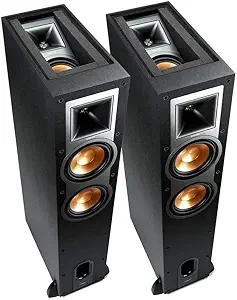
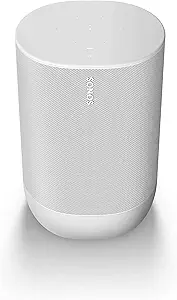
Klipsch and Sonos approach product selection from fundamentally divergent engineering philosophies, resulting in catalogs tailored to vastly different listener topologies. Klipsch boasts an expansive, traditional catalog rooted in component-driven high fidelity, spanning passive floorstanding towers, bookshelf monitors, architectural in-wall and in-ceiling drivers, dedicated center channels, high-excursion subwoofers, outdoor arrays, and active tabletop systems like their Heritage Wireless line. Characterized by their proprietary Tractrix horn-loaded tweeters and spun-copper Cerametallic woofers, Klipsch’s portfolio offers immense granular choice for consumers building discrete, multi-channel Dolby Atmos theater rigs or dedicated two-channel analog listening stations. Conversely, Sonos offers a tightly curated, highly standardized portfolio centered exclusively on network-integrated, wireless multi-room audio. Rather than offering dozens of driver and cabinet variations across multiple tier lines (such as Klipsch's Reference, Reference Premiere, and Heritage lines), Sonos focuses on a lean suite of all-in-one wireless speakers (Era 100, Era 300, Five), home theater soundbars (Ray, Beam, Arc), subwoofers (Sub Mini, Sub), and hybrid portables (Roam, Move), engineered to interoperate through an unbroken software layer.
The technical trade-offs inherent in these selection strategies reflect the divide between acoustic customization and unified digital convenience. Klipsch provides audiophiles and custom installers with high system-building flexibility, offering products ranging from low-impedance passive designs requiring external AVRs and discrete amplification to powered monitors featuring integrated phono preamps, optical inputs, and HDMI-ARC. This breadth allows listeners to fine-tune sensitivity, crossover points, and cabinet volumes to specific room acoustics, though it demands significant technical literacy regarding power ratings, cabling, and placement. Sonos, by contrast, restricts selection to self-powered, active architectures equipped with custom DSP, automated Trueplay room tuning, and seamless Wi-Fi mesh networking. While Sonos lacks the variety of floorstanding enclosures or passive components favored by purists—relying instead on its Amp to bridge third-party hardware—its tightly controlled hardware variance ensures flawless digital synchronization, uniform acoustic voicing, and guaranteed protocol support (AirPlay 2, Spotify Connect, and platform-agnostic voice assistants) across every SKU.
Ultimately, Klipsch wins on catalog breadth, dynamic acoustic ceiling, and application versatility, catering to users who demand distinct form factors, massive physical driver surface area, and analog component integration. However, this vast catalog introduces complexity, product overlap, and choice paralysis, especially between entry-level Reference and mid-tier Reference Premiere series. Sonos prioritizes clarity and interoperability; while it sacrifices niche form factors, high-SPL floorstanders, and analog flexibility, its disciplined product selection guarantees plug-and-play simplicity, modular scalability, and unmatched multi-room lifecycle support. Choosing between them comes down to whether a consumer requires deep hardware customization and traditional acoustic dynamics (Klipsch) or a streamlined, ecosystem-driven audio infrastructure with zero deployment friction (Sonos).
Affordability
When assessing affordability between Klipsch and Sonos, the evaluation extends beyond initial sticker prices into the architectural philosophies that define their product ecosystems. Klipsch operates predominantly in the traditional Hi-Fi sphere, offering high-efficiency horn-loaded drivers (such as their proprietary Tractrix horn geometry) across a sprawling spectrum of price tiers. From aggressively discounted entry-level Reference series passive monitors to mid-tier active powered speakers and heirloom-grade Heritage cabinets, Klipsch delivers exceptional acoustic performance per dollar. Because Klipsch speakers boast high sensitivity ratings—often exceeding 93–96 dB @ 2.83V/1m—they require significantly less amplification power to achieve high dynamic output, allowing budget-conscious consumers to pair them with modest, inexpensive AV receivers or integrated amplifiers without sacrificing headroom or clarity.
Conversely, Sonos positions itself within a closed, active multi-room ecosystem where the initial barrier to entry is higher, but the total cost of ownership is centralized. A Sonos speaker inherently bundles class-D digital amplification, custom-tuned digital signal processors (DSP), network streaming modules, and Trueplay acoustic tuning into a single chassis. While this eliminates the need to budget for outboard DACs, preamps, and speaker wire, the practical trade-off is a distinct lack of modular flexibility. Expanding a Sonos setup—such as adding a Sonos Sub to an Arc soundbar—incurs steep proprietary costs that far outstrip the cost of adding a generic powered subwoofer to a Klipsch setup. Klipsch provides far greater price elasticity, allowing users to cross-shop components across brands, hunt for standard audio sales, or incrementally upgrade components over time.
From a lifecycle and depreciation perspective, Klipsch generally secures a superior long-term affordability profile. Passive loudspeakers carry virtually zero risk of digital obsolescence; a well-engineered Klipsch passive crossover and titanium tweeter assembly can easily function for decades with minimal maintenance. Sonos products, despite their build quality and software polish, are fundamentally consumer electronics tethered to proprietary wireless protocols, cloud backends, and ongoing mobile app operating system support. For consumers prioritizing maximum acoustic output, long-term operational longevity, and modular budgeting, Klipsch represents the more financially advantageous investment, whereas Sonos represents a calculated convenience premium where initial costs are front-loaded into streamlined, wire-free convenience.
Quality/Durability
When assessing structural engineering and manufacturing quality, Klipsch and Sonos represent two fundamentally distinct design philosophies: traditional analog acoustic permanence versus precision-engineered smart technology. Klipsch anchors its reputation in heavy-duty enclosure construction, utilizing high-density fiberboard (MDF), furniture-grade wood veneers on premium lines, and acoustically inert internal bracing. Their proprietary Tractrix horn assemblies and signature spun-copper Cerametallic woofers are built to withstand immense physical excursions and high thermal loads over decades of high-output listening. In contrast, Sonos focuses on modern industrial design, utilizing seamless, injection-molded polycarbonates, precision micro-perforated acoustic metal grilles, and rigorous internal component packaging. While Sonos products feel dense, premium, and refined with tight manufacturing tolerances, Klipsch emphasizes mass, component separation, and mechanical isolation designed to endure mechanical stresses and minimize cabinet resonance indefinitely.
The starkest contrast between the two brands emerges in their functional longevity and resistance to obsolescence. The vast majority of Klipsch’s portfolio consists of passive loudspeakers; devoid of microprocessors, network cards, or internal amplifiers, these units are nearly immune to technological aging and can effortlessly function for thirty to forty years with basic care. Even Klipsch’s powered models retain standard analog and digital inputs (RCA, optical, HDMI-ARC) that ensure long-term utility regardless of streaming platform shifts. Conversely, Sonos products are integrated computing devices where acoustic hardware is tethered to internal digital signal processors (DSPs), Wi-Fi modules, and proprietary operating systems. Although Sonos boasts an industry-leading software lifecycle—frequently updating hardware for a decade or more—durability is fundamentally capped by firmware support, cloud infrastructure, and network compatibility, meaning a perfectly functioning speaker can eventually be functionally degraded by digital obsolescence.
From an environmental and practical durability standpoint, each brand delivers specific operational trade-offs depending on deployment. Sonos holds an advantage in everyday environmental versatility; portable and lifestyle units like the Move and Roam feature certified IP ratings (ranging from IP56 to IP67) that confer substantial protection against dust, drops, and moisture, making them far better suited for humid bathrooms, kitchens, and outdoor patios. Klipsch cabinets, conversely, are vulnerable to ambient moisture and temperature fluctuations, making them distinctly indoor fixtures unless explicitly designated as part of their all-weather architectural lines. Ultimately, for audiophiles prioritizing generational build quality, repairability, and uncompromised physical durability, Klipsch is the superior investment; for consumers demanding durable, ruggedized lifestyle integration with modern industrial finishes, Sonos provides exceptional build standards within the constraints of active smart electronics.
Sound Quality
Klipsch and Sonos represent two fundamentally distinct engineering philosophies when approaching sound quality: traditional acoustic efficiency versus modern computational audio. Klipsch builds its acoustic signature around proprietary hardware engineering, most notably its legendary Tractrix horn-loaded tweeters paired with rigid, spun-copper Cerametallic or thermoformed crystalline polymer (TCP) woofers. This mechanical design grants Klipsch speakers exceptional sensitivity, pinpoint directional control, and wide dynamic range with remarkably low distortion even at high volumes. The resulting sound profile is forward, lively, and articulate, delivering crisp, sparkling highs and punchy, tactile midrange transients that reproduce the immediacy of a live performance or cinema track. Sonos, conversely, leverages closed-loop digital architecture, combining custom multi-driver arrays, dedicated Class-D amplification per driver, and advanced Digital Signal Processing (DSP). Sonos sound is tuned for universal balance, warmth, and fatigue-free listening, prioritizing a smooth midrange and tight, controlled bass over raw, aggressive volume.
The practical trade-offs between the two become apparent when evaluating room interaction and frequency reproduction. Klipsch excels in micro-detail retrieval and dynamic headroom, making it a masterclass for uncompressed audio, orchestral crescendos, and high-impact home theater soundscapes. However, its bright, highly revealing top-end can occasionally border on harsh or fatiguing, particularly in rooms with reflective, hard surfaces or when paired with lower-bitrate compressed streaming tracks. Sonos mitigates room-acoustic challenges through its proprietary Trueplay tuning software, which measures acoustic reflections using a mobile device microphone to digitally correct standing waves and frequency dips. This processing yields a wide, highly dispersed soundstage with consistently clean bass, though the aggressive digital limiting used at peak volumes can compress dynamic peaks and slightly veil the finest acoustic textures compared to Klipsch's unhindered physical output.
Ultimately, the superior sound quality depends on the listener’s acoustic environment and sonic preferences. Klipsch is the definitive choice for critical listeners, audiophiles, and home theater enthusiasts who crave visceral impact, razor-sharp high-frequency precision, and true-to-source dynamic range. Sonos, on the other hand, triumphs in consumer-friendly sonic cohesion, utilizing intelligent DSP to guarantee a lush, well-rounded, and acoustically optimized sound profile that performs reliably in virtually any living space without the need for manual acoustic treatment.
Compare current retail pricing, active promotions, and verified stock availability directly from authorized stores: