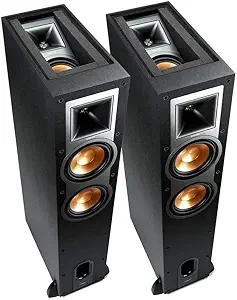
Klipsch vs Polk: Overview & Brand Philosophy
In the realm of home audio, few rivalries are as storied or distinct as Klipsch versus Polk Audio. Founded in 1946 by audio pioneer Paul W. Klipsch in Hope, Arkansas, Klipsch was built on a foundational philosophy: creating high-efficiency, low-distortion loudspeakers that replicate the dynamic power and emotional intensity of a live concert. Klipsch is virtually synonymous with horn-loaded drivers and bold, industrial aesthetics. The brand targets listeners who crave visceral impact, crisp transient attacks, and an uncompromising soundstage that brings movies and high-energy music to life with thrilling presence.
Polk Audio emerged decades later in 1972, founded by Matthew Polk, George Klopfer, and Sandy Gross in Baltimore, Maryland. Polk’s guiding principle was starkly different: delivering authentic, audiophile-grade sound at prices accessible to everyday consumers. Rather than pursuing maximum acoustic output and hyper-dynamic edge, Polk focuses on neutral, linear frequency response, wide dispersion, and fatigue-free listening. Known for their understated, contemporary designs, Polk speakers are engineered to integrate seamlessly into diverse living spaces, appealing to home theater enthusiasts and music lovers who prioritize warm, balanced, and immersive soundscapes over raw acoustic velocity.
Today, both brands command massive influence in consumer hi-fi and home theater ecosystems, yet they serve fundamentally different sonic palates. Choosing between Klipsch and Polk is rarely a matter of objective superiority; rather, it is a choice between two distinct engineering paradigms: Klipsch’s high-efficiency, front-row dynamic presentation versus Polk’s warm, balanced, and expansive musicality.
Key Differences & Technological Comparison
The engineering differentiation between Klipsch and Polk begins at the transducer level. Klipsch is defined by its proprietary Tractrix® Horn technology mated to Linear Travel Suspension (LTS) aluminum or titanium tweeters. By coupling the high-frequency driver to a 90x90 silicone composite hybrid horn, Klipsch drastically increases acoustic efficiency while tightly controlling dispersion. This design ensures that sound waves are beamed directly into the listening area rather than bouncing off walls and ceilings. In the midrange and bass registers, Klipsch deploys its signature spun-copper Cerametallic™ or TCP (Thermoformed Crystalline Polymer) woofers, which boast exceptional stiffness-to-mass ratios for fast, articulate transient response.
Conversely, Polk Audio relies on direct-radiating soft-dome configurations and sophisticated acoustic modeling. Polk’s high-end lines feature the Pinnacle Ring Radiator tweeter, engineered with a finely tuned waveguide to dramatically broaden the high-frequency sweet spot while eliminating unwanted resonances. Midrange and low frequencies are managed by Polk’s Turbine Cone™ or Dynamic Balance® drivers, which utilize proprietary foam-core composites and geometric damping to neutralize cone breakup modes. Instead of high directional control, Polk engineers for wide, uniform dispersion, ensuring that off-axis listeners experience the same balanced tonality as someone seated in the central sweet spot.
Low-frequency engineering also reveals stark design contrasts. Klipsch generally employs rear-firing Tractrix-profile ports to minimize air turbulence (chuffing) and maximize bass speed, though this necessitates careful placement away from rear boundaries. Polk addresses low-end reproduction using its patented Power Port® technology—a specialized cone diffuser situated at the port mouth that smoothly transitions airflow to eliminate turbulence and boundary-loading artifacts, allowing Polk speakers to be positioned closer to walls without introducing muddy, boomy bass.
Crucially, electrical sensitivity sets these brands apart. Klipsch speakers are famous for class-leading sensitivity ratings, frequently exceeding 95 dB to 98 dB @ 2.83V/1m. Consequently, they can reach deafening, low-distortion volumes powered by modest, entry-level AV receivers. Polk speakers typically measure between 86 dB and 89 dB sensitivity, requiring significantly more amplifier current and headroom to achieve comparable sound pressure levels.
Pros & Cons Comparison
Klipsch
- Pros:
- Extremely high sensitivity allows maximum output with minimal amplifier power.
- Incredible dynamic range, micro-detail retrieval, and dialogue intelligibility.
- Controlled directivity minimizes room acoustic interference.
- Distinctive, premium visual identity with spun-copper drivers and robust cabinetry.
- Cons:
- Bright, highly revealing top end can cause ear fatigue over prolonged sessions for sensitive listeners.
- Horn directivity creates a narrower "sweet spot" compared to wide-dispersion alternatives.
- Can sound harsh or clinical when paired with poorly mastered audio or overly bright amplification.
Polk Audio
- Pros:
- Warm, smooth, and forgiving sound signature ideal for hours of fatigue-free listening.
- Broad dispersion characteristics create an expansive, room-filling soundstage.
- Patented Power Port design offers versatile room placement without boomy bass buildup.
- Exceptional balance and natural midrange tonality at highly competitive price points.
- Cons:
- Lower sensitivity demands more robust, high-current amplification to truly shine.
- Attenuated transient impact compared to Klipsch's horn-loaded drivers.
- Aesthetic designs are more utilitarian and conservative, lacking distinctive visual flair.
Performance, Durability & Value Analysis
From a longevity and build quality standpoint, both manufacturers boast robust engineering that ensures decades of reliable operation when used within rated specifications. Klipsch cabinets utilize heavily braced MDF with premium wood-grain vinyl or real wood veneers on their Reference Premiere and Heritage lines. Their drivers feature durable rubber surrounds that resist dry rot and environmental degradation. Polk matches this structural integrity, utilizing rigid Medite acoustic enclosures and internally braced matrix systems in series like the Reserve and Signature Elite to prevent internal standing waves. Both brands back their passive loudspeakers with generous 5-year warranties, reflecting deep confidence in voice coil resilience, crossover component tolerance, and driver longevity.
In terms of value-to-cost metrics, the brands diverge by tier. In the entry-level bracket (under $500/pair), Polk’s Monitor XT and T-Series offer smoother, more forgiving all-around musicality for budget buyers, whereas entry-level Klipsch Reference speakers can lean towards an aggressive, treble-forward sound that exposes budget amplification flaws. However, in the mid-to-upper tiers ($1,000–$2,500/pair), the Klipsch Reference Premiere line offers exceptional value by delivering near-commercial cinema dynamics that outperform almost everything in its class for dedicated home theater setups. Conversely, Polk’s Reserve series punches dramatically above its weight class for audiophile-grade stereo listening, utilizing the flagship driver components of their ultra-high-end Legend line at a fraction of the cost.
Final Verdict: Which Brand Should You Choose?
Choosing between Klipsch and Polk hinges directly on your primary content consumption, listening environment, and acoustic preferences.
Choose Klipsch if: Your primary objective is an exhilarating, visceral home theater experience, or you listen to dynamic genres like classic rock, modern metal, and electronic music. If you have an entry-level to mid-range AV receiver and want massive, cinematic output with pinpoint vocal clarity and razor-sharp transient snaps, Klipsch's horn-loaded architecture is practically unmatched at consumer price points.
Choose Polk Audio if: You prioritize acoustic balance, vocal naturalism, and warm musicality across a wide variety of genres including jazz, acoustic, classical, and indie. Polk is the superior choice for open-concept floor plans where listeners are scattered across the room, for listeners who are prone to treble fatigue during long movie marathons, and for audio enthusiasts who already possess or plan to purchase dedicated, high-current amplification.
Product Selection
When evaluating product selection, Klipsch and Polk take distinct strategic approaches, though both maintain expansive portfolios spanning entry-level desktop solutions to high-end architectural and floorstanding audio. Klipsch structures its catalog around its signature proprietary technology—the Tractrix horn loaded tweeter—creating a unified sonic profile across its various tiers. The brand divides its consumer loudspeaker selection cleanly into the accessible Reference series, the audiophile-grade Reference Premiere line, and the prestigious, hand-built Heritage and Heritage Special lines (featuring legendary models like the Klipschorn and Heresy). Beyond traditional passive stereo and home theater offerings, Klipsch boasts a particularly robust selection of horn-loaded subwoofers, active powered monitors featuring integrated phono preamps, and specialized outdoor rock and landscape speakers. This vertical depth ensures that whether an enthusiast is purchasing a budget-friendly bookshelf speaker or a ten-thousand-dollar heirloom system, the dynamic, highly efficient, live-sound engineering philosophy remains identical.
Polk Audio, on the other hand, approaches product selection with a wider, more consumer-accessible net, prioritizing versatility, room acoustics, and budget flexibility. Polk’s lineup ranges from the hyper-budget T-Series and intermediate Monitor XT lines to the mid-tier Signature Elite and flagship Legend series, which incorporates patented SDA (Stereo Dimensional Array) technology to completely eliminate interaural crosstalk. Where Polk distinctly outpaces Klipsch is in the breadth of its lifestyle audio and architectural integration options. Polk offers a denser catalog of shallow-depth on-wall speakers, ultra-compact surround systems, sub-compact soundbars (such as the MagniFi Mini series), and a vastly more varied assortment of in-ceiling and in-wall installation speakers engineered with rotating cam-lock systems. Polk's engineering focuses heavily on patented Power Port bass venting and Dynamic Balance drivers, offering solutions specifically tuned to minimize port turbulence in acoustically challenging, tighter living spaces where Klipsch’s larger, rear-ported horn cabinets might struggle.
The practical trade-off between the two brands centers on acoustic specialization versus lifestyle adaptability. Klipsch provides an exceptional selection for dedicated home theater builders, vinyl purists, and high-efficiency audio seekers who want massive dynamic range with low amplifier power requirements. However, Klipsch's selection can feel rigid; their polarizing aesthetic with spun-copper cones and larger cabinet footprints may not fit modern, minimalist decors. Conversely, Polk delivers a more utilitarian, problem-solving catalog that accommodates casual listeners, multi-room custom smart-home installations, and decor-conscious consumers without requiring massive floor real estate. While Polk lacks an ultra-luxury, legacy-tier equivalent to the Klipsch Heritage line, its granular step-up paths across entry and mid-fi price points make Polk the more accessible, comprehensive catalog for the general consumer, while Klipsch remains the definitive choice for dynamic, purpose-built theater and classic hi-fi configurations.
Affordability
When evaluating affordability, Klipsch and Polk approach the budget-to-performance ratio from fundamentally different engineering and market philosophies. Polk Audio is widely recognized as an entry-level champion, built on a foundation of accessible pricing without catastrophic compromises in acoustic fidelity. Through lines like the T-Series and the highly regarded Monitor XT lineup, Polk delivers full-range floorstanding and bookshelf speakers at price points that significantly undercut the broader Hi-Fi market. This affordability is achieved through practical engineering choices, such as utilizing lightweight engineered MDF enclosures and traditional soft-dome tweeters paired with bi-laminate composite woofers. These mass-market materials keep manufacturing overhead low while maintaining a forgiving, warm frequency response, allowing consumers to build multi-channel surround sound configurations or stereo setups on a modest budget.
Klipsch, by contrast, commands a higher initial financial commitment, but offsets this upfront cost through operational value driven by acoustic efficiency. Even in Klipsch's entry-level Reference series, prices typically trend higher than direct Polk equivalents. However, Klipsch builds on proprietary Tractrix horn-loaded technology and rigid spun-copper TCP (thermoformed crystalline polymer) woofers. Horn loading fundamentally increases the sensitivity rating of the speaker—often yielding 93 dB to 98 dB sensitivity compared to Polk's average of 86 dB to 90 dB. In practical terms, this engineering choice means a Klipsch speaker requires vastly less amplifier power to produce equivalent volume and dynamic headroom. Consequently, buyers can drive Klipsch systems using basic, low-wattage AV receivers without investing in costly high-current amplification, shifting the total cost of ownership equation back in Klipsch’s favor despite higher speaker list prices.
Ultimately, the trade-off in affordability rests on short-term hardware cost versus long-term modular value. Polk delivers the superior outright "cost-per-box" metric, making it the premier choice for budget-conscious home theater enthusiasts who need to stretch a finite dollar amount across a 5.1 or 7.1 setup. While Polk's entry-level build materials exhibit more acoustic resonance and plastic framing than high-end units, they provide unmatched accessible performance. Klipsch demands more capital out of the gate and offers fewer deep-discount entry models, but compensates with higher-grade components, robust resale value, and reduced secondary amplification costs. If rock-bottom entry pricing is the primary purchase driver, Polk easily secures the advantage; if calculated by long-term durability and acoustic output per watt, Klipsch presents a uniquely compelling, value-dense proposition.
Quality/Durability
When evaluating build quality and long-term durability, Klipsch and Polk approach loudspeaker engineering from distinctly different material philosophies, each reflecting their underlying acoustic designs. Klipsch is renowned for its rigid cabinet construction and proprietary driver materials, most notably the spun-copper thermoformed crystalline polymer (TCP) or Cerametallic woofers paired with titanium or aluminum LTS (Linear Travel Suspension) tweeters housed within molded Tractrix horns. This design limits cone breakup and mechanical distortion, translating to exceptional thermal power handling and long-term mechanical resilience. The cabinet work, particularly in the Reference Premiere and Heritage series, utilizes dense, internally braced MDF wrapped in heavy, scratch-resistant wood-grain vinyl or furniture-grade wood veneers. Conversely, Polk champions structural inertness through its Power Port bass venting systems and Dynamic Balance driver technology, which frequently utilizes mineral-filled polypropylene or aerated polypropylene cones with rubber surrounds. In higher-tier offerings like the Reserve and Legend series, Polk features high-end Pinnacle ring radiator tweeters and structurally superior CRC (Cross-Bracing Cabinet) designs that minimize cabinet resonance, rivaling or exceeding Klipsch’s rigidity in competitive price brackets.
In terms of practical longevity and wear-and-tear, both brands engineer products capable of lasting decades, but their structural execution yields clear real-world trade-offs. Klipsch speakers possess an inherent advantage in durability through electro-acoustic efficiency: because their horn-loaded tweeters require significantly less amplifier power to produce high sound pressure levels, internal voice coils and crossover networks suffer far less thermal stress over prolonged listening sessions, reducing the risk of component burnout. However, Klipsch's rigid metallic cones can be susceptible to permanent denting if subjected to physical impacts, and the sharp-edged Tractrix horns require careful handling during setup. Polk, by contrast, relies on more compliant, damped polymers for its drivers, making them less prone to accidental puncture or deformation, and their heavy-duty magnetic grilles and rounded cabinet edges often better withstand high-traffic domestic environments. Polk’s crossovers are meticulously engineered with high-grade mylar and film capacitors to preserve tonal neutrality over time, though entry-level Polk lines (such as the T-Series) cut corners with thinner cabinet walls and vinyl that is more vulnerable to edge-peeling compared to Klipsch's similarly priced offerings.
Ultimately, the choice regarding quality and durability rests on whether you prioritize thermal endurance and rigid structural engineering or impact resistance and resonance-dampened cabinet design. Klipsch delivers unmatched mechanical efficiency and premium exterior finishes that make their mid-to-high-tier speakers virtually impervious to age-related electrical fatigue. Polk counters with advanced, sonically inert composite materials and robust, impact-friendly driver designs that deliver exceptional longevity, particularly in their Reserve lines. Both manufacturers demonstrate exemplary quality control with extensive manufacturer warranties—typically five years for passive speakers—solidifying their reputations as highly dependable stalwarts in the consumer and audiophile audio markets.
Sound Quality
When evaluating acoustic engineering and overall sound quality, Klipsch and Polk pursue vastly different design philosophies, resulting in contrasting sonic profiles. Klipsch is renowned for its proprietary Tractrix horn-loaded technology paired with rigid, lightweight spun-copper Cerametallic woofers. This engineering choice maximizes acoustic efficiency, minimizes mechanical distortion, and controls directivity, resulting in an immediate, ultra-dynamic, and forward sound signature. High frequencies on Klipsch speakers exhibit remarkable clarity and transient speed, making micro-details and orchestral attacks pop with live-performance energy. Conversely, Polk leans into a warmer, more linear acoustic approach, utilizing soft-dome Terylene tweeters, aerated polypropylene cones, and patented technologies like Dynamic Balance and the Power Port bass-venting system. Polk’s tuning emphasizes flat, accurate frequency response and tonal balance over hyper-detail, producing a velvety, smooth presentation that eliminates harshness and creates a wide, immersive soundstage.
The technical strengths and practical trade-offs between the two brands become pronounced depending on content and listening fatigue. Klipsch speakers excel in home theater setups and high-tempo, energetic music genres where pinpoint vocal imaging, dialogue intelligibility, and explosive dynamic range are paramount. Because they require minimal amplifier power to achieve high output levels, they deliver effortless headroom; however, their treble-forward nature can edge into stridency or listener fatigue over extended sessions, especially in rooms with hard, reflective surfaces. Polk, with its well-damped drivers and smoother roll-off, trades that aggressive punch for long-term listenability and bass cohesion. The Power Port technology successfully eliminates port turbulence to deliver smooth, resonant low-end that integrates organically with the midrange, making Polk systems exceptionally forgiving with poorly mastered tracks and superior for relaxed, multi-hour musical immersion.
Ultimately, the choice in sound quality hinges on acoustic preference and room compatibility. Critical listeners desiring razor-sharp imaging, high-impact transients, and the visceral excitement of a cinema will find Klipsch technically superior, provided the listening space has adequate acoustic treatment to tame horn reflections. On the other hand, buyers seeking a rich, natural midrange, gentle high-frequency reproduction, and a cooperative sweet spot that sounds consistently balanced anywhere in the room will prefer the warm, uncolored presentation of Polk.