Klipsch vs Elac: Overview
Comparing Klipsch and Elac helps you determine which brand is best suited for your needs in Speakers. Both brands offer strong choices depending on your budget and key feature requirements.
Key Features & Comparison
Evaluate factors such as build quality, warranty, customer satisfaction, and total value before making your final purchase choice between Klipsch and Elac.
Product Selection
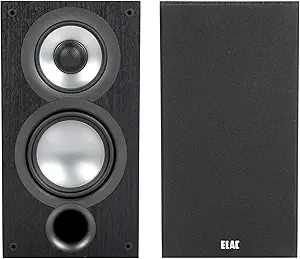
Klipsch maintains one of the most expansive and diversified product catalogs in the loudspeaker industry, catering to virtually every tier of consumer audio and custom installation. The American brand categorizes its vast selection into clearly stratified tiers: entry-to-midrange home theater solutions (the Reference and Reference Premiere series), luxury active lifestyle monitors (the Heritage Wireless line, including "The Fives" and "The Nines"), cutting-edge architectural and outdoor systems, and their halo Heritage Classic collection, which continues to handcraft legendary, fully horn-loaded monoliths like the Klipschorn and La Scala. This broad portfolio allows Klipsch to accommodate extreme ends of the market—from budget-conscious college students needing powered desktop setups to high-end purists designing multi-thousand-dollar dedicated cinema rooms. In contrast, ELAC adopts a more curated, audiophile-centric catalog architecture. Heavily influenced by German engineering traditions and acoustic luminaries like Andrew Jones, ELAC structures its selection primarily across dedicated bookshelf and floorstanding tiers—from the benchmark-setting budget Debut and Debut Reference series up through the mid-tier Uni-Fi, premium Vela, and flagship ultra-luxury Concentro series, supplemented by their compact active lines like the ConneX.
When evaluating the technical diversity embedded within these catalogs, the two brands approach engineering variety from opposite philosophical directions. Klipsch achieves brand-wide cohesion by anchoring nearly its entire lineup to high-efficiency Tractrix horn technology paired with spun-copper Cerametallic or TCP woofers. While this consistency guarantees signature dynamic range, micro-detail, and low amplifier strain across any Klipsch model chosen, it somewhat limits acoustic variety for buyers seeking alternative driver behaviors. ELAC, conversely, offers an exceptionally rich engineering palette across its product tiers. Depending on which series a buyer selects, ELAC deploys drastically different transducer topologies: standard silk-dome tweeters in the entry-level Debut, intricate three-way concentric driver arrays (coaxial midrange/tweeter units) in the Uni-Fi line for superior phase alignment, and handcrafted JET 5/6 folded-motion air-motion transformer (AMT) tweeters in the Vela and Concentro lines for ultra-fast transient response and extended high-frequency extension.
The practical trade-offs regarding product selection ultimately hinge on deployment requirements versus sonic variety. Klipsch's expansive footprint provides an unmatched one-stop solution for consumers and custom installers seeking complete acoustic uniformity across complex multi-channel Atmos rigs, architectural in-wall modules, and rugged outdoor speakers, though navigating their somewhat redundant, iteratively refreshed retail tiers (such as the overlapping Synergy, Reference, and Reference Premiere series) can occasionally induce buyer confusion. ELAC offers a cleaner, more deliberate hi-fi progression with superior driver diversification and refined industrial design, making it easier for critical listeners to pick a loudspeaker system tailored to specific acoustic dispersion preferences. However, ELAC cannot match Klipsch’s sheer product breadth in professional cinema, high-sensitivity legacy designs, or high-output active entertainment systems.
Affordability
When assessing affordability in the speaker category, Klipsch and Elac approach value from fundamentally different engineering and retail philosophies. Klipsch dominates the mass-market price-to-performance tier largely due to aggressive retail discounting and economies of scale. Its entry-level Reference series routinely experiences steep cyclical price drops, making multi-channel surround setups remarkably attainable on a strict budget. Elac, conversely, built its modern reputation under acoustic designer Andrew Jones by designing the Debut and Uni-Fi lines to deliver true high-end audiophile fidelity at entry-level, non-inflated baseline MSRPs. While Klipsch provides lower barrier-to-entry street pricing through frequent promotional cycles, Elac prioritizes sophisticated acoustic components—such as complex multi-element crossover networks and custom woven aramid-fiber woofers—that are rarely found at sub-$400 price points.
The true financial divergence between these brands emerges when analyzing the total cost of system ownership, specifically regarding amplification. Klipsch relies heavily on proprietary Tractrix horn-loaded titanium or aluminum tweeters, yielding exceptionally high sensitivity ratings often exceeding 93 to 96 dB @ 2.83V/1m alongside friendly 8-ohm nominal impedances. This high mechanical efficiency means Klipsch speakers can achieve theatrical dynamics with inexpensive, low-wattage AV receivers or budget stereo amplifiers. In contrast, Elac’s neutral acoustic voicing, low-diffraction domes, and complex crossovers result in much lower sensitivity ratings (typically between 85 and 87 dB) and dips into 4-to-6-ohm loads. Consequently, unlocking the acclaimed acoustic performance of an Elac speaker demands cleaner, higher-current amplification, effectively increasing the downstream financial investment required to build a functioning hi-fi setup.
Practical trade-offs in manufacturing and cabinet construction further define their respective value propositions. Klipsch manages aggressive price targets on its entry tiers by utilizing lighter-density MDF and basic vinyl wraps, reserving premium materials and rigid internal bracing for the costlier Reference Premiere line. Elac invests disproportionately in structural cabinet integrity even at the budget tier, employing thick MDF baffles and extensive internal cabinet bracing to eliminate box colorations and driver distortion. Ultimately, Klipsch represents superior out-of-the-box affordability for home theater enthusiasts who prioritize maximum volume, dynamic impact, and low amplification costs per dollar. Elac, however, offers superior acoustic engineering value per dollar for dedicated music listeners who seek flat frequency response and cabinet inertness, provided they factor the requirement for robust amplification into their total budget.
Quality/Durability
When assessing structural engineering and material selection, Klipsch and Elac represent two fundamentally distinct design philosophies that directly impact long-term durability. Klipsch builds around high-rigidity components designed to withstand intense physical and mechanical stress, most notably through their proprietary Cerametallic and spun-copper thermoformed crystalline polymer (TCP) woofers paired with molded silicon composite Tractrix horns. These cones exhibit exceptional tensile strength, resisting cone breakup, deformation, and surround fatigue over decades of use. Elac, heavily influenced by the engineering standards of acoustic maestro Andrew Jones, prioritizes structural mass and acoustic inertness. Elac's Debut and Uni-Fi lines employ thick, extensively braced medium-density fiberboard (MDF) cabinets wrapped in textured vinyl, using custom-woven aramid-fiber or stiffened aluminum cones with durable synthetic rubber surrounds. While Elac’s cabinets generally feel denser and less prone to parasitic cabinet resonance than entry-level Klipsch enclosures, Klipsch’s proprietary driver materials offer marginally superior resistance to accidental impact and physical puncture due to their metallic structural composition.
In terms of electrical durability and thermal tolerance, the two brands diverge based on sensitivity and crossover architecture. Klipsch speakers are renowned for their ultra-high sensitivity—often exceeding 95 dB—which provides a substantial durability advantage; because they require vastly less wattage from an amplifier to reach equivalent acoustic output, their voice coils experience significantly lower thermal stress and lower continuous heat buildup, naturally extending the operational lifespan of the internal crossover components and voice-coil assemblies. Conversely, Elac speakers generally feature lower sensitivity ratings (often dipping between 85 dB and 87 dB) and demanding nominal impedances, requiring substantial amplifier current to drive. To withstand this prolonged thermal loading, Elac engineers heavy-duty, multi-element crossovers equipped with high-grade capacitors and oversized inductors that dissipate heat reliably without drifting out of spec. Ultimately, the trade-off comes down to application: Klipsch offers nearly indestructible performance under high sound-pressure levels with minimal electrical strain, whereas Elac delivers an acoustically rigid, immaculately braced chassis built to provide sonic neutrality and structural stability under high-current amplification.
Sound Quality
When evaluating acoustic engineering and overall sound signature, Klipsch and Elac represent two fundamentally contrasting design philosophies. Klipsch is globally recognized for its proprietary Tractrix horn-loaded titanium or aluminum tweeters paired with stiff, lightweight spun-copper Cerametallic or TCP (thermoformed crystalline polymer) woofers. This engineering emphasis produces exceptionally high sensitivity and controlled directivity, yielding an energetic, forward, and hyper-dynamic sonic presentation. In stark contrast, Elac—largely shaped by renowned audio engineer Andrew Jones—focuses on linear neutrality and cohesive phase integration through bespoke silk-dome tweeters, concentric midrange-treble drivers (in lines like the Uni-Fi series), and woven aramid-fiber woofers. While Klipsch prioritizes explosive transient response and visceral micro-dynamics, Elac aims for British-influenced tonal accuracy, seamless crossover integration, and an expansive, natural soundstage that mirrors high-end studio monitors.
Across the frequency spectrum, these engineering choices produce distinct performance characteristics and trade-offs. Klipsch excels in upper-register sparkle and dialogue articulation, making footsteps, percussive strikes, and vocal transients cut through the mix with startling immediacy. However, this hyper-revealing top end can tilt toward brightness or listening fatigue over prolonged sessions, particularly in acoustically untreated rooms with hard surfaces. Elac offers a much smoother, forgiving high-frequency roll-off combined with an exceptionally textured, uncolored midrange that renders acoustic instruments and vocal timbres with lifelike authenticity. On the low end, Elac woofers produce a deep, warm, and authoritative bass response, though their rear-porting and lower sensitivity ratings require high-current amplification and deliberate placement away from boundary walls to avoid muddiness. Klipsch delivers tighter, punchier bass that requires substantially less amplifier wattage to achieve cinematic sound pressure levels with vanishingly low distortion.
Ultimately, the practical trade-off in sound quality comes down to media preference and system synergy. Klipsch is an undisputed powerhouse for multi-channel home theater and high-energy music genres like rock and electronic, where dynamic headroom, tactile impact, and pinpoint directional cues are paramount. Conversely, Elac is the superior choice for critical two-channel stereo listening, jazz, classical, and vinyl setups, offering a refined, fatigue-free listening experience with superior mid-band resolution and coherent imaging. Audiophiles seeking neutrality and warm musicality will lean toward Elac, while consumers demanding thrilling live-concert dynamics and effortless output will find Klipsch unmatched in acoustic vibrancy.