JBL vs Wharfedale: Overview
Comparing JBL and Wharfedale helps you determine which brand is best suited for your needs in Speakers. Both brands offer strong choices depending on your budget and key feature requirements.
Key Features & Comparison
Evaluate factors such as build quality, warranty, customer satisfaction, and total value before making your final purchase choice between JBL and Wharfedale.
Product Selection
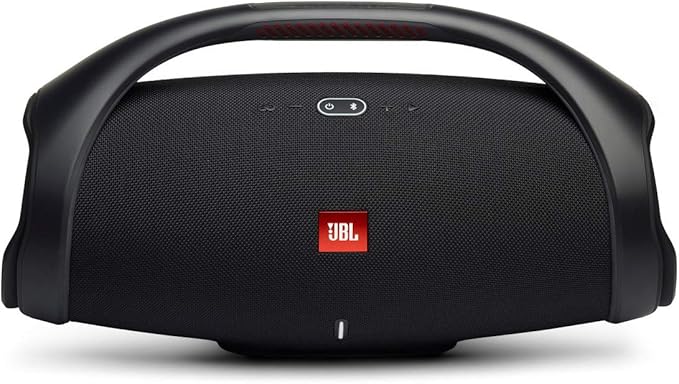
JBL offers one of the most expansive and diversified speaker catalogs in the consumer and professional audio industries. Their portfolio ranges from ultra-portable, rugged Bluetooth speakers like the Clip and Flip series to high-output PartyBoxes, active studio monitors, soundbars, and heritage architectural loudspeakers like the classic L100. This expansive breadth allows JBL to cater to virtually every lifestyle niche, offering battery-powered lifestyle gear, automotive systems, high-end synthesis home theaters, and professional tour-sound arrays under a single brand identity. Consumers seeking versatile lifestyle integrations—such as smart speaker functionality, IP-rated waterproofing, and multi-speaker daisy-chaining—will find JBL's catalog exceptionally well-rounded.
Conversely, Wharfedale maintains a specialized, purist approach anchored deeply in traditional high-fidelity audio and home theater engineering. Rather than competing in the ultra-portable or outdoor active speaker markets, the venerable British manufacturer focuses its engineering expertise on passive bookshelf speakers, floorstanding towers, center channels, and dedicated subwoofers. Their catalog is thoughtfully segmented across distinct hi-fi tiers, encompassing the budget-friendly Diamond series, vintage-inspired heritage models like the Linton and Denton, and ultra-high-end audiophile lines like the Elysian. While Wharfedale lacks the rugged outdoor options and diverse active ecosystem of JBL, it presents a cohesive, deeply focused selection for critical two-channel listeners and dedicated home cinema builders.
Affordability
JBL approaches affordability from a mass-market perspective, offering entry-level price points starting under fifty dollars for compact wireless units while maintaining robust economies of scale across intermediate tiers. In the active and lifestyle speaker sectors, JBL delivers high value-for-money by bundling power amplification, digital signal processing (DSP), and long-lasting lithium-ion batteries directly into the hardware, eliminating the need for downstream components. Even in their high-performance professional and stage lines, competitive mass manufacturing allows JBL to hit aggressive price-to-performance metrics, making dynamic and punchy acoustic performance accessible across virtually every socioeconomic bracket.
Wharfedale defines affordability through the lens of true audiophile performance per dollar, often serving as the benchmark for entry-level hi-fi investments. Lines such as the Diamond 12 series, engineered in collaboration with renowned acoustic designer Karl-Heinz Fink, provide exceptional value by leveraging premium materials like Klarity cone drivers and computer-modeled bracing at accessible, sub-thousand-dollar price points. However, prospective buyers must factor in the total cost of ownership; because most Wharfedales are passive enclosures, they require external amplification, DACs, and quality speaker cabling. Consequently, while Wharfedale offers unmatched component-level value for music purists, JBL remains the more turn-key, budget-friendly proposition for casual and all-in-one consumer setups.
Quality/Durability
JBL’s modern reputation is fundamentally built around rugged environmental resilience, dynamic output reliability, and road-ready materials. Their portable lifestyle line utilizes ultra-durable synthetic fabrics, dense silicone armor, and robust IP67/IP68 ratings that protect internal transducers against total water submersion and fine particulate ingress. On the professional and passive consumer end, JBL utilizes robust cast-aluminum woofer frames, high-power voice coils with advanced thermal venting, and impact-resistant polymer or heavy MDF enclosures designed to withstand extensive thermal and physical stress without driver failure or internal cabinet resonance.
Wharfedale emphasizes fine artisan craftsmanship, structural rigidity, and classic furniture-grade industrial design. Their cabinets are typically constructed from multi-layer sandwich MDF bonded with acoustic damping adhesives to eliminate cabinet coloration and dissipate internal standing waves. Premium real-wood veneers, magnetic cloth grilles, and gold-plated bi-wire terminal posts define Wharfedale’s tactile quality. While these speakers lack the water resistance, shock-absorbing bumpers, or physical portability of JBL's consumer lineup, their passive nature gives them superior longevity, remaining free from battery degradation or software obsolescence and capable of operating flawlessly for decades within a climate-controlled home environment.
Sound Quality
JBL’s sonic profile is widely recognized for its vibrant, high-energy signature, characterized by impactful low-frequency punch, forward midrange presentation, and crisp, elevated highs. Utilizing proprietary technologies such as High-Definition Imaging (HDI) waveguides and compression drivers derived from their professional cinema heritage, JBL loudspeakers deliver expansive dispersion, high sensitivity, and low distortion at extreme SPL levels. This 'American Sound' tuning prioritizes engagement, visceral transient impact, and dynamic contrast, making JBL speakers thrilling for modern electronic music, hip-hop, action film soundtracks, and open-air environments where cutting through ambient noise is essential.
Wharfedale champions the refined, smooth, and balanced characteristics quintessential to traditional 'British Sound' engineering. Their acoustic design philosophy prioritizes natural timbral accuracy, midrange clarity, and a non-fatiguing top-end, achieved via woven Kevlar or advanced polymer cones paired with textile soft-dome tweeters. Wharfedale speakers excel at resolving nuanced acoustic textures, rendering human vocals with three-dimensional realism, and projecting deep, articulate soundstages without artificial mid-bass bloat. For critical listening sessions featuring jazz, classical, or vocal-centric music, Wharfedale delivers an articulate, organic, and cohesive acoustic signature that rewards focused, fatigue-free listening.