Elac vs Dali: Overview
Comparing Elac and Dali helps you determine which brand is best suited for your needs in Speakers. Both brands offer strong choices depending on your budget and key feature requirements.
Key Features & Comparison
Evaluate factors such as build quality, warranty, customer satisfaction, and total value before making your final purchase choice between Elac and Dali.
Product Selection
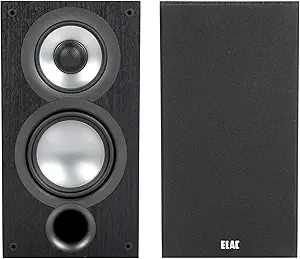
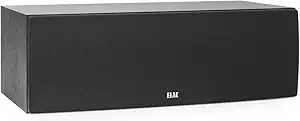
Both Elac and Dali offer expansive catalogs designed to cater to modern audiophiles, home theater enthusiasts, and design-conscious listeners alike. Elac, drawing on its rich German heritage and the acoustic engineering input of industry veteran Andrew Jones, categorizes its lineup into well-defined consumer and reference tiers. Their catalog extends from entry-level passive bookshelf and floorstanding designs (such as the Debut and Uni-Fi series) to high-end flagship speakers (the Concentro series), alongside dedicated architectural, active lifestyle, and modern subwoofers equipped with auto-EQ technology. Elac’s strength lies in offering complete home theater packages across standard form factors, focusing primarily on traditional box configurations, coaxial point-source monitors, and high-performance bass integration.
Dali (Danish Audiophile Loudspeaker Industries) presents an equally formidable, yet distinctly European product portfolio that places heavy emphasis on interior design, lifestyle integration, and proprietary transducer arrays. Their selection spans from accessible budget models like the Spektor and Oberon lines up to ultra-high-end audiophile statements like the Epikore and Kore. Where Dali truly differentiates its selection is through its diverse lifestyle, on-wall, and wireless ecosystems; the Dali Oberon C and Rubicon C active wireless systems, along with the architecturally slender Phantom custom install series, provide more versatile lifestyle solutions than Elac's core offerings. While both brands support everything from stereo bookshelf models to monolithic floorstanders, Dali offers greater variety in slim-profile and active streaming systems, whereas Elac excels in technical subwoofer variety and coaxial driver implementations.
Affordability
When examining pricing structures and cost-to-performance ratios, Elac is widely regarded as one of the most aggressive and consumer-friendly brands in the loudspeaker industry. The brand revolutionized the budget audiophile space with its Debut series, which made sophisticated driver crossover engineering and acoustically inert cabinet design accessible at entry-level price brackets. Even moving into their mid-tier Uni-Fi and Carina ranges, Elac consistently utilizes trickle-down engineering—such as concentric midrange-tweeter assemblies and folded-motion ribbon tweeters—at price points where competitors typically deploy standard off-the-shelf silk dome tweeters and conventional two-way designs. For budget-conscious buyers seeking maximum acoustic performance per dollar spent, Elac regularly establishes the price-to-performance benchmark.
Dali operates at a slightly higher price floor, positioning even its introductory Spektor and Oberon lines as premium budget alternatives. While Dali delivers remarkable acoustic and aesthetic refinement, buyers pay a noticeable premium compared to equivalent Elac models. As you advance through Dali’s mid-to-high tiers, such as the Opticon and Rubicon series, the pricing reflects European industrial design, specialized wood-fiber cones, and hybrid ribbon-dome tweeter modules, which demand a steeper financial investment. Dali rarely competes directly in the absolute lowest pricing brackets, choosing instead to target the enthusiast who is willing to pay more for furniture-grade finishes, advanced magnetic driver motors, and sophisticated industrial styling alongside acoustic capability.
Quality/Durability
The structural integrity and build quality of Elac speakers reflect traditional German precision engineering and utilitarian durability. In their budget and mid-tier models, Elac utilizes heavy, internally braced MDF cabinets wrapped in robust, textured vinyl wraps that resist scuffs, scratches, and humidity fluctuations. While some consumers may find the vinyl aesthetics of the lower-tier Debut and Uni-Fi models slightly plain or industrial, the physical durability is exceptional, built to endure years of high-excursion playback. In higher-end tiers such as the Vela and Concentro lines, Elac transitions to precision-extruded aluminum baffles, high-gloss lacquers, and custom-cast chassis that rival the best luxury speaker manufacturers in mechanical tolerances and long-term durability.
Dali approaches quality through a dual lens of acoustic engineering and Danish furniture craftsmanship. Cabinets across the Dali range exhibit meticulous fit-and-finish, often featuring higher-grade vinyl laminates, real wood veneers, and multi-layered high-gloss baffles that lend an inherently luxurious feel even to their mid-tier offerings. Mechanically, Dali's proprietary Soft Magnetic Compound (SMC) driver motor systems and reinforced wood-fiber cone structures are designed to minimize hysteresis and mechanical fatigue over decades of use. While delicate components like Dali's exposed hybrid tweeter ribbons and lightweight paper-blend cones demand more careful handling than Elac's ruggedized woofers, the overall material selection, joint assembly, and cosmetic refinement of Dali cabinets generally surpass Elac's utilitarian lower-tier enclosures.
Sound Quality
Elac's sonic signature is characterized by neutral tonal balance, exceptional imaging, and powerful, controlled low-frequency extension. Under the design philosophy implemented across many of its popular lines, Elac prioritizes coaxial point-source alignment (in the Uni-Fi line) and JET folded-ribbon tweeters (in the Carina and Vela lines), resulting in cohesive phase coherence, expansive soundstaging, and pinpoint instrument localization. Bass response from Elac speakers is notably punchy, authoritative, and capable of digging remarkably deep for cabinet size, though this often demands substantial amplifier current to properly control. The high frequencies tend to be smooth, forgiving of poorly mastered tracks, and non-fatiguing, making Elac an ideal choice for long, analytical listening sessions across diverse genres.
Dali champions a distinctly wide-dispersion, vibrant, and emotionally engaging sound profile. Central to Dali’s acoustic philosophy is low surface loss, achieved via ultra-lightweight wood-fiber diaphragms that deliver lightning-fast transient response and transparent micro-detail in the midband, bringing vocals to the immediate forefront. In their Opticon, Rubicon, and Epicon tiers, Dali pairs a soft dome tweeter with an planar-ribbon supertweeter; this hybrid module provides unmatched high-frequency air, shimmering detail, and horizontal dispersion that eliminates the need for toe-in positioning. Compared to Elac's measured, slightly dry, and focused presentation, Dali delivers a more open, lively, and holographic soundstage, though this elevated top-end clarity can occasionally reveal flaws in brighter or compressed source recordings.