Denon vs Wharfedale: Overview
Comparing Denon and Wharfedale helps you determine which brand is best suited for your needs in Speakers. Both brands offer strong choices depending on your budget and key feature requirements.
Key Features & Comparison
Evaluate factors such as build quality, warranty, customer satisfaction, and total value before making your final purchase choice between Denon and Wharfedale.
Product Selection
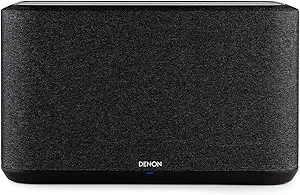
Denon approaches speaker product selection primarily through the lens of modern, integrated home audio ecosystems. Rather than offering traditional standalone passive stereo speakers, Denon focuses heavily on powered smart speakers, multi-room wireless units under their Denon Home line, and full-featured soundbar packages. Their catalog is engineered to mesh seamlessly with the broader HEOS architecture and Denon’s industry-leading AV receivers, delivering a cohesive digital experience that spans single-room portable setups to multi-channel wireless surround systems. While this ecosystem-centric strategy provides immense utility for streaming-focused listeners and smart home adopters, it leaves a noticeable void for purists seeking traditional, high-fidelity passive acoustic enclosures.
In stark contrast, Wharfedale boasts one of the most comprehensive catalogs of traditional hi-fi and home theater passive loudspeakers in the audio industry. Spanning entry-level bookshelf speakers to ultra-premium, furniture-grade floorstanders, Wharfedale’s lineup is meticulously divided into renowned series such as the Diamond, EVO4, Linton Heritage, and flagship Elysian. Each tier is further complemented by dedicated center channels, surround monitors, and powered subwoofers tailored for bespoke two-channel stereos and high-end cinema rooms. While Wharfedale has selectively introduced powered wireless solutions like the Diamond A1 or active heritage designs, their true strength lies in offering an exhaustive array of driver configurations, cabinet sizes, and driver architectures that appeal to audiophiles at virtually every performance tier.
Affordability
When analyzing price-to-performance, Denon focuses on delivering all-in-one value that simplifies the user’s overall investment. By bundling amplification, advanced digital signal processing (DSP), wireless streaming protocols (AirPlay 2, Bluetooth, HEOS), and high-resolution DACs directly into their active speaker enclosures, Denon significantly reduces total ownership costs. A consumer purchasing a Denon Home 150 or 250 avoids the substantial expense of outboard integrated amplifiers, speaker cables, and external streaming streamers, making their standalone price tags between $250 and $500 an accessible entry point into modern high-resolution audio. However, consumers seeking purely mechanical passive acoustic value will find Denon’s ecosystem-bound pricing less attractive on a pure driver-per-dollar metric.
Wharfedale, conversely, delivers legendary acoustic value by keeping component fabrication tightly controlled and optimizing passive mechanical engineering. The budget-oriented Diamond series, historically dubbed the benchmark of affordable hi-fi, provides remarkable audiophile performance at sub-$500 price points for bookshelf pairs. However, true cost of ownership with Wharfedale must factor in the necessity of quality external amplification, source gear, and proper acoustic mounting, which can escalate total system cost. Furthermore, Wharfedale’s catalog stretches from highly accessible budget offerings directly into luxury audiophile territory, where models like the Elysian series reach several thousand dollars, demanding a substantially higher financial commitment tailored to dedicated high-end enthusiasts.
Quality/Durability
Denon applies sophisticated industrial manufacturing and rigorous consumer electronics engineering to ensure longevity across its product lines. The Denon Home series and soundbars feature robust composite polymer enclosures wrapped in custom-engineered, water-and-stain-resistant acoustic fabrics, engineered to blend discreetly into living environments while resisting domestic wear and tear. Internally, Denon utilizes premium class-D amplification, highly resilient microelectronics, and heat-sinked internal power supplies engineered for continuous operation. The primary vulnerability in Denon’s longevity profile lies in firmware support and network obsolescence; as with all connected smart speakers, their functional lifespan can be tied to platform updates, app compatibility, and software ecosystem support over decades of use.
Wharfedale approaches build quality from an artisanal woodworking and classical acoustic engineering perspective. Their cabinets often feature multi-layer sandwich construction combining high-density particle board and MDF, lined with resonant damping materials to virtually eliminate cabinet coloration. Premium veneers—such as real walnut and mahogany on the Heritage and Elysian lines—undergo hand-finishing processes that outshine mass-market consumer tech. Structurally, passive speakers from Wharfedale contain no onboard processing units or delicate digital circuitry, relying instead on over-engineered crossovers, copper wiring, and cast-aluminum driver baskets that resist mechanical degradation. Consequently, a well-maintained Wharfedale speaker can easily operate flawlessly for thirty years or more without the threat of digital obsolescence.
Sound Quality
The acoustic profile of Denon speakers is engineered for wide dispersion, contemporary warmth, and fatigue-free everyday listening. Leveraging sophisticated digital signal processing (DSP) and active driver management, Denon compensates for compact enclosure dimensions to produce surprisingly punchy, controlled low-frequency extension and balanced mids. These tunings excel with modern streaming genres, podcasts, and television audio, delivering high vocal clarity and expansive room-filling sound without harsh treble spikes. However, audiophiles may note limitations in ultimate dynamic range and micro-detail retrieval; the heavily processed signal path can constrain soundstage depth and instrument separation when compared directly to finely tuned passive stereo monitors playing native analog or uncompressed masters.
Wharfedale is globally renowned for its signature warm, organic, and highly musical acoustic voicing that prioritizes natural midrange presentation and fluid high-frequency extension. Employing advanced driver materials—such as woven Kevlar cones for low-frequency control and sophisticated Air Motion Transformer (AMT) tweeters in the EVO4 and Elysian lines—Wharfedale speakers deliver exceptional transient speed, pinpoint imaging, and three-dimensional soundstaging. The vocal presence, particularly on the Linton Heritage and Diamond 12 series, is lush and emotionally engaging, avoiding the clinical analytical dryness of some modern monitors while sidestepping DSP intervention. For listeners demanding authentic instrument timbre, analog warmth, and pure acoustic headroom, Wharfedale provides a decidedly superior, purist listening experience.