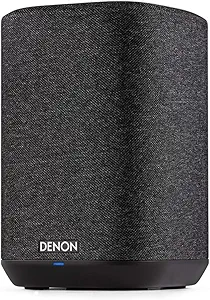
Denon vs Polk Audio: Overview
Comparing Denon and Polk Audio helps you determine which brand is best suited for your needs in Speakers. Both brands offer strong choices depending on your budget and key feature requirements.
Key Features & Comparison
Evaluate factors such as build quality, warranty, customer satisfaction, and total value before making your final purchase choice between Denon and Polk Audio.
Product Selection
Denon and Polk Audio take distinct strategic directions when it comes to catalog variety, largely reflecting their individual core competencies within the consumer audio ecosystem. Denon, while world-renowned for its AV receivers, approaches standalone speaker hardware through a focused, digital-first lens. Their speaker selection primarily revolves around the Denon Home series, encompassing multi-room smart speakers (Home 150, 250, 350), specialized subwoofers, and integrated soundbars powered by the proprietary HEOS streaming architecture. Rather than offering dozens of disparate passive acoustic cabinets, Denon focuses on delivering a cohesive, networked ecosystem designed for seamless whole-home integration, modern wireless convenience, and synchronized spatial audio setups.
In stark contrast, Polk Audio offers an expansive, traditional speaker catalog that caters to virtually every physical form factor and home theater installation scenario imaginable. Polk's lineup includes entry-level passive bookshelf pairs, architectural in-wall and in-ceiling drivers, high-performance floorstanding towers, dedicated center channels, active subwoofers, and Dolby Atmos height modules, spread across tiered series like the Monitor XT, Signature Elite, and flagship Reserve lines. While Polk also produces lifestyle soundbars and wireless solutions, their catalog is significantly more versatile for traditional component-based audiophiles and custom home theater builders looking to tailor individual driver configurations to specific room dimensions.
Affordability
When analyzing price-to-performance metrics, Polk Audio stands out as an industry benchmark for accessible, high-value consumer audio. Polk has deliberately engineered its entry-level and mid-range tiers, such as the T-Series and Monitor XT, to provide surprisingly capable acoustic fidelity at price points that accommodate entry-level enthusiasts and budget-conscious home theater builders. Even Polk's premium Reserve line is widely regarded as a giant-killer, offering trickle-down acoustic engineering from flagship speakers at a fraction of high-end boutique prices. This tiered pricing allows buyers to enter the home audio hobby incrementally, mixing and matching components without exorbitant upfront financial commitments.
Denon, on the other hand, operates with a higher entry barrier that reflects the integrated processing, internal amplification, and networking hardware baked into its speaker lineup. Because Denon primarily markets powered, networked smart speakers rather than passive speaker cabinets, each individual purchase requires an investment in advanced digital-to-analog converters, DSP modules, and Wi-Fi streaming chipsets. A single Denon Home wireless unit can easily cost as much as a complete passive 5.0 surround sound bundle from Polk's entry lines. While Denon justifies this premium through convenience and digital functionality, buyers seeking raw driver surface area per dollar will find Polk significantly more cost-effective.
Quality/Durability
Denon’s physical construction and component selection emphasize modern electronic durability and understated, premium industrial design. The Denon Home family utilizes custom-wrapped acoustic fabric, tempered glass touch-capacitive control surfaces, and rigid internal plastic baffles designed to eliminate cabinet resonance while protecting delicate electronics inside. Because Denon's speakers are active units containing power supplies and digital processors, their longevity depends not only on physical build quality but also on thermal management and sustained firmware support. Historically, Denon scores high marks for robust internal circuit layouts and steady HEOS platform updates, ensuring the hardware remains functional and secure over long lifecycles.
Polk Audio approaches durability from a structural acoustic perspective, relying on thick, extensively braced medium-density fiberboard (MDF) cabinets, non-resonant enclosures, and rugged driver materials like bi-laminate composite cones and mica-reinforced polypropylene. Polk’s passive speakers benefit from the inherent mechanical simplicity of having no internal digital processors or amplifiers that could fail over decades of heavy use. In their higher-tier lines like the Signature Elite and Reserve, Polk implements rigid internal Power Port structures and high-grade crossovers that withstand continuous high-current transients. Consequently, while Denon excels in clean modern electronics assembly, Polk offers superior long-term acoustic endurance against mechanical wear and tear.
Sound Quality
Acoustically, Denon leans into a clean, modern, and DSP-optimized sound profile characterized by tight bass response, controlled midrange projection, and clear, articulate high frequencies. Leveraging onboard digital signal processing, Denon actively manages driver excursion and frequency distribution, ensuring that even compact speakers like the Home 150 reproduce balanced audio without audible distortion at moderate to high listening levels. The acoustic signature is remarkably neutral and adaptable to various musical genres, though soundstage width is naturally constrained by the physical dimensions of self-contained wireless enclosures unless two units are explicitly paired for dedicated stereo imaging.
Polk Audio delivers a more dynamic, physically expansive listening experience that embodies classic American hi-fi voicing, featuring robust dynamic impact, warm low-end presence, and smooth, fatigue-free highs. Technologies such as Polk’s patented Power Port bass venting and Pinnacle Ring Radiator tweeters allow their passive speakers to generate effortless transient response, expansive soundstages, and deep, visceral bass extension that DSP-tuned small enclosures cannot fully replicate. Polk speakers excel at recreating cinematic scale and orchestral grandeur, offering a punchier, more room-filling acoustic presentation that appeals deeply to film enthusiasts and critical stereo listeners alike.
Compare current retail pricing, active promotions, and verified stock availability directly from authorized stores: