Bowers & Wilkins vs Wharfedale: Overview
Comparing Bowers & Wilkins and Wharfedale helps you determine which brand is best suited for your needs in Speakers. Both brands offer strong choices depending on your budget and key feature requirements.
Key Features & Comparison
Evaluate factors such as build quality, warranty, customer satisfaction, and total value before making your final purchase choice between Bowers & Wilkins and Wharfedale.
Product Selection
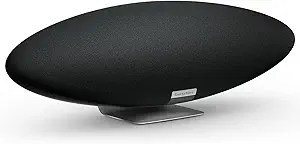
Bowers & Wilkins maintains a finely curated catalog that spans luxury high-fidelity hi-fi, custom architectural installations, home theater setups, and premium lifestyle audio. The British brand is widely recognized for its tiered audiophile lines, anchored by the legendary 800 Series Diamond at the ultra-high end, stepping down to the 700 and 600 Series for consumers seeking flagship trickle-down technology. Beyond traditional passive stereo pairs and center channels, Bowers & Wilkins has heavily invested in modern, connected form factors. Their product portfolio features premium active wireless speakers like the Zeppelin and Formation suite, alongside high-performance soundbars and award-winning noise-canceling headphones, demonstrating a clear focus on modern luxury and multi-room convenience alongside dedicated listening room monitors.
Wharfedale takes a markedly different approach by offering a vast, democratized lineup of stereo and home theater loudspeakers that cater extensively to traditional two-channel enthusiasts. While they do produce high-end audiophile statements like the Elysian and Aura series, Wharfedale's catalog is deeply rooted in budget-to-midrange excellence, famously exemplified by the long-running Diamond series, which serves as a benchmark for accessible hi-fi. Additionally, Wharfedale excels in the modern-vintage audio sector with its celebrated Heritage Series—including the Linton and Denton—re-engineering classic acoustic designs with contemporary internals. While Wharfedale offers fewer portable lifestyle devices or wireless headphone models compared to Bowers & Wilkins, their breadth of passive floorstanders, standmounts, and subwoofers across accessible price tiers provides superior depth for home theater builders and traditional stereo hobbyists.
Affordability
When analyzing price-to-performance and absolute barrier to entry, Wharfedale holds a substantial advantage for cost-conscious audiophiles. The company is historically renowned for engineering budget speakers that punch far above their retail price point, utilizing high-volume manufacturing to minimize margins without gutting component quality. The entry-level Diamond series provides genuine audiophile qualities—such as low cabinet resonance, smooth crossovers, and balanced frequency responses—at pricing accessible to audio beginners. Even Wharfedale's flagship models, like the Elysian line, are strategically priced significantly below equivalent ultra-luxury offerings from elite competitors, positioning the brand as one of the most value-driven manufacturers in the global audio market.
Bowers & Wilkins positions itself deliberately in the luxury and high-performance audio tier, which carries a commensurate price premium across its entire range. While the entry-level 600 Series provides a relatively accessible path into the brand's ecosystem, it still sits well above the typical budget threshold established by entry-level Wharfedale speakers. As buyers move into the 700 and 800 Series, prices escalate rapidly into the thousands and tens of thousands of dollars, justified by proprietary materials research, bespoke manufacturing, and high-end industrial design. Consumers investing in Bowers & Wilkins must accept a steeper cost curve, where the monetary trade-off pays for elite industrial finishes, pioneering acoustic engineering, and significant brand prestige rather than sheer price-to-watt economic value.
Quality/Durability
Bowers & Wilkins is an industry benchmark for industrial design, utilizing advanced materials and obsessive mechanical engineering to achieve exceptional physical longevity and resonance control. Higher-end models feature CNC-machined solid aluminum 'Solid Body' tweeter-on-top housings, reverse-wrap layered beech cabinets, and composite Matrix bracing matrices that eliminate internal standing waves and panel vibrations. Driver implementation is equally resilient, relying on proprietary woven Continuum cones and synthetic diamond dome tweeters that suffer virtually no structural degradation or deformation over decades of use. The brand's flawless lacquers, bespoke leather accents, and anodized aluminum trim ensure that the speakers function as heirloom-quality furniture pieces designed to endure heavy acoustic loads without physical or sonic decay.
Wharfedale exhibits commendable build quality that emphasizes time-tested acoustic construction methods and durable cabinet joinery. Wharfedale's Heritage and higher-tier Aura and Elysian speakers feature multi-layer sandwich wood construction bonded with acoustic damping glue, significantly reducing cabinet coloration while offering robust structural integrity. Their drivers frequently employ woven Kevlar or glass-fiber cones paired with supple rubber surrounds, ensuring long-term flexibility and resilience against ambient humidity and physical wear. While entry-level models utilize standard vinyl veneers rather than real wood or polished multi-coat lacquers to meet lower price points, the internal crossovers, magnetic grilles, and gold-plated binding posts are robustly engineered to deliver dependable, maintenance-free performance across decades of operation.
Sound Quality
The signature Bowers & Wilkins acoustic profile is defined by exceptional transparency, hyper-resolving detail, and an energetic, forward presentation. Thanks to their decoupled carbon or diamond dome tweeters and pistonic Continuum midrange drivers, B&W speakers produce blistering transient speeds, immaculate micro-detail, and an expansive, three-dimensional soundstage where every instrument is precisely pinpointed. The bass response is tight, muscular, and fast, tuned to prevent mid-bass bloat. However, this analytical clarity means that Bowers & Wilkins speakers can be ruthlessly revealing of poorly mastered recordings and demanding of amplifier pairings; in bright acoustic spaces or paired with clinical electronics, the treble energy can occasionally border on aggressive or fatiguing for treble-sensitive listeners.
Wharfedale champions a warm, natural, and forgiving acoustic signature that prioritizes musical coherence over analytical hyper-detail. Utilizing Air Motion Transformer (AMT) ribbon tweeters in their upper-tier lines and smooth textile soft domes in their traditional models, Wharfedale achieves an airy yet smooth high-frequency extension that never sounds harsh, sibilant, or fatiguing. The midrange is famously lush, rendering vocal performances with rich emotional weight, while the low end is generous, full-bodied, and deeply satisfying. This sonic tuning makes Wharfedale speakers exceptionally versatile across all musical genres and recording qualities, delivering a relaxing, immersive listening experience that is far less dependent on ultra-premium source electronics to sound musical and engaging.