Audioengine vs Elac: Overview & Brand Philosophy
When selecting high-fidelity speakers, understanding the heritage and engineering philosophy of the manufacturer is essential. Audioengine emerged in the mid-2000s in Austin, Texas, founded by veterans from Apple, Harman Kardon, and Gibson. Their core mission was straightforward: eliminate the friction traditionally associated with high-end audio. Rather than forcing consumers to invest in bulky receivers, dedicated preamps, and rat-nests of speaker cables, Audioengine prioritized powered, plug-and-play desktop and bookshelf monitors. Their products are designed primarily for the digital age, catering to computer setups, small living spaces, and wireless streaming, delivering warm, articulate sound straight out of the box.
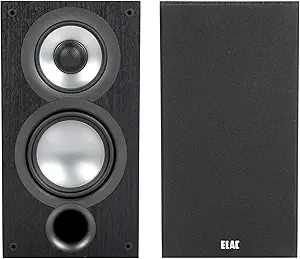
Elac, by contrast, is a legacy titan of acoustic engineering. Founded in Kiel, Germany, in 1926, the brand originally worked on electroacoustic technology and sonar before transitioning into precision phonograph cartridges and loudspeakers. Over the past decade, Elac achieved a major modern resurgence by enlisting legendary speaker designer Andrew Jones to lead their entry-level and mid-tier acoustic engineering. Elac's philosophy is rooted in purist audio: rigid cabinets, complex crossover networks, and proprietary driver materials engineered to achieve exceptional dynamic range and neutrality. While they have expanded into powered speakers, Elac's primary domain remains the passive speaker market, serving dedicated two-channel stereo and multi-channel home theater enthusiasts.
Choosing between Audioengine and Elac often comes down to an ideological split in home audio: the convenience-first, modern all-in-one powered solution versus the traditional, scalable audiophile ecosystem. Audioengine champions self-contained elegance with minimal footprint, whereas Elac focuses on acoustic scaling, absolute sonic accuracy, and integration into dedicated hi-fi separates.
Key Differences & Technological Comparison
The technological divide between Audioengine and Elac revolves around amplification, driver construction, acoustic voicing, and intended use cases.
Amplification Architecture: The most immediate difference lies in system integration. Audioengine focuses almost entirely on active (powered) speakers utilizing integrated Class A/B monolithic amplifiers (such as in the A5+ and HD6) or efficient Class D designs in smaller models. This eliminates the need for external amplifiers and guarantees that the internal amp is perfectly matched to the drivers. Elac, while manufacturing powered options like the Debut ConneX, primarily excels in passive speaker design. Their celebrated Debut 2.0, Uni-Fi 2.0, and Carina lines require external integrated amplifiers or AV receivers, giving the listener the freedom—and the responsibility—to choose their own amplification path.
Transducer Technology and Materials: Audioengine typically utilizes custom aramid fiber (Kevlar) woofers paired with neodymium silk dome tweeters. These materials produce a smooth, warm frequency response that is forgiving of lower-bitrate source material and pleasant for long, non-fatiguing nearfield listening sessions. Elac utilizes more aggressive, rigid materials. Their Debut series relies on custom woven aramid-fiber cones with deep-spheroid wave guides, while their Uni-Fi and Carina series step up to aluminum woofers, concentric midrange/tweeter arrays, and folded-ribbon JET tweeters. Elac's driver engineering results in dramatically faster transient response, wider dispersion, and higher potential detail retrieval, though it can be unforgiving of poor-quality source files.
Connectivity & Integration: Audioengine prioritizes digital-first convenience. Models like the A2+ and HD4 feature built-in 24-bit DACs, USB inputs for direct computer connection, and Bluetooth with aptX HD codec support. Elac's passive speakers feature standard 5-way binding posts, requiring external sources. However, when examining Elac's powered lines (like the Debut ConneX), they frequently include modern additions like HDMI ARC for direct TV integration and dedicated phono preamps for vinyl setups, offering a different flavor of versatility compared to Audioengine's desktop-centric I/O.
Soundstage & Dispersion: Audioengine monitors are intentionally voiced for nearfield to mid-field listening. They provide an intimate, focused soundstage ideal for an office desk, creative workstation, or bedroom. Elac speakers are engineered to energize larger volumes of air. Their wide-dispersion wave guides and sophisticated multi-order crossovers yield a massive, holographic soundstage with pinpoint imaging that shines in living rooms and dedicated listening spaces.
Pros & Cons Comparison
Audioengine: Pros
- All-in-One Simplicity: Built-in amplification eliminates the need for an external receiver or separate DAC, minimizing clutter.
- Nearfield Mastery: Superb desktop performance with small footprints, front-ported or slotted cabinet designs, and intuitive front-panel volume controls.
- Warm, Forgiving Sound: Silk dome tweeters and aramid fiber woofers provide smooth highs and rich mids that prevent ear fatigue over long work sessions.
- Premium Aesthetics: Real wood veneers (such as walnut) and satin finishes give the speakers an upscale, lifestyle-oriented appeal.
- Seamless Wireless Audio: Extended-range Bluetooth with aptX HD ensures reliable, high-resolution mobile streaming.
Audioengine: Cons
- Limited Scalability: Because the amp and DAC are internal, you cannot upgrade individual system components over time.
- Not Ideal for Large Rooms: Bass roll-off occurs earlier, and the speakers can struggle to fill expansive, open-concept living spaces without a paired subwoofer.
- Higher Price-to-Performance for Pure Audio: A substantial portion of the cost goes into internal electronics rather than raw acoustic driver scale.
Elac: Pros
- Superior Acoustic Engineering: Renowned crossover designs deliver audiophile-grade transparency, neutral frequency response, and explosive dynamics.
- Modular Scalability: Passive designs allow you to upgrade amplifiers, DACs, and source components as your budget and preferences evolve.
- Expansive Soundstage: Waveguides and multi-way concentric drivers project a broad, room-filling stereo image with exceptional depth.
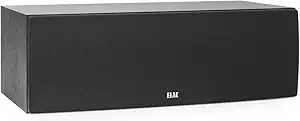
- Comprehensive Product Lines: Offers center channels, Atmos modules, and tower speakers, making them capable of full home theater integration.
- Competitive Passive Pricing: The Debut series offers industry-leading sonic capability per dollar spent on the speaker itself.
Elac: Cons
- Hidden Component Costs: Passive models require the separate purchase of speaker wire, an amplifier, or an AV receiver.
- Power Demanding: Many Elac speakers (especially the 4-ohm Uni-Fi series) have low sensitivity and require high-current amplification to sound their best.
- Utilitarian Styling: Entry-level lines (such as the standard Debut 2.0) feature basic vinyl wrap finishes that lack the bespoke luxury feel of Audioengine's cabinetry.
- Placement Sensitivity: Rear-ported models often demand substantial clearance from walls to prevent boominess, complicating desktop or tight-shelf setups.
Performance, Durability & Value Analysis
From a longevity and build quality standpoint, both brands hold strong reputations, but they present different risk profiles. Audioengine constructs rigid MDF cabinets finished in furniture-grade veneers that resist wear exceptionally well. However, because they are active speakers, the internal circuit boards, power supplies, and internal amplifiers are subjected to thermal stress over years of operation. While Audioengine's reliability track record is solid and supported by a robust 3-year warranty, an electronic failure inside a powered speaker renders the entire unit inoperable. Elac's passive speakers, by contrast, possess almost indefinite lifespans. Devoid of internal electronics beyond simple, heavy-duty passive crossover networks, an Elac passive speaker can easily last two to three decades with basic care, making them the superior choice for sheer physical longevity.
Regarding value for money, the assessment hinges on total system cost. If your budget is $300 to $600 and you need an immediate, high-fidelity solution for a computer desk, turntable, or small room, Audioengine delivers exceptional value. Factoring in the included internal DAC, high-performance amplifier, and wireless streaming, purchasing equivalent separates would cost considerably more. However, if your budget allows for an external amplifier, or if you already own an audio receiver, Elac provides unmatched acoustic value. An Elac Debut B5.2 or B6.2 paired with a capable amplifier routinely outperforms powered monitors costing twice as much in terms of low-end extension, micro-detail retrieval, and dynamic headroom.
Final Verdict: Which Brand Should You Choose?
Your ultimate decision between Audioengine and Elac should be guided by your intended environment, system goals, and equipment preferences:
Choose Audioengine if:
- You are outfitting a computer desk, studio workstation, or small bedroom where physical space is at a premium.
- You want an elegant, all-in-one powered solution without the footprint, cable clutter, and complexity of an external amplifier or receiver.
- You prioritize real wood aesthetics, easy Bluetooth streaming, and a smooth, warm sonic profile that never causes listening fatigue.
- You want to hook up directly to a PC, Mac, or turntable with minimal configuration.
Choose Elac if:
- You are building a dedicated two-channel listening room or a multi-channel home theater system that needs to fill a medium to large space.
- You already own—or plan to invest in—a quality stereo amplifier or AV receiver.
- You value clinical accuracy, wide-open soundstaging, and precise detail retrieval over forgiving warmth.
- You want a modular audio setup where speakers and electronics can be independently upgraded over the next decade.
Product Selection
When evaluating product selection, Audioengine and ELAC approach the speaker market from fundamentally divergent engineering and philosophical vantage points. Audioengine deliberately targets the premium desktop, computer audio, and small-space listening segments. Their product catalog is compact and laser-focused, dominated by powered and active monitor speakers spanning from the ultra-compact A1 and A2+ up to the larger bookshelf-sized HD6. Beyond these core self-amplified stereo pairs, Audioengine's selection extends strictly into complementary lifestyle accessories, including compact desktop subwoofers (such as the S8), standalone digital-to-analog converters (DACs), and low-latency wireless transmitters. In contrast, ELAC boasts a vast, traditional audiophile and home theater catalog designed under the engineering oversight of industry veterans like Andrew Jones. ELAC’s portfolio covers a massive breadth of product categories, including entry-level to high-end passive bookshelf speakers, dedicated center channels, multi-driver floorstanding towers, architectural in-wall and in-ceiling monitors, home-theater subwoofers, and sophisticated integrated amplification components spanning lines like Debut 2.0, Uni-Fi, Carina, and the ultra-premium Concentro series.
From a technical and feature-set perspective, this divergence translates into very different practical trade-offs for consumers. Audioengine's engineering excels in plug-and-play simplicity and all-in-one feature integration. Nearly every primary speaker they sell incorporates custom Class AB amplifiers, integrated DACs, and high-fidelity Bluetooth codecs (such as aptX HD), reducing component clutter for nearfield users who prioritize convenience without sacrificing warm, dynamic fidelity. However, their selection hits a hard ceiling when it comes to scalability; Audioengine offers virtually no passive speakers, no multi-driver floorstanders, and no native multichannel surround options. ELAC, by contrast, provides immense acoustic versatility and headroom. Their product range features advanced transducer engineering—including concentric driver arrays and custom folded-ribbon JET tweeters—engineered explicitly to integrate into scalable, high-current modular audio systems. While ELAC does feature some active, lifestyle-oriented speakers (like the Debut ConneX), their primary strength lies in providing the building blocks for dedicated multi-channel AV rigs, expansive stereo listening rooms, and custom whole-home installations.
Ultimately, the superior brand in terms of product selection depends on the deployment scenario and the listener's desire for modularity versus self-containment. Consumers looking for straightforward, turnkey solutions for desktop setups, office spaces, or small media rooms will find Audioengine’s curated, active-first selection ideal and free from the complexity of external amplification. However, for sheer scope, acoustic ambition, and configuration versatility, ELAC overwhelmingly wins the product selection comparison. ELAC offers enthusiasts the flexibility to start with an affordable passive pair and scale up to reference-grade tower speakers, Dolby Atmos height modules, and elaborate home theater arrays, delivering an exhaustive portfolio that comfortably serves casual listeners, critical two-channel purists, and dedicated home cinema designers alike.
Affordability
When assessing affordability between Audioengine and ELAC, the comparison hinges on total system cost versus component scalability. Audioengine specializes primarily in powered, all-in-one desktop and bookshelf speakers, such as the popular A2+ and A5+ models. From an initial expenditure standpoint, Audioengine delivers exceptional out-of-the-box value by integrating audiophile-grade Class AB amplification, digital-to-analog converters (DACs), and high-resolution Bluetooth connectivity directly into the cabinet. This integrated engineering eliminates the immediate need for outboard amplifiers, preamps, or extensive cabling, making their entry-level offerings (typically ranging from $200 to $500) highly cost-effective for consumers seeking premium nearfield or small-room sound without auxiliary investments.
Conversely, ELAC approaches affordability through a traditional hi-fi lens, driven by the acoustic engineering pedigree of renowned designer Andrew Jones, most notably realized in the Debut and Debut Reference series. ELAC focuses heavily on passive loudspeakers, channeling manufacturing budgets into superior cabinet bracing, woven aramid-fiber woofers, and complex multi-element crossover networks rather than internal electronics. While a pair of ELAC Debut B5.2 or B6.2 speakers often retails at a price point comparable to or even lower than Audioengine's mid-tier powered monitors (frequently between $300 and $400), achieving functional sound requires a separate integrated amplifier or stereo receiver. This elevates the true cost of ownership, though it provides superior long-term acoustic scale, higher dynamic headroom, and a modular upgrade path that Audioengine’s self-contained units cannot match.
Ultimately, the value proposition between the two brands depends on the consumer's intended audio ecosystem. Audioengine represents superior short-term affordability and convenience, offering a plug-and-play solution where technical features—like built-in USB DACs and compact form factors—maximize space and eliminate hidden costs. In contrast, ELAC offers greater raw acoustic engineering per dollar spent on the speaker units themselves, delivering expansive imaging and bass extension superior to most compact powered monitors. For buyers wanting a zero-friction, self-powered setup, Audioengine provides the most budget-efficient overall purchase, whereas ELAC represents the smarter financial investment for those willing to assemble a dedicated, modular component-based hi-fi system over time.
Quality/Durability
When assessing engineering standards and structural integrity, Audioengine and ELAC approach durability from two fundamentally distinct design philosophies: compact, all-in-one active architecture versus time-tested, passive acoustic precision. Audioengine specializes in self-powered bookshelf models (such as the A5+ and HD series) constructed with hand-finished, high-density MDF cabinets, robust real-wood veneers, and custom acoustic components like aramid fiber woofers and silk dome tweeters. Their technical strength lies in integration; amplifiers, DACs, and drivers are engineered internally as a unified ecosystem. However, packing internal Class AB amplifiers directly into the compact cabinet creates a structural vulnerability over time. Electrolytic capacitors and integrated power supplies are inherently susceptible to heat fatigue and power grid fluctuations, meaning that an internal electronic component failure can render the entire acoustic unit inert despite the pristine condition of the physical drivers.
ELAC, heavily influenced by legendary acoustic engineer Andrew Jones in its popular Debut and Uni-Fi lines, primarily emphasizes passive speaker engineering where durability is maximized through simplicity. ELAC’s cabinets boast thick internal cross-bracing that dramatically reduces cabinet resonance and flex, paired with rugged, textured vinyl wraps that resist scuffs and environmental wear better than Audioengine’s delicate furniture-grade finishes. Driver construction is exceptionally resilient, featuring woven aramid-fiber or rigid aluminum cones coupled with cast-chassis baskets designed to withstand decades of high excursion without structural fatigue. Because ELAC’s core lineup relies on external amplification, the speakers are completely decoupled from heat-generating electronics, fundamentally eliminating the primary failure point that plagues active systems and granting ELAC an inherently longer practical lifespan measured in decades rather than years.
The operational trade-off between the two brands ultimately hinges on convenience versus mechanical longevity. Audioengine offers exceptional initial tactile quality, featuring precision-machined aluminum volume knobs, gold-plated binding posts, and premium enclosure finishes that feel luxurious on a desktop, but users must accept the finite shelf-life of all-in-one active electronics. Conversely, ELAC’s entry and mid-tier passive offerings trade high-end cosmetic flair for utilitarian, over-engineered internal mechanics and crossover networks built with high-tolerance film capacitors and air-core inductors. While ELAC’s powered variants (like the Debut ConneX) face similar electronic aging risks as Audioengine, the brand’s broader portfolio remains the benchmark for passive acoustic longevity, making ELAC the superior choice for sheer physical and electrical endurance, whereas Audioengine remains the standard for premium, unified near-field builds.
Sound Quality
When evaluating sound quality, Audioengine and Elac approach acoustic design from fundamentally different philosophies, resulting in distinct sonic signatures. Audioengine prioritizes an engaging, accessible, and ready-to-use acoustic profile designed primarily around nearfield listening environments. Engineered with custom aramid fiber (Kevlar) woofers and silk dome tweeters, Audioengine models like the A5+ and HD6 produce a warm, punchy sound with a forward midrange that excels at vocal clarity and modern, compressed digital tracks. Their integrated Class A/B amplification is meticulously tuned to the physical enclosures, ensuring low distortion and an energetic bass response that belies their compact footprint. However, this consumer-friendly tuning somewhat sacrifices ultimate neutral transparency; the low-end, while authoritative on a desk, can become slightly boomy near boundaries, and the upper-treble roll-off means micro-detail and airy acoustic separation are less pronounced compared to dedicated reference monitors.
Conversely, Elac—anchored by the acoustic pedigree of master designer Andrew Jones—champions high-fidelity neutrality, expansive soundstaging, and linear frequency response. Whether examining their active offerings or celebrated passive lines like the Debut 2.0 and Reference series, Elac emphasizes complex internal cabinet bracing to eliminate resonance, woven aramid-fiber cones, and wide-dispersion waveguides paired with cloth or soft-dome tweeters. The result is an extraordinarily open, transparent soundstage with superior imaging and instrumental separation that effortlessly resolves complex orchestral, jazz, and uncompressed acoustic passages. Elac’s bass response is tighter, faster, and delves into sub-bass frequencies with greater textural precision, avoiding the artificial mid-bass bloom. The trade-off with Elac, particularly in their dominant passive speaker lineup, lies in their amplification demands: they possess a lower sensitivity that requires clean, robust, high-current amplification to truly open up dynamic range, sounding somewhat flat and clinical on budget upstream gear.
Ultimately, the choice in sound quality hinges on listening distance, source material, and the user's audio infrastructure. Audioengine delivers an inherently musical, vibrant, and cohesive out-of-the-box performance that flatters streaming media and excels in small-to-medium rooms where plug-and-play simplicity is paramount. Elac, by contrast, targets the critical listener seeking audiophile-grade precision, flat-frequency balance, and expansive spatial projection. While Audioengine wins on immediate gratification and nearfield bass weight, Elac fundamentally outperforms in dynamic capability, harmonic accuracy, and high-frequency refinement, making Elac the superior choice for acoustic purists, whereas Audioengine remains the benchmark for tuned, fatigue-free desktop audio.