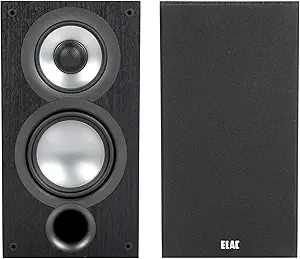
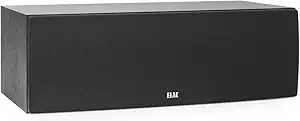
Acoustic Audio vs Elac: Overview & Brand Philosophy
In the expansive market of home audio, Acoustic Audio by Goldwood and ELAC occupy fundamentally different niches, driven by contrasting philosophies on acoustic engineering, target demographics, and cost distribution. Acoustic Audio focuses primarily on accessible, budget-conscious multi-channel systems, architectural in-wall/in-ceiling installations, and high-output outdoor sound reinforcement. Originating as a value-driven consumer brand, its philosophy revolves around maximizing the component count and perceived feature set per dollar spent, giving cost-conscious homeowners an affordable entry into surround sound and whole-home distributed audio without requiring heavy capital investment in specialized amplification.
Conversely, ELAC (Electroacustic GmbH) carries a storied German heritage dating back to 1926. While the brand initially engineered advanced sonar and precision phonograph components, its modern identity was revitalized by renowned loudspeaker designer Andrew Jones. ELAC’s core philosophy is uncompromising acoustic fidelity rooted in rigorous physics, scientific measurement, and high-performance component design. The company operates predominantly in the audiophile and enthusiast home theater spaces, engineering custom-tooled transducers, highly braced enclosures, and sophisticated crossover networks to deliver transparent, reference-grade sound. Where Acoustic Audio aims to fill a room cheaply, ELAC aims to recreate an acoustic space faithfully.
Key Differences & Technological Comparison
The engineering divide between Acoustic Audio and ELAC is evident across several critical design vectors, including driver composition, enclosure construction, crossover engineering, and acoustic tuning:
- Transducer Engineering: ELAC designs its drivers in-house from the ground up. Lines like the Debut and Uni-Fi series utilize custom aramid-fiber or aluminum woofers coupled with specialized wave-guided soft dome tweeters or concentric midrange/tweeter drivers. These materials minimize cone flex and ensure linear pistonic motion. Acoustic Audio relies heavily on standardized, off-the-shelf components, commonly employing basic polypropylene-coated paper cones and simple mylar or titanium-coated dome tweeters, which lack the precise transient response and low distortion figures of ELAC's proprietary designs.
- Cabinet Rigidity and Acoustics: ELAC prioritizes thick, internally braced MDF cabinets engineered to quell cabinet resonance and internal standing waves, preventing the cabinet itself from coloring the sound. Acoustic Audio products, tailored toward budget constraints and often lightweight architectural deployment, typically feature thinner ABS plastic housings (for architectural and outdoor units) or lightweight particle-board/thin MDF enclosures with minimal internal dampening, leading to audible resonance when driven at higher volumes.
- Crossover Networks: A critical differentiator lies in crossover design. ELAC employs complex multi-element crossover networks utilizing high-grade inductors, capacitors, and resistors to ensure a seamless acoustic transition between drivers and maintain phase linearity. Acoustic Audio systems typically utilize minimalist first-order crossovers (often just a basic inline capacitor on the tweeter), which results in phase anomalies, uneven frequency response, and an elevated potential for harmonic distortion at the crossover point.
- Amplification and Connectivity: Acoustic Audio often markets "all-in-one" active solutions featuring integrated Bluetooth receivers, SD card inputs, and raw spring-clip terminals geared toward plug-and-play simplicity. ELAC focuses largely on passive, high-fidelity speakers that require dedicated external amplification, utilizing robust five-way gold-plated binding posts. However, ELAC's active offerings (such as the Navis or Debut ConneX lines) incorporate high-end Class D/AB hybrid amplifiers and proprietary DSP, maintaining audiophile standards over convenience-driven feature-packing.
Pros & Cons Comparison
Acoustic Audio
- Pros:
- Extremely low barrier to entry with high affordability across multi-channel packages.
- Extensive portfolio of architectural (in-wall/in-ceiling) and weather-resistant outdoor speakers.
- All-in-one convenience packages that frequently include integrated amplification and basic consumer cabling.
- High sensitivity designs that can produce loud volumes without requiring high-current amplification.
- Cons:
- Limited dynamic range, often resulting in muddy midrange and harsh, fatiguing treble.
- Inconsistent frequency response with pronounced peaks and dips throughout the audio band.
- Use of lightweight enclosure materials prone to structural resonance and vibration coloration.
- Lower long-term durability on electronic components and integrated amplifiers.
ELAC
- Pros:
- Audiophile-grade sound quality characterized by exceptional imaging, deep soundstage, and neutral tonality.
- Proprietary driver technologies, including custom aramid-fiber cones and concentric driver arrays.
- Extremely rigid, acoustically inert cabinet designs that prevent acoustic colorations.
- Class-leading engineering overseen by celebrated acoustic designers, delivering high performance-to-cost ratios.
- Cons:
- Significantly higher purchase price compared to entry-level consumer brands.
- Many models feature lower sensitivity (e.g., 85–86 dB) and 4-to-6-ohm impedance loads, demanding high-current, high-quality amplification.
- Fewer ultra-budget, complete "home-theater-in-a-box" turnkey setups.
- Larger, heavier footprints that require deliberate room placement for optimal acoustic performance.
Performance, Durability & Value Analysis
From a critical listening perspective, the performance gap between these two manufacturers is expansive. ELAC speakers deliver wide, highly articulated soundstages, realistic instrumental separation, and flat frequency responses that faithfully reproduce the nuances of source material. In contrast, Acoustic Audio models tend to present a "V-shaped" or mid-scooped sound profile with elevated, somewhat brittle highs and loose, boomy lower-mid frequencies. While Acoustic Audio speakers provide sufficient clarity for casual television viewing, basic background music, or commercial installations like retail shops, they lack the micro-dynamic detailing and phase coherence required for critical high-resolution music reproduction.
In terms of longevity and financial value, both brands fulfill their intended market expectations differently. Acoustic Audio provides exceptional raw economic utility: the cost of an entire Acoustic Audio 5.1 in-wall system often falls below the price of a single passive ELAC bookshelf speaker. However, their lower-cost components, stamped-steel baskets, and lightweight surrounds are more susceptible to physical and electrical degradation over prolonged stress. ELAC structures represent long-term acoustic investments; utilizing thick structural baffles, heavy cast-aluminum baskets, robust butyl rubber surrounds, and heavy-duty voice coils, ELAC speakers maintain structural and sonic integrity for decades when paired with properly matched amplification.
Final Verdict: Which Brand Should You Choose?
The optimal choice between Acoustic Audio and ELAC comes down to your listening objectives, acoustic expectations, and equipment budget:
Choose Acoustic Audio if: You are working within a strict budget and need a complete, multi-speaker solution immediately. Acoustic Audio is ideal for basic background music in secondary zones (such as patios, garages, or basements), rental properties, commercial retail spaces, or casual multi-channel home theaters where high-output volume and total system affordability take precedence over pristine sonic fidelity.
Choose ELAC if: You care deeply about true high-fidelity audio, dynamic accuracy, and musical realism. If you are building a dedicated two-channel stereo listening system or a premium home theater, and you possess (or plan to purchase) a quality AV receiver or integrated amplifier capable of driving demanding loads, ELAC represents one of the highest-value investments in the audiophile industry today.
Product Selection
When analyzing product selection, Acoustic Audio by Goldwood and ELAC represent fundamentally different strategic approaches within the speaker market, dictated by their contrasting engineering philosophies and target demographics. Acoustic Audio prioritizes sheer volume, functional versatility, and aggressive affordability. Their expansive catalog casts an exceptionally wide net, focusing heavily on architectural audio (in-ceiling and in-wall speakers), multi-zone whole-home distribution setups, utilitarian all-weather outdoor speakers, and active, feature-packed PA-style Bluetooth systems. The technical strengths of Acoustic Audio’s lineup lie in accessible utility rather than acoustic perfection; their products frequently integrate pragmatic features such as high-level spring terminals, paintable magnetic grilles, multiple impedance switchers, and all-inclusive mounting hardware. This extensive selection caters effectively to budget-conscious homeowners, light commercial venues, and DIY renovators seeking high-channel-count setups without significant financial overhead, though it trades off high-end componentry, meticulous cabinet bracing, and acoustical phase coherence to achieve that breadth.
Conversely, ELAC executes a refined, audiophile-centric portfolio engineered with precision acoustic science, predominantly shaped by world-renowned transducer designer Andrew Jones and the brand’s historic German engineering roots. ELAC’s product selection is structurally organized into distinct, tiered performance ecosystems—ranging from the high-value Debut and Debut Reference series to the intermediate Uni-Fi lines, and culminating in reference-grade flagship offerings like the Vela and Concentro series. Rather than saturating the market with budget lifestyle accessories, ELAC’s catalog focuses squarely on high-fidelity passive and active stereo pairs, dedicated center channels, multi-driver home theater surrounds, and specialized subwoofers equipped with DSP and automated room equalization. Technically, their lineup distinguishes itself through proprietary driver implementations, such as concentric midrange-tweeter arrays, custom aramid-fiber woofers, and their signature hand-folded JET folded-ribbon tweeters, paired with thick, low-resonance MDF cabinets and sophisticated crossover networks.
The practical trade-offs regarding product selection ultimately separate architectural ubiquity from sonic fidelity. Acoustic Audio offers an unrivaled catalog for sprawling, low-cost structural integrations where discrete aesthetic blending and volume-of-output outweigh pinpoint soundstaging or ultra-low total harmonic distortion. However, their portfolio completely lacks the true audiophile-grade high-frequency resolution, dynamic headroom, and deep linear bass necessary to satisfy dedicated critical listeners. ELAC presents a far more focused, premium catalog where every model within a tier is voice-matched with precision, ensuring seamless spectral continuity across complex audio systems. While ELAC provides significantly fewer options for direct in-ground landscaping or budget mass-installation applications, their selection offers an authoritative continuum for home audio purists and serious home theater enthusiasts who prioritize engineering rigor, build quality, and superior transient response over absolute product variety.
Affordability
When analyzing the cost-to-performance dynamic between Acoustic Audio and ELAC, the definition of affordability diverges into entry-level volume pricing versus audiophile value proposition. Acoustic Audio, operating as a brand under the Goldwood umbrella, directly targets the budget-conscious consumer by maximizing the speaker count per dollar. Their catalog—spanning budget in-ceiling speakers, multi-channel surround setups, and active subwoofers—relies on cost-effective bill of materials (BOM), utilizing injection-molded polypropylene cones, stamped steel baskets, and rudimentary crossover topologies. This manufacturing strategy yields exceptionally low acquisition costs, making whole-home multi-room audio or full 5.1 home theater setups attainable for a couple of hundred dollars. However, this aggressive pricing requires practical trade-offs: frequency response tolerances are wide, cabinet resonance is noticeable due to lower-density fiberboards, and dynamic headroom is constrained by modest magnet assemblies and low voice-coil heat dissipation.
Conversely, ELAC represents high-fidelity affordability, where upfront costs are noticeably higher, but the return on investment regarding engineering and acoustic capability is disproportionately high. Championed by renowned audio designer Andrew Jones via the Debut and Uni-Fi series, ELAC democratizes genuine audiophile performance rather than simply competing at the rock-bottom floor of the consumer electronics market. The German-engineered brand invests in thick, internally braced MDF enclosures, woven aramid-fiber or aluminum woofers, custom-designed complex multi-element crossovers, and wide-dispersion spheroidal waveguides. While an entry-level pair of ELAC bookshelf speakers may cost as much as an entire multi-speaker bundle from Acoustic Audio, ELAC offers exceptionally flat phase response, refined harmonic distortion measurements, and pinpoint imaging, retaining its resale value and relevance as upstream audio gear improves over time.
Ultimately, the practical choice between these two brands rests on how a consumer defines their financial threshold against performance requirements. Acoustic Audio excels for casual utility: background audio, outdoor utility installations, commercial retail spaces, or first-time home theater builds on an absolute shoestring budget where raw coverage trumps clinical fidelity. ELAC, by contrast, targets dedicated music listeners and discerning home cinema enthusiasts who are willing to spend slightly more for precision engineering, linear spectral performance, and component longevity. Acoustic Audio wins on absolute out-of-pocket savings, but ELAC completely outclasses it in functional cost-per-performance, serving as the benchmark for genuine high-end audio accessibility.
Quality/Durability
When evaluating engineering quality and structural integrity, Elac operates in an entirely different tier than Acoustic Audio, reflecting its heritage of German acoustic research and precision design. Elac loudspeakers, particularly their acclaimed Debut and Uni-Fi lines spearheaded by renowned audio engineer Andrew Jones, feature robust internally braced MDF cabinets engineered to eradicate unwanted mechanical resonance. Their drivers utilize advanced materials such as custom aramid-fiber or aluminum cones, paired with cast aluminum baskets, oversized ceramic magnets, and audiophile-grade crossovers utilizing high-specification inductors and film capacitors. In contrast, Acoustic Audio, a brand managed by Goldwood, targets the budget-conscious consumer and custom installation market. While practical, their enclosures often employ thinner commercial-grade particleboard or lightweight molded ABS plastic, and their internal architecture relies on cost-efficient stamped steel frames, basic paper or poly-coated diaphragms, and rudimentary first-order crossover networks. This fundamental divergence in material science directly dictates long-term performance stability, with Elac maintaining superior acoustic precision under demanding thermal and mechanical loads.
From a durability and longevity standpoint, Elac speakers are explicitly engineered for enduring, high-fidelity performance across decades of use. Their surrounds are typically made of durable treated rubber that resists dry rot and environmental humidity, while their voice coils are wound with high-temperature wire capable of dissipating substantial heat during prolonged playback at high volumes without delaminating. Acoustic Audio designs, by contrast, offer trade-offs inherent to their price point: while their architectural in-ceiling and outdoor speakers feature moisture-resistant materials and UV-treated grills adequate for casual ambient sound, their structural thresholds are significantly lower. Under sustained high power, Acoustic Audio drivers are more vulnerable to thermal fatigue, voice coil rub, and foam surround degradation over time, whereas Elac speakers exhibit tighter manufacturing tolerances that ensure sonic characteristics do not drift or degrade over long ownership cycles.
Ultimately, the practical trade-offs regarding quality and durability boil down to application and investment scale. Acoustic Audio delivers serviceable, highly affordable utility for multi-room background audio, commercial installations, or low-cost home theaters where absolute structural rigidity and audiophile-grade components are not prioritized over sheer channel count. However, for consumers demanding robust build quality, premium tactile finishes, and road-tested electrical engineering that ensures acoustic fidelity will survive years of rigorous use, Elac is overwhelmingly the superior brand. Its superior cabinet damping, robust driver assemblies, and meticulously engineered internal components ensure that Elac represents a true long-term investment, leaving Acoustic Audio as an entry-level convenience play.
Sound Quality
When evaluating sound quality, Elac stands in a significantly higher acoustic tier than Acoustic Audio, largely due to its high-end engineering heritage and sophisticated component design. Spearheaded in recent years by renowned audio engineer Andrew Jones, Elac prioritizes acoustic neutrality, exceptional imaging, and audiophile-grade fidelity. The brand utilizes custom-designed drivers, such as aramid-fiber woofers and silk-dome or JET folded-ribbon tweeters, paired with complex, multi-element crossover networks. This translates to an expansive soundstage, remarkable midrange clarity, and a tight, articulate low-end with minimal cabinet resonance. Instruments and vocals are rendered with nuanced micro-details and natural timbre, making Elac the definitive choice for critical stereo listening, high-fidelity vinyl playback, and high-performance home theater systems.
Conversely, Acoustic Audio by Goldwood caters to the budget-conscious and utility-driven market, resulting in a sound profile that emphasizes volume, dynamic punch, and room-filling coverage over acoustic accuracy. Their speaker lineups frequently employ polypropylene cones, soft dome or piezo tweeters, and simpler crossover circuits housed in cost-effective enclosures. While Acoustic Audio products deliver satisfying, impactful bass and crisp highs suitable for casual background listening, outdoor entertainment, or affordable multi-room ceiling setups, they exhibit noticeable technical trade-offs. The high frequencies can lean harsh or sibilant at elevated volumes, the midrange often lacks depth and separation, and the low-end tends toward a boomy, less controlled decay compared to Elac’s tightly damped bass response.
Ultimately, the practical choice between these two brands comes down to sonic expectations versus investment. Elac demands a higher financial commitment and often requires quality upstream amplification to truly shine, but it rewards the listener with transparent, fatigue-free audio that reveals subtle textures in the source material. Acoustic Audio offers an accessible, high-efficiency solution that performs well for high-SPL applications, lively gatherings, and budget installations where critical listening is secondary to general sound dispersion. For discerning ears and pure sound reproduction, Elac is the decisive winner, while Acoustic Audio serves as a pragmatic, high-output alternative for entry-level audio needs.