Yamaha vs JBL: Overview & Brand Philosophy
In the home theater landscape, Yamaha and JBL represent two distinct schools of acoustic design and consumer audio philosophy. Yamaha approaches the soundbar market with the pedigree of a century-old musical instrument manufacturer and a pioneer in multi-channel AV receivers. In fact, Yamaha invented the modern "digital sound projector" category in the early 2000s, focusing heavily on beam-driver technology that physically bounces sound off walls to simulate discrete surround speakers. Their overarching design philosophy prioritizes tonal balance, acoustic transparency, dialogue clarity, and broad, cinematic dispersion through precise digital signal processing (DSP).
Conversely, JBL leverages its rich heritage in live-sound concert reinforcement, professional cinema installations, and mainstream consumer electronics under the Harman International umbrella (a subsidiary of Samsung). JBL's philosophy is rooted in high energy, impactful low-frequency response, and maximum dynamic range. Rather than relying solely on subtle virtualization, JBL has disrupted the premium soundbar market with inventive hardware solutions, most notably truly wireless, battery-powered detachable rear surround speakers. Where Yamaha delivers understated, refined fidelity suited to audiophiles and drama enthusiasts, JBL crafts bold, tactile, and explosive experiences targeted at modern blockbuster cinema and bass-heavy music.
Consequently, choosing between these two audio giants is rarely an issue of raw manufacturing quality; rather, it hinges on your acoustic environment, physical space constraints, and personal tonal preferences. Yamaha appeals to the listener seeking seamless integration and nuanced soundscapes, whereas JBL targets the consumer demanding plug-and-play simplicity combined with the visceral, high-SPL punch of a commercial theater.
Key Differences & Technological Comparison
The technological divide between Yamaha and JBL soundbars is evident across several key areas: acoustic processing, bass architecture, physical surround strategies, and smart connectivity.
Acoustic Processing and DSP: Yamaha relies heavily on proprietary sound-shaping algorithms developed over decades of analyzing global concert halls. Technologies like Clear Voice lift dialogue cleanly out of complex soundscapes without inducing harsh treble spikes, while Adaptive DRC (Dynamic Range Control) balances high and low volumes for comfortable late-night viewing. In higher-end models, Yamaha employs complex directional beam arrays driven by discrete amplifiers that calculate room reflections to yield genuine height and surround effects. JBL, on the other hand, leans on Harman's renowned scientific acoustic research, deploying MultiBeam technology alongside standard Dolby Atmos and DTS:X decoding. JBL focuses on a wide "sweet spot" rather than room-boundary dependent reflection, making its virtualization more forgiving in open-concept living rooms.
Bass Response and Subwoofer Integration: Bass presentation is perhaps the most immediate differentiator between the two brands. Yamaha soundbars, especially mid-tier offerings like the SR and YAS series, often feature dual built-in down-firing subwoofers with bass-reflex ports. The resulting low-end is musical, tight, and well-controlled, avoiding the boomy resonance that can muddy vocal clarity. JBL takes an unashamedly aggressive stance on low frequencies. Most JBL systems (such as the Bar series) include dedicated, high-excursion wireless subwoofers—often featuring massive 10-inch drivers delivering thunderous, floor-shaking extension down to sub-35Hz frequencies, making them unmatched for action movies and modern pop or electronic music.
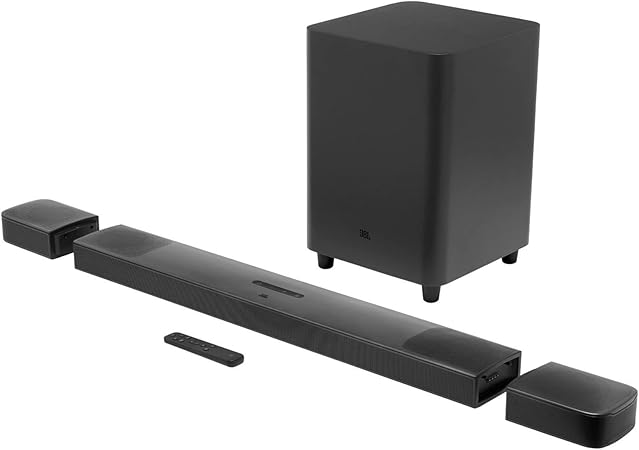
Surround Implementation and Hardware: While Yamaha favors self-contained single-chassis bars with sophisticated virtualization or traditional wired/wireless add-on satellites (via MusicCast), JBL revolutionized the category with its modular, battery-powered rear speakers. Models like the JBL Bar 800, 1000, and 1300 allow users to physically undock the ends of the soundbar and place them behind the couch for movie night, automatically re-calibrating the soundstage. This eliminates the unsightly power cords and complex routing associated with conventional surround sound, offering a major edge in physical convenience.
Ecosystem and Connectivity: Yamaha integrates its MusicCast platform into higher-tier soundbars, offering high-resolution multi-room audio, stable Wi-Fi streaming, and broad integration with standard smart home protocols. JBL bypasses proprietary multi-room ecosystems in favor of universal consumer protocols, outfitting nearly all current models with Chromecast built-in, Apple AirPlay 2, Alexa Multi-Room Music, and robust Bluetooth connectivity.
Pros & Cons Comparison
Yamaha Soundbars
- Pro: Exceptional Dialogue Clarity: The proprietary Clear Voice technology is among the best in the industry, making dialogue distinct even at low volumes.
- Pro: Refined Tonal Accuracy: Sound tuning is natural, musical, and balanced, preventing listener fatigue during long viewing or listening sessions.
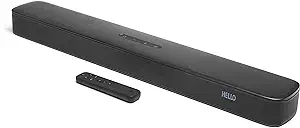
- Pro: Compact All-in-One Options: Market-leading standalone units that deliver decent low-end without requiring an external subwoofer footprint.
- Pro: MusicCast Ecosystem: Flawless multi-room streaming and robust high-resolution audio support across Yamaha AV gear.
- Con: Underwhelming Deep Bass on Sub-$400 Models: Bass is tight but often lacks the deep, visceral impact demanded by modern cinema.
- Con: Reliance on Room Geometry: Advanced sound-beam projection requires standard, reflective walls and struggles in large, open-concept floor plans.
- Con: Slower Feature Adoption: Slower to integrate consumer-friendly features like detachable wireless hardware and streamlined mobile app controls.
JBL Soundbars
- Pro: Modular Wireless Surrounds: Truly wireless, battery-powered detachable rears provide an authentic 5.1 to 11.1.4 cinema surround experience without trailing cables.
- Pro: Thunderous Subwoofer Performance: Massive wireless subwoofers deliver unmatched low-frequency rumble and physical presence in living spaces.
- Pro: Room Calibration Flexibility: MultiBeam auto-calibration handles asymmetric and open-concept spaces better than sound-reflection setups.
- Pro: Universal Smart Connectivity: Broad native support for AirPlay 2, Chromecast, and Bluetooth across virtually every tier.
- Con: Midrange Can Lack Nuance: The frequency response curves often emphasize a "V-shaped" sound (heavy bass and highs), occasionally leaving the vocal midrange slightly recessed.
- Con: Detachable Battery Longevity: Rechargeable rear speakers will inevitably experience lithium-ion battery degradation over multi-year lifespans.
- Con: Physical Footprint: Flagship soundbars and their accompanying 10-inch subwoofers are bulky and demand significant living-room real estate.
Performance, Durability & Value Analysis
From an acoustic durability and build perspective, both brands uphold rigorous industry standards, though they exhibit distinct manufacturing styles. Yamaha units favor industrial, durable cloth and matte polymer construction engineered to sit unobtrusively beneath displays for years without issue. Historically, Yamaha’s internal electronics, passive crossover components, and discrete amplifiers demonstrate exceptional longevity, with internal failure rates remaining among the lowest in the AV sector. JBL builds with robust metallic grilles and dense plastics designed to endure physical handling—especially critical for their detachable satellite designs. However, JBL’s reliance on rechargeable lithium-ion cells in its flagship rear units introduces a potential long-term point of failure that does not exist in standard mains-powered soundbar systems.
When assessing value, Yamaha captures the entry-level to mid-range sweet spot for consumers who demand high return on investment without aesthetic clutter. For under $300, a Yamaha all-in-one bar consistently out-resolves similarly priced competitors for television broadcasts, acoustic performances, and daily streaming. Conversely, JBL commands the high-value crown in the $800 to $1,500 flagship segment. Assembling an equivalent discrete Dolby Atmos system—comprising an AV receiver, ceiling speakers, surround satellites, and a 10-inch high-output subwoofer—routinely costs nearly twice as much and requires extensive wiring. JBL packs all of that multi-channel functionality into a singular, hassle-free retail box.
Final Verdict: Which Brand Should You Choose?
The decision between Yamaha and JBL comes down to acoustic priorities, room layout, and intended media consumption.
Choose Yamaha if: You are seeking an all-in-one or mid-range soundbar that effortlessly improves TV dialogue, delivers balanced and natural acoustics for music, and integrates into standard living room spaces without excessive clutter. Yamaha is the superior option for users in apartments, bedrooms, or homes where massive subwoofers are impractical, as well as for audio purists who favor vocal detail and accurate stereo reproduction over bone-jarring low-end theatrics.
Choose JBL if: You want an uncompromising, authentic cinema experience packed with visceral bass, explosive dynamics, and true surround sound without running wires through your walls. If you primarily consume Hollywood action movies, play immersive video games, or frequently host gatherings with bass-heavy music, JBL's high-output subwoofers and detachable surround speakers deliver an engaging, theater-grade experience that Yamaha cannot match at a comparable price point.
Product Selection
When evaluating product selection in the soundbar category, Yamaha and JBL approach their portfolio architectures with distinctly different engineering philosophies and target demographics. Yamaha leans heavily on its storied acoustic heritage, offering a highly curated, precision-focused lineup that primarily targets budget-conscious spatial seekers and serious home theater enthusiasts. Their catalog is defined by the foundational SR-series for entry-to-mid-tier plug-and-play deployments (such as the SR-B20A and SR-C30A compact units) and transitions into their high-end AV-centric gear, historically pioneered by their proprietary Digital Sound Projector technology. While Yamaha excels in compact, single-chassis designs with integrated subwoofers and pristine vocal clarity via their "Clear Voice" processing, their overall depth of catalog is narrower. Consumers looking for intermediate configurations often find fewer modular jump points in Yamaha's ecosystem, representing an engineering trade-off where acoustic purity and DSP-driven virtualization are prioritized over an expansive variety of form factors.
Conversely, JBL leverages the immense industrial resources of Harman to produce one of the most segmented and versatile soundbar lineups in consumer audio. Their "Bar" series features granular product tiers ranging from ultra-accessible 2.0-channel bedroom upgrades like the Bar 2.0 All-in-One to massive flagship surround solutions like the Bar 1300X. JBL’s key engineering strength in product diversity lies in their modular flexibility and low-end output, universally integrating class-leading, high-excursion subwoofers (frequently 10-inch drivers) and their signature detachable, battery-powered wireless rear surround speakers. This broad product distribution ensures that whether a buyer needs a slim, sub-less soundbar for a desktop, a multi-driver mid-tier Dolby Atmos setup with MultiBeam technology, or a completely wire-free, discrete 11.1.4-channel spatial powerhouse, JBL has a distinct model engineered specifically for that room dimension and performance threshold.
Ultimately, the practical trade-off in product selection boils down to acoustic specialization versus lifestyle adaptability. Yamaha offers a tighter, more concentrated selection where each SKU represents refined digital signal processing, exceptional stereo separation, and understated aesthetic engineering, making them an ideal choice for buyers who favor dialogue intelligibility and space-saving, all-in-one enclosures. JBL, however, wins in sheer catalog scope and progressive modularity. Their deep portfolio accommodates virtually every tier of cinematic ambition, offering superior options for consumers who demand discrete physics-based surround channels, high-wattage low-end slam, and future-proofed feature sets across a much wider price spectrum.
Design/Look
Yamaha and JBL represent two distinctly divergent design philosophies in the soundbar market, each catering to different aesthetic environments and functional priorities. Yamaha embraces a traditional, minimalist Japanese aesthetic characterized by understated elegance and acoustic functionality. Most Yamaha soundbars, such as the SR and YAS series, feature low-profile, slim enclosures wrapped in acoustically transparent black or charcoal fabric. The structural engineering prioritizes a low vertical clearance—often hovering under 2.5 inches—to ensure seamless placement beneath modern low-stand televisions without obstructing the screen or infrared receivers. Built-in keyhole slots are standard and engineered flush with the chassis, making wall-mounting exceptionally clean. The trade-off for Yamaha's subdued, textile-heavy approach is long-term durability and maintenance; the fabric mesh tends to attract dust, pet hair, and is susceptible to snagging compared to rigid materials.
Conversely, JBL leans into a modern, rugged, and high-tech industrial aesthetic defined by rigid metal grilles, matte plastics, and sweeping, rounded contours. Models like the Bar series replace fabric with full-coverage, micro-perforated metallic front and top grilles, delivering superior resilience against physical wear and effortless cleanability. JBL's most notable industrial engineering triumph is found in its modular architecture; higher-end models feature truly wireless, detachable rear surround speakers that dock directly into the main chassis via magnetic connectors. This allows the system to alternate between a clean, unified single-bar look and a fully articulated multi-speaker home theater layout without permanent cable clutter. However, the technical consequence of JBL's feature-heavy and driver-dense design is a visibly bulkier, deeper chassis with a higher vertical profile, which can overpower smaller media consoles or partially block the bottom edge of ultra-low-profile TVs.
From an interactive design perspective, the brands diverge significantly in their approach to user feedback. Yamaha heavily favors minimalist, top-mounted tactile buttons paired with cryptic array LEDs that change patterns to communicate input, volume, and sound modes—a subtle design choice that keeps the front baffle clean, but often frustrates users who cannot easily read status cues from across a dark room. JBL resolves this practical usability issue by integrating high-contrast, alphanumeric LED displays directly behind the metallic front grille, which illuminate brightly during adjustment and disappear seamlessly into the enclosure when idle. Ultimately, consumers seeking an unobtrusive, furniture-friendly soundbar that quietly blends into the background will gravitate toward Yamaha’s refined fabric profiles, whereas those valuing robust materials, prominent digital feedback, and modular engineering will find JBL's bold, durable design superior.
Affordability
When assessing affordability in the soundbar category, Yamaha approaches value through acoustic precision, audio processing efficiency, and long-term durability. Rather than competing in the ultra-budget tier with hollow specifications, Yamaha strategically positions its entry-level and mid-range offerings—most notably the SR-B and SR-C series—to deliver exceptional acoustic performance per dollar. The brand leverages proprietary technologies, such as Clear Voice processing and DTS Virtual:X, to simulate multi-channel audio without necessitating costly, bulky hardware like outboard wireless subwoofers or satellite speakers. This makes Yamaha uniquely affordable for consumers with spatial constraints or those seeking a standalone, plug-and-play upgrade to integrated television speakers. By focusing their engineering expenditures on low-distortion drivers, balanced crossovers, and robust internal amplifiers, Yamaha provides audiophile-leaning sound reproduction at price points often dominated by consumer-grade plastics and muddy bass.
Conversely, JBL approaches affordability by maximizing hardware volume and immediate sonic impact, operating under a tiered product strategy that appeals directly to mainstream, bass-forward preferences. JBL’s Bar series frequently includes dedicated wireless subwoofers even at budget-friendly price points (such as the Bar 2.1 Deep Bass), offering raw output, substantial low-end extension, and multi-channel hardware configurations that typically demand a higher premium from other legacy audio manufacturers. In the mid-to-high tiers, JBL’s value proposition evolves into feature-rich multifunctionality, famously offering modular setups with battery-powered, detachable wireless rear surround speakers that provide genuine 5.1 or Dolby Atmos setups at a fraction of the cost of discrete AV receiver systems. The brand’s sheer manufacturing scale under the Harman International and Samsung umbrella enables it to integrate modern connectivity, including Google Cast, AirPlay 2, and advanced HDMI eARC passthrough, while maintaining aggressively competitive street pricing.
The practical trade-offs regarding affordability between the two brands come down to acoustic fidelity versus modular functionality. Yamaha yields the highest return on investment for budget-conscious buyers seeking natural midrange reproduction, clear dialogue intelligibility, and a low-profile aesthetic, though consumers sacrifice subterranean bass response and true physical surround immersion at lower price tiers. JBL, on the other hand, wins on perceived dollar-for-spec value, delivering superior decibel output, visceral low-frequency impact, and versatile peripheral ecosystems, but budget models can occasionally suffer from aggressive V-shaped sound profiles and plastic-heavy enclosures. Ultimately, Yamaha represents acoustic value through disciplined engineering and refined tonal balance, whereas JBL captures affordability by offering full-bodied, cinema-style multi-component hardware at accessible consumer price thresholds.
Sound Quality
When evaluating sound quality, Yamaha and JBL approach acoustic engineering from fundamentally distinct philosophies, catering to different listening preferences. Yamaha leverages its extensive heritage in musical instrument manufacturing and professional studio audio to deliver a balanced, natural, and detail-oriented acoustic signature. Across models like the SR-B20A and the higher-end True X-Bar series, Yamaha focuses on acoustic purity and midrange intelligibility. By utilizing meticulously tuned proprietary drivers, sophisticated digital signal processing (DSP), and advanced audio algorithms like Clear Voice, Yamaha soundbars excel at unraveling dialogue from dense background scores. The resulting soundstage is expansive and articulate, prioritizing fidelity and instrumental separation over exaggerated frequencies, making Yamaha an audiophile-friendly choice for cinematic dramas and high-resolution music listening.
Conversely, JBL, backed by the acoustic research of Harman International, builds its soundbar lineup around high-energy impact, dynamic range, and class-leading low-frequency response. Through models like the JBL Bar 500 and the flagship Bar 1300, the brand emphasizes physical immersion and tactile bass, often pairing soundbars with oversized 10-inch subwoofers. JBL soundbars feature Harman’s MultiBeam technology and precision-angled drivers to project sound around the room, yielding a lively, V-shaped sound signature that produces authoritative explosions, punchy mid-bass, and crisp highs. While dialogue remains clear thanks to PureVoice technology, JBL inherently tunes its systems for modern, fast-paced action blockbusters and bass-heavy music genres rather than delicate, neutral acoustic playback.
Ultimately, the sound quality trade-off between the two brands hinges on fidelity versus cinematic energy. Yamaha holds the technical advantage for consumers seeking an authentic, neutral representation of audio tracks, offering superior tonal balance and immersive virtual surround processing (via DTS Virtual:X and Dolby Atmos) that avoids artificial coloring. However, buyers who demand room-shaking, visceral sub-bass without having to manually tweak EQ settings will find standard Yamaha bars somewhat restrained. JBL excels at delivering massive dynamic presence and true physical surround through detachable wireless rear speakers on select models, though it can occasionally sacrifice subtle micro-details in favor of sheer acoustic power and high-volume stability.