TCL vs VIZIO: Overview
Comparing TCL and VIZIO helps you determine which brand is best suited for your needs in Soundbars. Both brands offer strong choices depending on your budget and key feature requirements.
Key Features & Comparison
Evaluate factors such as build quality, warranty, customer satisfaction, and total value before making your final purchase choice between TCL and VIZIO.
Product Selection
When examining product selection, VIZIO holds a definitive historical advantage and offers a more meticulously segmented catalog than TCL. VIZIO organizes its soundbar ecosystem cleanly across the V-Series, M-Series, and high-end Elevate lines, catering precisely to varying user requirements from compact 2.0 all-in-one bars up to complex 5.1.4 Dolby Atmos spatial audio setups with mechanical rotating height speakers. This deliberate tiering makes it straightforward for consumers to locate hardware that matches specific room sizes, physical channel demands, and home theater aspirations without significant overlap or functional ambiguity.
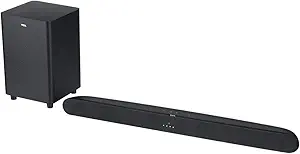
TCL has steadily expanded its audio portfolio through its S-Series and premium Q-Series lineups, yet its overall market coverage remains narrower and somewhat more home-theater-lite than VIZIO's. While TCL produces competitive 2.1, 3.1, and 5.1 channel solutions featuring wireless subwoofers and satellite speakers, its flagship offerings lack the high-concept architectural diversity seen in VIZIO’s rotating-driver Elevate models. Instead, TCL's product selection leans heavily toward companion audio for its dominant television line, focusing primarily on mainstream, high-volume consumer configurations that deliver straightforward value rather than extreme enthusiast-grade multi-channel configurations.
Design/Look
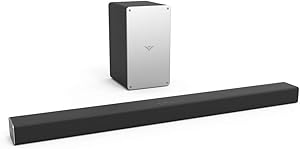
VIZIO soundbars are characterized by an understated, modern design language that emphasizes low-profile physical footprints and contemporary acoustic fabric wraps. The brand deliberately engineers its enclosures to tuck neatly under TV bezels, with thin vertical clearances that prevent IR sensor blockage on most displays. In its higher-end units, VIZIO showcases engineering sophistication with brushed metallic accents and the signature motorized side speakers of the Elevate series, which automatically rotate upward when Atmos signals are detected—providing an unmistakable visual cue of technical performance alongside clean, premium styling.
TCL takes a more conventional, utilitarian approach to industrial design, featuring angular chassis profiles often dominated by rigid plastic grilles, matte synthetic shells, and subtle geometric patterns. While the Q-Series attempts a more refined aesthetic with metallic accents and sleeker profiles, TCL soundbars generally prioritize durability and cost-effective manufacturing over living-room luxury. They fit well in modern entertainment centers without drawing undue attention, but they lack the tailored, fabric-wrapped elegance and mechanical showmanship that define VIZIO’s mid-to-premium hardware tiers.
Affordability
In the entry-level audio segment, TCL is an exceptionally aggressive competitor, frequently undercutting rival brands by significant margins. TCL leverages massive internal manufacturing efficiencies to produce 2.0, 2.1, and basic multichannel bars that deliver essential modern connectivity—such as HDMI ARC/eARC and Bluetooth—at price points that represent minimal barriers to entry. For price-conscious buyers seeking an immediate, inexpensive upgrade over tinny integrated TV speakers without crossing into triple-digit territory, TCL provides immense baseline value.
VIZIO commands slightly higher retail pricing across equivalent tier labels, but it consistently delivers superior functional value per dollar when factoring in channel count, driver quality, and included accessories. Rather than competing strictly on bottom-dollar pricing, VIZIO frequently includes dedicated wireless subwoofers and discrete wired surround satellites even in its budget-friendly V-Series packages. This means that while a consumer might spend marginally more on a VIZIO unit up front, the cost per physical surround channel and overall acoustic return on investment is often higher than comparable TCL bundles.
Sound Quality
VIZIO has established an impressive reputation in the budget and mid-tier audio spaces for acoustic tuning that balances dialogue clarity with impactful low-frequency punch. VIZIO models typically exhibit a wide front soundstage, well-calibrated dedicated center channels for distinct vocal reproduction, and surprisingly capable subwoofers that cross over smoothly without sounding excessively boomy. In Atmos-enabled configurations, VIZIO’s implementation of dedicated up-firing or motorized height drivers provides authentic overhead acoustic reflection, yielding an immersive, coherent spatial sound bubble that punches well above its price class.
TCL delivers solid, dynamic sound that is a massive upgrade over internal display speakers, though its acoustic tuning leans toward a bass-heavy, consumer-oriented profile that can occasionally compromise mid-range definition. Dialogue remains clear on models equipped with dedicated center drivers, but lower-tier 2.1 configurations can suffer from muddy dialogue during high-intensity scenes as low-end frequencies overpower nuanced mid-tones. Furthermore, TCL relies more frequently on virtualized spatial audio algorithms rather than dedicated physical up-firing transducers, resulting in Atmos soundstages that lack the precise height positioning and vertical depth achieved by VIZIO’s dedicated hardware.