Samsung vs BESTISAN: Overview & Brand Philosophy
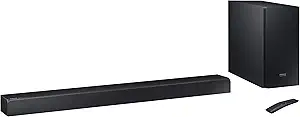
The home audio landscape has shifted dramatically over the past decade, moving away from complex, wire-heavy component systems toward streamlined, high-performance soundbars. In this competitive space, Samsung and BESTISAN represent two entirely different philosophies of product design, marketing, and market positioning. Samsung approaches the category as a global consumer electronics titan, leveraging vast research and development budgets, ownership of prestigious audio labs (including Harman Kardon), and deep ecosystem integration with its world-leading television lineup. For Samsung, the soundbar is not just a speaker; it is an intelligent, acoustically tuned centerpiece designed to deliver cinematic immersion up to full 11.1.4-channel spatial audio.
Conversely, BESTISAN operates on a hyper-focused direct-to-consumer model that prioritizes utility, simplicity, and extreme budget accessibility. Recognizing that modern flat-panel televisions universally suffer from weak, rear-firing down-speakers, BESTISAN entered the market to solve a single, widespread consumer pain point: poor dialogue clarity and thin sound at a price point nearly anyone can afford. Rather than attempting to pioneer proprietary 3D audio algorithms or multi-room wireless networks, BESTISAN refines basic acoustic principles, utilizing wooden enclosures, full-range dynamic drivers, and essential digital inputs to dramatically outperform built-in TV speakers without inflating retail margins.
While an initial comparison between an industry behemoth like Samsung and an agile budget-tier manufacturer like BESTISAN might seem unbalanced, both brands serve critical roles in today’s audio marketplace. Understanding their differences requires looking beyond raw brand recognition and evaluating how each manufacturer solves specific audio problems, who their target user is, and where the performance-to-price curve provides the greatest return on consumer investment.
Key Differences & Technological Comparison
The primary technical divide between Samsung and BESTISAN lies in acoustic architecture, digital signal processing (DSP), and spatial sound rendering. Samsung operates on the leading edge of psychoacoustic engineering. Higher-end models in its Q-Series incorporate advanced technologies such as Dolby Atmos and DTS:X decoding, up-firing height channels, side-firing wide beams, and automated room-correction software (SpaceFit Sound). Even in its entry-level and mid-range tiers, Samsung provides sophisticated multi-band equalizers, dedicated voice-enhancement channels, and proprietary integrations like Q-Symphony, which synchronizes soundbar output with compatible Samsung TV speakers for a wider soundstage.
In contrast, BESTISAN relies on time-tested, analog-friendly acoustic design. While BESTISAN lacks Dolby Atmos or complex object-based decoding, the brand distinguishes itself in the sub-$100 category by opting for high-density wood (MDF) cabinets instead of the hollow, molded plastic enclosures frequently found among cheap competitors. MDF construction naturally dampens cabinet resonance and reduces harmonic distortion, yielding a surprisingly warm, resonant mid-range. BESTISAN units feature integrated DSP presets (typically optimized for Movies, Music, and Dialogue), but they rely almost exclusively on stereo (2.0) or entry-level 2.1 channel configurations with discrete internal or wired subwoofers.
Connectivity options also clearly delineate the two manufacturers. Samsung prioritizes modern digital standards, equipping the majority of its soundbar portfolio with HDMI eARC (enhanced Audio Return Channel), optical inputs, Wi-Fi streaming (AirPlay 2, Spotify Connect, Chromecast), and advanced Bluetooth codecs. This allows uncompressed high-bitrate surround sound to pass directly from the television to the soundbar. BESTISAN focuses on broad, legacy-friendly compatibility: optical TOSLink, 3.5mm AUX, RCA-to-AUX, USB audio playback, and standard Bluetooth (SBC/AAC). BESTISAN’s omission of HDMI ARC/eARC on several core models means users often have to manage audio via an optical cable and juggle two remotes, whereas Samsung seamlessly integrates into standard TV-remote CEC ecosystems.
Pros & Cons Comparison
Samsung: Strengths & Weaknesses
- Pro: Industry-leading spatial audio support, including true discrete Dolby Atmos and DTS:X processing.
- Pro: Seamless ecosystem integration via HDMI eARC, HDMI passthrough, and Samsung TV Q-Symphony syncing.
- Pro: Advanced automated room calibration (SpaceFit Sound) that tunes output to individual room geometry.
- Pro: Robust wireless options including Wi-Fi casting, AirPlay 2, and multi-room grouping.
- Con: Significantly higher entry cost, with premium systems reaching into four figures.
- Con: Lower-tier plastic enclosures can sometimes sound thin without the subwoofer engaged.
BESTISAN: Strengths & Weaknesses
- Pro: Exceptional value-to-cost ratio, delivering noticeable upgrades over native TV audio for under $100.
- Pro: High-density wood (MDF) housing minimizes cabinet rattle and improves vocal warmth.
- Pro: Simple plug-and-play setup without the need for Wi-Fi networks, mobile apps, or accounts.
- Pro: Comprehensive physical connectivity options for older TVs, desktop monitors, and turntables.
- Con: Complete lack of advanced surround formats like Dolby Atmos, DTS:X, or 5.1 multi-channel decoding.
- Con: Frequent absence of HDMI ARC/eARC prevents single-remote TV integration on several models.
- Con: Sub-bass performance is limited on standalone bars without an active external subwoofer.
Performance, Durability & Value Analysis
From an objective performance standpoint, Samsung easily sweeps benchmarks relating to dynamic range, frequency response reach, and three-dimensional spatial reproduction. A mid-to-high tier Samsung system can cleanly dip into the 30Hz-35Hz sub-bass region using robust wireless subwoofers, while dedicated center tweeters ensure pristine dialogue articulation even amidst heavy explosions and cinematic scores. Build quality across Samsung’s lineup is consistent and durable, backed by international quality-assurance pipelines, extensive supply networks, and reliable firmware updates distributed via smart apps. However, consumers pay a premium for these perks; the brand’s price-to-performance sweet spot exists in the upper mid-range, making them a calculated investment rather than an impulse buy.
BESTISAN, on the other hand, delivers remarkable value per dollar spent by sticking to the fundamentals. While you will not experience overhead sound effects or chest-thumping sub-bass notes from a standalone BESTISAN soundbar, its dialogue clarity and vocal frequency separation often match or beat budget soundbars from household brands that cost twice as much. Durability is surprisingly high thanks to the rigid wood housing, though the internal electronics, power supplies, and lightweight remotes are clearly budget-grade components. If the unit is used in a secondary bedroom, dorm, or home office setup, a BESTISAN bar can comfortably run for years without technological obsolescence, precisely because its simple inputs (Optical and AUX) do not depend on evolving software ecosystems.
Final Verdict: Which Brand Should You Choose?
Choosing between Samsung and BESTISAN comes down to defining the scope of your audio ambitions, your physical setup, and your budget limitations. Neither brand is universally superior because they address entirely different customer expectations.
Choose Samsung if: You are outfitting a primary living room, media room, or dedicated home theater, and you demand an immersive, cinematic experience. Samsung is the clear winner for film enthusiasts, gamers who rely on 3D positional audio cues, and owners of modern 4K/8K TVs looking for hassle-free control via HDMI eARC and TV-remote synchronization. If your budget spans from $200 to over $1,000 and you want expandable, theater-grade sound with deep sub-bass, Samsung is well worth the investment.
Choose BESTISAN if: Your primary objective is simply fixing muffled TV dialogue, improving casual music listening, or upgrading a secondary screen (such as a bedroom, garage, or computer monitor) on a strict budget under $100. If you do not care about spatial Dolby Atmos audio, have an older TV without HDMI eARC, or prefer a straightforward plug-and-play wooden speaker that requires zero network configuration, BESTISAN offers some of the highest value on the market today.
Product Selection
When evaluating product selection in the soundbar category, Samsung and BESTISAN represent fundamentally different tiers of market scope, engineering ambition, and architectural variety. Samsung boasts one of the most comprehensive portfolios in the audio industry, structured hierarchically across its entry-level B-series, lifestyle-centric Ultra Slim (S-series), and flagship cinematic Q-series. This expansive ecosystem ranges from accessible 2.0-channel compact units to fully realized 11.1.4-channel surround environments featuring wireless physical rear surrounds and independent subwoofers. In contrast, BESTISAN operates with a hyper-focused, budget-conscious catalog primarily consisting of 2.0, 2.1, and basic powered stereo configurations. BESTISAN’s selection is engineered strictly to solve the problem of poor integrated television audio, offering utilitarian designs such as detachable soundbars that split into vertical tower speakers and low-profile units tailored for desktop or small-room use, but it completely eschews high-channel-count, immersive spatial arrays.
The technical divergence in feature availability across each brand's product lineup further highlights this disparity in consumer options. Samsung’s higher-tier catalog integrates cutting-edge acoustic engineering, including discrete up-firing and side-firing physical drivers, proprietary SpaceFit Sound room calibration, Q-Symphony television-speaker synchronization, and native hardware decoding for uncompressed Dolby Atmos and DTS:X over HDMI eARC. Conversely, BESTISAN’s product matrix relies on simplified DSP presets (Movie, Music, Dialogue), optical inputs, analog auxiliary jacks, and standard Bluetooth streaming, virtually lacking HDMI eARC connectivity and advanced multi-channel object-based audio decoding across its fleet. While BESTISAN provides solid driver integration for clean stereo separation, their lineup lacks true low-frequency infrastructure, leaning heavily on internal bass reflex tubes or modest wired subwoofers that cannot reproduce the deep, sub-30Hz acoustic pressure achieved by Samsung’s high-excursion wireless acoustic suspension modules.
Ultimately, the practical trade-off between these brands comes down to situational application versus capital investment. BESTISAN’s lean product lineup offers remarkable value for consumers furnishing secondary living spaces, bedrooms, or PC gaming setups where budget constraints dominate and standard stereo enhancement is the sole objective. The absence of complex networking and surround hardware in BESTISAN's range translates to effortless, plug-and-play simplicity. However, for enthusiasts seeking an authentic home theater trajectory, Samsung’s catalog is objectively superior. Samsung provides a fully scalable ecosystem capable of accommodating distinct room acoustics, offering future-proof AV receiver-like performance, high-bandwidth passthrough (such as 4K/120Hz on select flagships), and modular add-on capabilities that BESTISAN simply does not engineer into its product portfolio.
Design/Look
From an industrial design and engineering perspective, Samsung and BESTISAN approach soundbar aesthetics from fundamentally different market philosophies. Samsung leverages its massive consumer electronics R&D infrastructure to deliver sleek, architectural audio pieces designed to blend seamlessly into modern living spaces. Their soundbars, particularly the Q-Series and Ultra Slim lineups, feature premium materials like acoustically transparent micro-perforated steel grilles, geometric angular bevels, and matte-finished polycarbonate that resists fingerprint smudges. Beyond superficial styling, Samsung's physical engineering emphasizes ultra-low profiles, often under two inches in height for slim models, specifically engineered to slide beneath low-clearance television stands without obstructing infrared sensors or screen real estate. The minimalist integration extends to hidden LED text displays that fade out when inactive, preserving an unobtrusive, monolithic aesthetic.
Conversely, BESTISAN operates in the high-value budget space, yet it adopts an unexpectedly traditional, hi-fi aesthetic that diverges sharply from Samsung’s tech-forward minimalism. Rather than thin plastics and metal meshes, several BESTISAN models feature dense wooden (MDF) cabinet construction wrapped in simulated wood-grain vinyl or deep gloss-black piano finishes, flanked by classic fabric speaker grilles. Acoustically, this heavy, rigid wood enclosure reduces structural cabinet resonance, representing a functional design win at a low price point. However, the trade-offs in modern utility are apparent: BESTISAN soundbars are frequently bulkier, taller, and deeper than Samsung’s units, which can cause logistical challenges when positioning them directly in front of modern, low-profile TVs. Furthermore, BESTISAN’s interface design is comparatively rudimentary, often relying on simple multi-colored status LEDs rather than alphanumeric displays, requiring users to memorize color-coded inputs.
Ultimately, the choice between the two brands regarding design hinges on the consumer's interior layout and integration priorities. Samsung excels in cohesive ecosystem harmony; their bars are engineered to visually complement contemporary flat-panel displays, offer sophisticated hidden cable-routing channels, and provide specialized wall-mounting hardware that keeps the unit flush to the drywall. BESTISAN provides an appealing retro-audio look that mimics traditional bookshelf speakers, making it a charming standalone centerpiece for desktop gaming setups, secondary bedrooms, or vintage-inspired living rooms. While BESTISAN proves that budget audio hardware does not have to feel hollow, Samsung undeniably leads in streamlined spatial integration, refined material tolerances, and ultra-modern industrial polish.
Affordability
When evaluating affordability in the soundbar market, BESTISAN and Samsung operate under fundamentally different pricing architectures and value propositions. BESTISAN positions itself strictly within the entry-level, budget-conscious segment, prioritizing hyper-accessible pricing without sacrificing essential audio improvements over built-in television speakers. From an engineering standpoint, BESTISAN achieves its low price point by utilizing cost-effective MDF wooden enclosures, simplified Class-D amplification, and standardized acoustic drivers. This stripped-back approach allows them to offer functional 2.0 and 2.1 channel setups—often bundled with basic Bluetooth connectivity and analog/optical inputs—at a fraction of the cost of tier-one competitors. However, the trade-off for this extreme affordability lies in technical limitations: users forfeit advanced digital signal processing (DSP), HDMI eARC functionality, and modular expandability, resulting in a product engineered primarily for utility rather than high-fidelity immersion.
Conversely, Samsung approaches affordability through a multi-tiered portfolio strategy that spans from the accessible, entry-level B-series and C-series up to premium, flagship Q-series architectural systems. While Samsung’s lowest-priced models command a cost premium over comparable BESTISAN units, they justify the price disparity with superior engineering standards, proprietary acoustic lab tuning, and advanced software integration. Even Samsung's budget offerings frequently incorporate technologies such as dedicated center channels for dialogue clarity, wireless external subwoofers with custom bass-reflex engineering, and HDMI ARC support for seamless consumer electronics control (CEC). Furthermore, Samsung’s ecosystem allows for long-term value retention through forward-compatible wireless rear speaker expansion kits, Dolby Audio processing, and proprietary Q-Symphony integration with Samsung televisions, mitigating the need for premature upgrades.
In conclusion, the decision between BESTISAN and Samsung regarding affordability depends heavily on how a consumer defines value. BESTISAN dominates absolute upfront affordability, serving as an exceptional low-risk solution for secondary rooms, desktop setups, or consumers strictly seeking higher volume and basic stereo separation on a constrained budget. Samsung, however, represents superior functional affordability and long-term return on investment. While demanding a higher initial capital outlay across both its entry and mid-tier tiers, Samsung delivers a markedly more sophisticated feature set, refined acoustic calibration, broad format decoding (including spatial formats like Dolby Atmos on mid-to-high tiers), and superior post-purchase customer support infrastructure, making it the more cost-effective choice per audio feature delivered.
Sound Quality
When evaluating sound quality, BESTISAN and Samsung approach acoustic engineering from fundamentally different market tiers. BESTISAN focuses on maximizing acoustic value within the ultra-budget segment, relying on straightforward driver configurations and ported enclosures to deliver an immediate upgrade over tinny, integrated television speakers. Their systems generally offer decent mid-range clarity, making dialogue intelligible for standard broadcast television, and provide surprisingly punchy upper-bass response given their compact physical footprints. However, BESTISAN units often encounter technical limitations at higher volumes, where their smaller class-D amplifiers and basic full-range drivers struggle, resulting in noticeable harmonic distortion, a congested soundstage, and rolled-off high frequencies that lack micro-detail.
In contrast, Samsung leverages its dedicated Audio Lab in California to produce industry-leading acoustic performance that spans mid-tier value to elite home theater immersion. Samsung soundbars frequently employ multi-channel architectures with dedicated center channels, wide-range tweeters, side-firing drivers, and up-firing Dolby Atmos and DTS:X height channels. This advanced hardware is paired with sophisticated digital signal processing (DSP), such as SpaceFit Sound room calibration and Q-Symphony integration, which actively tunes audio output to the specific acoustic characteristics of the listening environment. The result is a vastly superior dynamic range, pin-point spatial imaging, crystalline treble detail, and deep, controlled sub-bass via wireless subwoofers that maintain low distortion even at high sound pressure levels.
The practical trade-offs in sound quality between these two brands ultimately center on performance expectations versus financial investment. BESTISAN provides an economical, plug-and-play solution suitable for secondary spaces like bedrooms or small apartments, where simple vocal clarity and modest volume are sufficient. Conversely, Samsung delivers an expansive, theater-grade soundstage engineered for critical listening, action-heavy cinematic content, and high-fidelity music streaming. For consumers prioritizing immersive three-dimensional spatial audio, seamless frequency balance, and acoustic precision, Samsung’s advanced DSP and driver engineering vastly outperform the entry-level physical limits of BESTISAN.