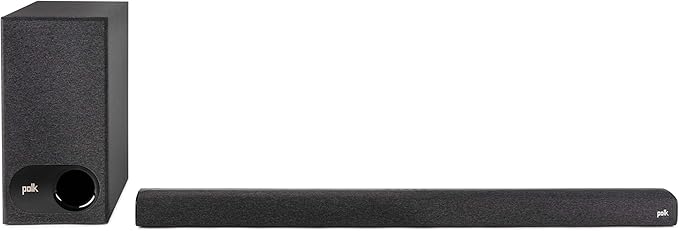
Polk Audio vs TaoTronics: Overview & Brand Philosophy
When navigating the modern soundbar market, consumers are often caught between heritage audio engineering and budget-driven utility. Polk Audio, founded in Baltimore in 1972, represents the former. As a mainstay in the American hifi space, Polk has spent decades developing patented acoustic technologies aimed at delivering high-fidelity sound at accessible price points. In the soundbar category, Polk’s philosophy revolves around authentic acoustic separation, vocal clarity, and multi-channel home theater immersion, leveraging deep technical expertise to engineer purpose-built drivers, tuned enclosures, and robust digital signal processing.
In contrast, TaoTronics emerged from the consumer electronics manufacturing boom as a direct-to-consumer brand focused on utility, ultra-low pricing, and desktop versatility. Rather than prioritizing audiophile-grade acoustic precision, TaoTronics focuses on solving a fundamental modern issue: replacing thin, underpowered built-in television and monitor speakers with a compact, plug-and-play solution. Their brand philosophy is built entirely on utilitarian value, offering basic stereo amplification, wireless Bluetooth streaming, and compact form factors without the premium overhead associated with specialized acoustic research and development.
Key Differences & Technological Comparison
The technical divergence between Polk Audio and TaoTronics is vast, reflecting their differing market segments across acoustic architecture, processing capabilities, and physical design.
- Acoustic Architecture and Driver Design: Polk Audio soundbars feature proprietary multi-driver arrays, dedicated tweeters, and dynamic balance drivers, often paired with wireless subwoofers tuned for precise low-end roll-off. TaoTronics typically relies on small full-range micro-drivers augmented by passive radiators, which provide basic stereo separation but struggle with dynamic range and lower-midrange frequencies.
- Vocal Clarity and Tuning: A standout feature across Polk’s lineup is patented VoiceAdjust technology, which allows listeners to isolate and elevate dialogue channels independently of the master volume. TaoTronics relies on standard pre-set equalizer modes (e.g., Movie, Music, Dialogue) that broadly boost mid-frequencies, often introducing harshness at higher volume thresholds.
- Surround Formats and Decoding: Polk integrates advanced decoding codecs such as Dolby Digital, DTS, and in their mid-to-high tier models (like the Signa and MagniFi series), Dolby Atmos with eARC support. TaoTronics units generally process only basic standard PCM stereo signals via optical or auxiliary inputs, lacking multi-channel spatialization.
- Build Quality and Aesthetics: Polk utilizes premium materials, including acoustically transparent woven fabrics, high-density composites, and reinforced internal bracing to eliminate cabinet resonance. TaoTronics enclosures are primarily constructed from lightweight ABS plastic and stamped metal grilles, functional for desktop setups or secondary bedrooms but prone to chassis vibration at high volumes.
- Connectivity and Smart Features: Polk soundbars frequently offer comprehensive I/O options, including HDMI-eARC, Wi-Fi streaming (Google Cast, Apple AirPlay 2), and Amazon Alexa integration. TaoTronics limits connectivity to fundamental inputs: basic optical, 3.5mm AUX, and standard Bluetooth (SBC codec).
Pros & Cons Comparison
Polk Audio
Pros:
- Proprietary VoiceAdjust technology ensures class-leading dialogue intelligibility.
- Advanced multi-channel surround sound handling, including Dolby Atmos and DTS support on select models.
- Superior dynamic range and bass control with dedicated wireless subwoofers.
- Comprehensive connectivity options including HDMI-ARC/eARC and Wi-Fi streaming.
- Durable construction utilizing acoustically inert structural materials.
Cons:
- Significantly higher investment cost compared to entry-level budget brands.
- Larger physical footprints that may not suit cramped computer desks or compact setups.
TaoTronics
Pros:
- Extremely cost-effective entry point for replacing flat-screen TV speakers.
- Compact, low-profile designs that fit easily beneath PC monitors and small TVs.
- Simple, intuitive plug-and-play operation with minimal configuration required.
- Reliable Bluetooth pairing for quick casual audio playback from mobile devices.
Cons:
- Prone to audio distortion and cabinet resonance at elevated volume levels.
- Absence of advanced audio decoding (no Dolby Digital multi-channel or Atmos).
- Lack of HDMI connectivity requires relying on optical or 3.5mm analog outputs.
- Narrow soundstage with negligible deep bass extension.
Performance, Durability & Value Analysis
From an acoustic performance standpoint, Polk Audio operates in an entirely different tier. Polk soundbars maintain low Total Harmonic Distortion (THD) even when pushed to high volume levels, presenting a wide, articulate soundstage suitable for cinematic media and nuanced music playback. In terms of long-term durability, Polk’s use of high-grade internal capacitors, robust power supplies, and reinforced composite cabinets translates into lasting reliability over years of daily home theater duty. While their price tags range from moderate to premium, the longevity, software support, and acoustic return deliver outstanding value for serious home entertainment.
TaoTronics offers utility-driven value suited strictly to constrained budgets. Performance is modest: dynamic range is compressed, and the lack of dedicated subwoofers means sub-bass frequencies (below 70Hz) are largely non-existent. However, for a secondary bedroom, dorm, or computer workstation, a TaoTronics bar delivers noticeably better dialogue presence and volume output than standard integrated 10W television speakers. In terms of durability, their lightweight components and basic power bricks make them more susceptible to board-level failures over extended periods, but their exceptionally low replacement cost softens the financial risk.
Final Verdict: Which Brand Should You Choose?
The choice between Polk Audio and TaoTronics ultimately comes down to your intended deployment space, source media, and acoustic expectations.
Choose Polk Audio if: You are outfitting your primary living room, media room, or main entertainment display. If you regularly watch films, stream high-bitrate television, play video games, or use your soundbar for critical music listening, Polk delivers the necessary dynamic range, dialogue clarity via VoiceAdjust, and multi-channel spatialization. It is an authentic acoustic upgrade designed to simulate a true home theater environment.
Choose TaoTronics if: Your objective is strictly functional on a strict budget. If you simply need a cheap, compact speaker to make evening news dialogue clearer on a small bedroom television, or if you want a basic audio bar to sit under a desktop PC monitor for casual YouTube and podcast listening, TaoTronics provides adequate sound reinforcement without the cost or footprint of dedicated home theater gear.
Product Selection
Polk Audio approaches the soundbar market with a comprehensive and tiered portfolio engineered to satisfy distinct acoustic environments and audiophile performance standards. Spanning from entry-level stereo units to high-end, multi-channel Dolby Atmos configurations, Polk’s lineup includes dedicated series like the compact MagniFi Mini, the mainstream Signa family, and the flagship MagniFi Max AX. These models showcase advanced acoustic engineering, utilizing discrete driver arrays, dedicated wireless subwoofers, proprietary VoiceAdjust technology, and upward-firing elevation drivers. The breadth of Polk’s selection ensures high-fidelity connectivity options, seamlessly integrating eARC, HDMI passthrough, Wi-Fi multi-room streaming (AirPlay 2, Chromecast), and high-resolution digital processing to accommodate everything from cramped desktop spaces to full-scale, architectural home theaters.
In sharp contrast, TaoTronics maintains a narrowly focused, utility-driven product catalog targeted almost exclusively at the ultra-budget and desktop-audio segments. The brand’s selection typically centers on low-profile, stereo (2.0-channel) soundbars and compact PC mini-bars that emphasize plug-and-play simplicity over acoustic complexity. Engineering specifications are fundamentally utilitarian, incorporating basic full-range drivers, integrated bass diaphragms rather than external subwoofers, and analog connections alongside standard Bluetooth and optical inputs. TaoTronics eschews spatial audio decoding, network connectivity, and discrete surround architectures, resulting in a lean inventory designed primarily to provide an inexpensive, modest volume upgrade over thin, integrated television or computer monitor speakers.
From a consumer analysis perspective, the operational trade-offs between the two brand portfolios reflect a division between true home-theater versatility and rudimentary cost efficiency. Polk Audio’s extensive catalog demands a higher capital investment and a greater understanding of home audio configurations, but it rewards consumers with expansive scalability, sophisticated DSP tuning, and multi-room ecosystem compatibility. Conversely, TaoTronics offers exceptional value for secondary rooms, dorms, and desktop setups where spatial virtualization and immersive sound are secondary to footprint and budget. However, TaoTronics' lack of spatial audio solutions, premium components, and surround expansion modules significantly limits its viability for consumers seeking a dynamic, cinematic home entertainment center.
Design/Look
When evaluating the industrial design and aesthetic execution of soundbars, Polk Audio and TaoTronics approach consumer audio from fundamentally different design philosophies. Polk Audio leans heavily into traditional, high-end acoustic engineering, prioritizing understated, living-room-friendly elegance. Polk soundbars—such as the Signa and MagniFi series—typically feature low-profile silhouettes wrapped in acoustically transparent fabric grilles, accented by textured, matte-finished composites. Their physical dimensions are deliberately calculated; Polk engineers keep the vertical clearance remarkably low (often under 2.5 inches) to ensure the units do not obstruct IR sensors on modern, low-slung flat panels. Structurally, Polk employs internally braced, dense plastic enclosures that deaden cabinet resonances, demonstrating a superior build quality that blends seamlessly into sophisticated home theater aesthetics without appearing ostentatious.
Conversely, TaoTronics specializes in compact, functional minimalism targeted at budget-conscious consumers, bedroom setups, and desktop audio environments. Unlike Polk’s wide, premium, cloth-dominated enclosures, TaoTronics soundbars commonly utilize rigid ABS plastic shells paired with painted perforated metal grilles. While these metal grilles offer robust physical protection for the drivers against accidental impacts, the visual presentation leans more utilitarian and office-centric than cinematic. Ergonomically, TaoTronics models often feature side-mounted physical tactile buttons or simple touch capacitive interfaces, alongside front-facing LED indicator pinholes that can sometimes feel rudimentary compared to the subtle, hidden status lights found behind Polk’s fabric fronts. However, TaoTronics holds a distinct functional advantage in space conservation, frequently engineering ultra-compact units under 24 inches that fit seamlessly beneath computer monitors where larger Polk systems simply cannot go.
The aesthetic trade-offs between the two brands ultimately reflect their target environments. Polk Audio invests in premium material choices, tailored visual warmth, and seamless integration with mid-to-large-scale entertainment centers, but their larger footprints and dust-attracting fabric grilles require more deliberate spatial planning and maintenance. TaoTronics delivers a durable, no-nonsense industrial design that is easy to wipe down and exceptionally compact, making it superior for space-restricted utility. Nevertheless, from an overall design and build quality perspective, Polk Audio achieves a decidedly more polished, cohesive, and premium aesthetic that outclasses the budget-grade plastics and utilitarian finish of TaoTronics.
Affordability
When evaluating affordability in the soundbar market, Polk Audio and TaoTronics represent fundamentally different philosophies: Polk Audio offers "value-driven audio engineering," while TaoTronics targets "absolute budget optimization." Polk Audio situates itself largely in the mid-range consumer tier, generally ranging from $150 to $500. While its upfront cost is undeniably higher, Polk delivers acoustic engineering that justifies the price point. Features like dedicated external wireless subwoofers, proprietary VoiceAdjust technology for dialogue clarity, and multi-driver arrays built with tuned transducers provide superior frequency response and expansive soundstages. Polk’s budget-tier units, such as the Signa series, offer robust long-term durability and versatile connectivity (including HDMI-ARC and optical inputs), giving buyers high fidelity and longevity per dollar spent, even if they lack true entry-level pricing.
Conversely, TaoTronics specializes almost entirely in the sub-$100 ultra-budget space, catering to consumers prioritizing low financial barrier to entry above all else. TaoTronics achieves extreme affordability through significant manufacturing compromises, including the use of basic single or dual full-range drivers, compact plastic enclosures, and reliance on simple passive bass radiators rather than discrete amplification or subwoofers. While feature sets usually include essential Bluetooth streaming and optical or auxiliary inputs, TaoTronics soundbars typically omit premium features like Dolby Atmos decoding, Wi-Fi multi-room integration, or granular EQ calibration. The primary trade-off is acoustic capability: these units excel at replacing weak television speakers with louder, direct-firing sound, but they struggle with low-end bass extension and dynamic range at elevated volumes.
Ultimately, determining the more "affordable" brand hinges on whether a buyer measures cost by the absolute purchase price or by performance-per-dollar. TaoTronics is the clear winner for shoppers with strict, minimal budgets who need an inexpensive audio upgrade for a small bedroom, dorm, or secondary TV. However, Polk Audio presents a significantly stronger long-term value proposition. By integrating superior components, better acoustic cabinet dampening, and advanced audio processing, Polk models maintain a much higher threshold of audio quality and obsolescence-resistance, making Polk the preferred investment for cost-conscious home theater enthusiasts.
Sound Quality
When evaluating sound quality, Polk Audio and TaoTronics represent fundamentally different tiers of acoustic engineering and performance intent. Polk Audio, a brand with deep audiophile heritage, engineers soundbars that prioritize dynamic range, tonal accuracy, and spatial depth. Utilizing advanced driver arrays, dedicated tweeters, and proprietary innovations like VoiceAdjust technology, Polk ensures exceptional vocal clarity without sacrificing low-end impact. Their systems—frequently paired with tuned wireless subwoofers—reproduce frequencies with low total harmonic distortion (THD), allowing dialogue in complex film mixes to remain articulate while rendering cinematic scores and bass drops with controlled, resonant punch. Even their compact models, such as the MagniFi Mini, employ digital signal processing (DSP) to create an expansive, convincing soundstage that punches far above the unit's physical footprint.
In contrast, TaoTronics operates in the budget-conscious consumer electronics segment, offering functional, low-profile soundbars designed primarily as straightforward upgrades over lackluster built-in television speakers. From an acoustic standpoint, TaoTronics soundbars rely on full-range micro-drivers packed into slim enclosures. While they succeed in boosting overall volume and making dialogue marginally clearer than standard flat-screen TV speakers, their sonic profile is considerably flat and mid-forward. They struggle at frequency extremes: the upper treble often sounds harsh or sibilant at higher volumes, while the low-end lacks true sub-bass extension, resulting in an anemic, boxy response due to the absence of dedicated woofers or substantial cabinet volume. DSP capabilities are rudimentary, usually limited to basic preset EQ modes (Movie, Music, Dialogue) that offer minimal spatial widening or soundstage depth.
Ultimately, the sound quality comparison hinges on acoustic fidelity versus basic utility. Polk Audio offers an authentic, cinema-grade listening experience characterized by balanced frequency response, nuanced musicality, and customizable vocal projection, making it the clear choice for discerning home theater enthusiasts. TaoTronics provides a utilitarian, budget-friendly audio bump for secondary bedrooms or casual desktop setups, but it lacks the transducer quality, acoustic chambering, and sophisticated signal processing required for immersive, high-fidelity sound reproduction.