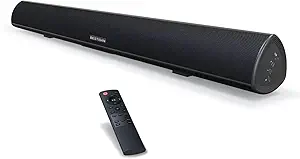









KEF vs BYL: Overview & Brand Philosophy
When navigating the soundbar marketplace, consumers frequently encounter two fundamentally opposing design paradigms: heritage acoustic engineering and budget-driven utility. KEF (Kent Engineering & Foundry), founded in the United Kingdom in 1961, represents the pinnacle of high-fidelity audio design. With decades of pioneering research in driver geometry, cabinet resonance, and psychoacoustics, KEF approaches soundbars not merely as television accessories, but as high-performance architectural loudspeakers engineered to reproduce sound with studio-grade fidelity.
In contrast, BYL (Bestisan / BYL) operates primarily in the direct-to-consumer value segment, leveraging efficient supply chain logistics and cost-effective manufacturing to deliver entry-level audio solutions. BYL's philosophy centers on solving a universal modern problem: the notoriously thin, muffled sound produced by slim modern flat-panel displays. Rather than targeting audiophiles or luxury home theater connoisseurs, BYL focuses on delivering accessible, simple-to-install, and budget-friendly plug-and-play audio upgrades for secondary rooms, dorms, and budget-conscious buyers.
Consequently, Comparing KEF and BYL is a study in acoustic ambition versus practical accessibility. KEF targets high-income consumers, dedicated cinephiles, and discerning listeners who demand premium materials, sophisticated DSP, and transparent stereo imaging. BYL addresses the mass market, prioritizing high volume-to-price ratios, essential connectivity, and straightforward speech enhancement without the substantial financial investment required by luxury audio manufacturers.
Key Differences & Technological Comparison
The technological gulf between KEF and BYL begins at the component level, specifically in transducer design. KEF’s hallmark technology is its patented Uni-Q driver array, which places the tweeter precisely at the acoustic center of the midrange cone. This single point source configuration disperses high and mid frequencies evenly across an expansive sweet spot, ensuring exceptional clarity regardless of seating position. Conversely, BYL employs standard off-the-shelf full-range cone drivers paired with conventional dome tweeters or passive bass radiators, which often produce a narrower listening angle and introduce phase cancellation at off-axis positions.
In terms of digital signal processing (DSP) and format decoding, KEF incorporates proprietary algorithms (such as the Music Integrity Engine) alongside native support for high-resolution formats, including Dolby Atmos, DTS:X, and uncompressed multichannel audio over eARC. These processors allow KEF units to dynamically control phase, limit distortion at elevated volumes, and map three-dimensional spatial soundscapes. BYL soundbars utilize basic, entry-level DSP chips typically limited to two-channel stereo decoding and basic preset equalizers (Movie, Music, Dialogue), lacking true immersive spatial audio decoding capabilities.
Build quality and acoustic cabinet construction further delineate the two brands. KEF builds its soundbar enclosures using acoustically inert, extruded aluminum or dense structural composites designed to eliminate cabinet resonance and driver coloring. The industrial design is premium, minimalist, and built to integrate into high-end interior spaces. BYL constructs its chassis using lightweight ABS plastics and conventional MDF interiors wrapped in basic fabrics. While functional and unobtrusive, BYL products prioritize minimal shipping weight and reduced production costs over acoustic deadening and luxury aesthetics.
Pros & Cons Comparison
KEF Soundbars
- Pros:
- Audiophile-grade acoustic fidelity powered by proprietary Uni-Q point-source driver arrays.
- Robust support for advanced spatial formats, including Dolby Atmos and high-res audio streaming.
- Acoustically deadened, premium extruded aluminum cabinet design reduces unwanted vibrations.
- Exceptional soundstage width and off-axis performance, providing a large sweet spot.
- Extensive modern connectivity: HDMI eARC, Wi-Fi, AirPlay 2, and multi-room ecosystem integration.
- Cons:
- Prohibitive price point that places it out of reach for average consumers.
- Limited product catalog, focusing on a few specialized, high-tier installations rather than diverse budget tiers.
- Often requires separate, high-end subwoofers to achieve true sub-bass performance in larger home theaters.
BYL Soundbars
- Pros:
- Extremely accessible price point, representing an affordable alternative to premium audio.
- Substantial improvement over native flat-screen TV speakers, specifically for dialogue clarity.
- Straightforward setup and operation with minimal software overhead or configuration hurdles.
- Compact footprints suitable for small bedrooms, desktop gaming setups, or student apartments.
- Basic connectivity options included (Optical, AUX, Bluetooth) across most units.
- Cons:
- Lacks support for modern surround formats such as Dolby Atmos, DTS:X, and HDMI eARC.
- Audible harmonic distortion and compression when pushed to higher volume levels.
- Plasticky build quality with lower long-term durability and limited customer service support.
- Narrow soundstage with limited bass depth due to small cabinet volumes and basic passive radiators.
Performance, Durability & Value Analysis
From an acoustic performance standpoint, KEF operates in a different stratum. Dynamic range, micro-detail retrieval, and vocal realism are exceptional; musical tracks reveal instrumental separation that cheap soundbars simply compress into a monolithic wall of sound. KEF units maintain low Total Harmonic Distortion (THD) even under demanding dynamic swings in modern cinematic mixes. Durability reflects this standard: premium internal components, gold-plated terminals, and high-grade heat dissipation ensure that a KEF soundbar will operate reliably for over a decade without degradation of electronic or mechanical components.
Assessing pure economic value requires balancing absolute quality against capital outlay. If judged solely on sound quality per dollar spent, BYL offers significant immediate utility: for a fraction of the cost of a high-end soundbar, it remedies the primary shortcoming of modern televisions by projecting dialogue forward cleanly. However, BYL's long-term durability is modest; budget power supplies, basic Bluetooth modules, and lightweight plastic joints mean these units have a higher attrition rate over 2–4 years. KEF demands a high upfront investment, but it delivers authentic luxury, cutting-edge software updates, and reference-grade sound that retains its acoustic relevance and operational reliability long after lower-tier electronics fail.
Final Verdict: Which Brand Should You Choose?
Selecting between KEF and BYL comes down to budget, intended application, and expectations of acoustic performance:
Choose KEF if: You are an audiophile, design-focused homeowner, or dedicated cinema enthusiast building a primary living room entertainment setup. If your budget permits an investment in the hundreds or thousands of dollars, and you require wide spatial immersion, pristine musical accuracy, premium materials, and support for high-bandwidth codecs via HDMI eARC, KEF delivers an uncompromising, reference-level audio experience that stands as an acoustic centerpiece.
Choose BYL if: You are seeking a strictly functional, low-cost solution to overcome poor TV speaker performance in a secondary bedroom, garage, dorm, or rental property. If your budget is firmly constrained, and you simply want clear dialogue for everyday broadcast television, news, and casual streaming without complex wiring, BYL delivers satisfactory performance that achieves its basic utility goal at an entry-level price point.
Product Selection
When evaluating product selection between KEF and BYL (Bestisan), consumers are presented with two diametrically opposed brand philosophies that target radically different segments of the audio market. KEF operates firmly in the high-end, audiophile-grade tier, curating an intentionally focused and limited catalog of soundbars rather than saturating the market with incremental variants. Their engineering philosophy centers on architectural integration and acoustic perfection, most visibly embodied in passive-lcr solutions and ultra-premium designs like the HTF series. Instead of providing dozens of cheap, all-in-one powered soundbars, KEF offers specialized three-channel passive soundbars designed to integrate with discrete AV receivers. These feature their proprietary Uni-Q driver arrays, which place the tweeter at the acoustic center of the midrange cone for an expansive sweet spot, rigid aluminum enclosures, and advanced crossover networks. KEF's lineup is narrow by design, serving dedicated home theater purists who prioritize sonic imaging, bespoke spatial coherence, and premium passive amplification over plug-and-play mass production.
Conversely, BYL caters directly to the ultra-budget, mass-market consumer with a prolific, ever-rotating catalog of active, plug-and-play soundbars. Rather than requiring external receivers, BYL’s selection is populated by an array of all-in-one form factors ranging from compact 16-inch units ideal for desktop setups and secondary bedroom TVs, up to 40-inch full-room bars paired with wireless or wired subwoofers. While KEF restricts its lineup to passive transducers, BYL provides expansive variety within active connectivity, engineering budget-tier units that feature integrated Bluetooth 5.0, digital optical (Toslink), RCA, AUX, and specialized DSP equalizer presets (Movie, Music, Dialogue). The trade-off is stark: BYL provides immense versatility in low-cost sizing, aesthetic profiles, and self-powered convenience, but achieves this through mass-market chipsets, high-density fiberboard or plastic builds, and driver units that inherently lack the harmonic accuracy, low total harmonic distortion (THD), and expansive dynamic range found in KEF's architectural portfolio.
Ultimately, the practical trade-offs regarding product selection reveal KEF as a specialized choice for bespoke home theaters and BYL as a versatile provider for practical, immediate audio upgrades. Consumers looking for extensive variety in self-contained soundbar lengths, integrated amplification, and casual lifestyle features will find BYL’s broad portfolio advantageous for outfitting bedrooms, gaming stations, and secondary living spaces on a strict budget. However, this catalog breadth is largely horizontal, offering minor aesthetic and port-configuration variations rather than distinct acoustic milestones. KEF’s product selection, while numerically sparse and requiring dedicated downstream amplification, represents an uncompromising engineering tier where each product is an acoustically inert, high-fidelity centerpiece built to outlast iterative electronic cycles. Therefore, buyers seeking true acoustic refinement must accept KEF’s limited catalog, while those seeking plug-and-play convenience across multiple size configurations will gravitate toward BYL’s accessible variety.
Design/Look
From an engineering and industrial design standpoint, KEF and BYL exist at entirely opposite ends of the audio aesthetic spectrum. KEF approaches soundbar design as an extension of high-end architectural acoustics, best exemplified by models like the ultra-slim HTF series or the flagship LS60 Wireless ecosystem equivalents. Utilizing rigid, extruded aluminum enclosures with precision-machined grilles, KEF soundbars are engineered not just for low visual footprint, but to eliminate internal cabinet resonance that plagues plastic-bodied competitors. The visual language is distinctly minimalist, Scandinavian-leaning, and premium, characterized by clean lines, matte anodized finishes, and the iconic, perfectly integrated Uni-Q driver arrays. The depth and profile are meticulously measured to sit flush beneath high-end OLED displays or blend seamlessly into custom wall-mount installations, catering to interior-conscious audiophiles who treat home theater gear as luxury furniture.
Conversely, BYL operates primarily in the budget-conscious, functional home audio segment, prioritizing utility and mass-market compatibility over bespoke materials. BYL soundbars predominantly feature lightweight ABS plastic chassis enveloped in standard acoustic mesh cloth or stamped, utilitarian metal front grilles. From a visual perspective, BYL adopts a safe, monolithic aesthetic—mostly rectangular, gloss-accented, or matte-black designs that do not call attention to themselves. While these enclosures lack the premium tactile materials, structural rigidity, and bespoke colorways of KEF, they are engineered for practical adaptability. BYL often includes integrated LED status displays hidden behind the front mesh, along with top-mounted physical or touch controls, providing immediate operational feedback that high-end minimalist bars like KEF sometimes omit in favor of companion apps and on-screen displays.
The practical trade-offs between the two brands regarding design center on durability, acoustic impact, and cost-to-aesthetic ratio. KEF’s heavy-gauge aluminum constructions resist scratches, wear, and structural warping, but their significant weight demands robust wall-anchoring solutions, and their uncompromising luxury aesthetic comes with an ultra-premium price tag. BYL delivers a competent, modern look that easily fits standard TV consoles without drawing negative attention, making it an exceptional value for consumers who simply want a low-profile soundbar that blends into a dark media center. Ultimately, KEF’s design is a deliberate artistic statement defined by acoustic materials science and high-end industrial styling, whereas BYL offers pragmatic, unobtrusive form factors strictly designed to deliver functional utility on a budget.
Affordability
When evaluating affordability in the soundbar category, KEF and BYL occupy completely opposite ends of the pricing and engineering spectrum. KEF approaches the market from a luxury, audiophile-grade perspective, where products like the LS60 Wireless or passive array soundbars command premium four-figure price tags. This extreme cost corresponds to elite acoustic engineering, including KEF’s proprietary Uni-Q driver arrays, inert enclosure construction, and high-resolution digital signal processing. In contrast, BYL targets the absolute budget consumer, pricing their standalone units in the ultra-accessible double-digit to low triple-digit range. BYL eliminates the high-end industrial design and bespoke transducer research seen in KEF products, relying instead on off-the-shelf plastic chassis, modest amplification, and mass-market full-range dynamic drivers to deliver functional television audio improvements at a minimal barrier to entry.
The feature sets and technical capabilities reflect this immense pricing divergence. KEF’s premium pricing guarantees cutting-edge spatial clarity, expansive soundstaging without phase interference, robust multi-room network streaming (AirPlay 2, Chromecast, Roon), and advanced HDMI eARC integration capable of handling uncompressed audio formats. BYL soundbars prioritize essential, baseline utility for the cost-conscious buyer, frequently packaging basic Bluetooth connectivity, optical inputs, and rudimentary EQ presets into their enclosures. While BYL delivers commendable volume and dialogue intelligibility compared to weak, native flat-panel TV speakers, it completely foregoes advanced acoustic correction, high-fidelity dynamic headroom, and deep sub-bass control, which are technical hallmarks embedded in KEF's high-priced acoustic architecture.
Ultimately, the practical trade-off between these brands hinges on how a consumer defines "value" versus raw "cheapness." BYL wins decisively on pure transactional affordability, making it the practical choice for secondary bedrooms, dorms, or budget-restricted users who simply need louder, clearer audio without financial strain. However, BYL units suffer from high distortion at peak volumes and lower long-term durability. KEF, while requiring an immense upfront capital investment, delivers high-end value through acoustic longevity, timeless industrial aesthetics, and true high-fidelity performance that easily anchors an uncompromising home theater system for a decade or more. Consumers seeking the lowest possible expenditure will gravitate to BYL, whereas those demanding reference-tier sonic fidelity will justify KEF’s steep premium as a worthwhile investment in acoustic craftsmanship.
Sound Quality
When evaluating sound quality, KEF and BYL represent opposite ends of the audio engineering spectrum. KEF approaches soundbar design from a high-fidelity audiophile perspective, integrating decades of acoustic innovation into products like the KEF V720 and contemporary streaming speaker systems. The cornerstone of KEF’s superior sound quality is their proprietary Uni-Q driver array, which places the tweeter precisely at the acoustic center of the midrange cone. This single point-source configuration creates an expansive, pristine soundstage with a remarkably wide sweet spot, delivering crisp highs, transparent vocal clarity, and intricate micro-dynamics without noticeable distortion even at high volumes. BYL (Bestisan), by contrast, operates in the ultra-budget tier, relying on off-the-shelf, small-aperture full-range drivers and budget-grade dome tweeters housed within lightweight plastic enclosures that are prone to cabinet resonance and acoustic coloration.
The technical disparities become even more apparent when examining frequency response, digital signal processing (DSP), and bass reproduction. KEF soundbars boast sophisticated internal amplification and bespoke DSP algorithms engineered to deliver a neutral, reference-grade tonal balance, seamlessly handing off lower frequencies to potent, low-distortion subwoofers with force-canceling driver designs that eliminate cabinet vibration. BYL soundbars prioritize functional utility over clinical precision; their integrated DSP offers blunt preset curves—such as "Movie," "Music," and "Dialogue"—that artificially elevate upper-mids and treble to simulate clarity while frequently sounding harsh or sibilant. Without a dedicated external subwoofer, BYL's compact bass reflex ports struggle to produce visceral low-end extension, resulting in a compressed acoustic profile where bass either rolls off prematurely below 70Hz or sounds muddy when pushed.
Ultimately, the choice between KEF and BYL in sound quality is a study in practical trade-offs and acoustic ambition. KEF provides a true cinema-grade experience characterized by exceptional instrument separation, lifelike dynamic headroom, and immersive spatial imaging, making it an ideal choice for discerning listeners who prioritize acoustic fidelity for both lossless music playback and high-impact theatrical soundscapes. Conversely, BYL is engineered simply to solve the intelligibility flaws of ultra-thin, built-in television speakers on a strict budget. While BYL adequately elevates dialogue presence for casual broadcast viewing, it lacks the depth, tonal accuracy, and structural refinement required to reproduce complex audio tracks without flattening the soundstage and inducing harmonic distortion.