JBL vs Sony: Overview
Comparing JBL and Sony helps you determine which brand is best suited for your needs in Soundbars. Both brands offer strong choices depending on your budget and key feature requirements.
Key Features & Comparison
Evaluate factors such as build quality, warranty, customer satisfaction, and total value before making your final purchase choice between JBL and Sony.
Product Selection
Sony structures its soundbar catalog around a tiered ecosystem that caters to diverse consumer needs, ranging from entry-level stereo bars to sophisticated, modular home theater architectures. At the higher end, Sony distinguishes itself with advanced systems like the HT-A7000 and the HT-A9, which allow users to integrate dedicated wireless subwoofers (SA-SW3, SA-SW5) and rear satellite speakers with up-firing drivers (SA-RS3S, SA-RS5). This modular approach provides an expansive upgrade path for home cinema enthusiasts who want custom configurations tailored to room geometry, accompanied by specialized TV-integration capabilities like Acoustic Center Sync when paired with Sony Bravia displays.
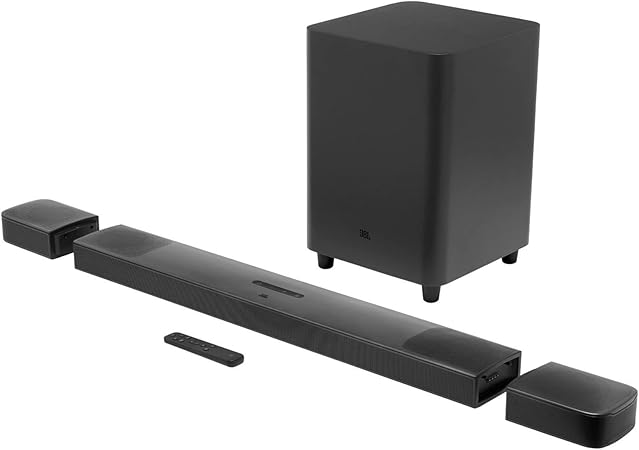
JBL, by contrast, focuses its product selection heavily on straightforward, complete package solutions characterized primarily by the JBL Bar series, spanning from compact 2.0-channel bars to the high-channel-count Bar 1300X. JBL’s engineering standout lies in its truly wireless, battery-powered detachable rear surround speakers, a feature that eliminates the need for trailing power cords or auxiliary receiver hubs. While Sony provides deeper interoperability with its own display and gaming hardware ecosystems, JBL offers a more self-contained lineup where consumers purchase an all-in-one surround system out of the box without navigating multiple individual component SKUs.
Design/Look
Sony adopts a minimalist, industrial design philosophy focused on understated luxury and acoustic engineering subtlety. Flagship models often incorporate premium fabric textures, matte-finished metals, and discreet display readouts that minimize light distraction in darkened home theater environments. The physical construction emphasizes structural rigidity, utilizing rounded baffle edges and meticulously engineered resonant chambers to minimize acoustic distortion. Sony soundbars are designed to visually complement contemporary flat-panel televisions, blending seamlessly onto media consoles or wall mounts without calling unnecessary attention to themselves.
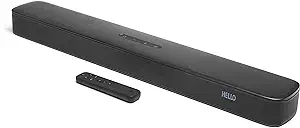
JBL approaches aesthetic design with a utilitarian, robust sensibility rooted in modern pro-audio heritage. Its soundbars feature heavy-duty perforated metal grilles, durable dark-matte plastics, and clean rectangular chassis built to withstand extensive handling—a necessity given the frequent docking and undocking of the detachable surround speakers. While this design language feels sturdy and highly functional, it leans more towards an assertive, tech-forward gadget aesthetic rather than the architectural elegance championed by Sony. JBL units also prioritize physical tactile control and visible status indicators, catering to users who appreciate a visibly rugged piece of consumer electronics.
Affordability
When analyzing the cost-to-performance ratio, Sony commands a distinct price premium that reflects its proprietary processing engines and ecosystem synergy. Entry-level Sony models remain competitively priced, but accessing the brand’s hallmark spatial audio technologies, multi-channel Dolby Atmos decoding, and HDMI 2.1 passthrough requires a substantial financial commitment. Furthermore, because Sony often sells subwoofers and rear speakers as separate modular add-ons for its premium bars, assembling a complete 5.1.2 or 7.1.4 system can significantly elevate the total expenditure compared to turnkey competitor packages.
JBL presents a markedly more aggressive value proposition, particularly in the mid-range to high-end multi-channel segments. The brand bundles massive standalone down-firing subwoofers—often featuring 10-inch or 12-inch drivers—and wireless surround units directly into the core purchase price of its Bar series. While the initial retail price for top-tier JBL systems is substantial, it typically undercuts a fully configured Sony equivalent that requires individual accessory purchases. For consumers seeking maximum speaker channels and raw acoustic output per dollar invested, JBL generally offers superior economic efficiency.
Sound Quality
Sony’s acoustic performance is defined by technical precision, advanced digital signal processing (DSP), and exceptional spatial staging. Utilizing proprietary technologies such as 360 Spatial Sound Mapping, Sound Field Optimization, and S-Force Pro Front Surround, Sony excels at psychoacoustically generating a vast, cohesive three-dimensional audio bubble from relatively compact enclosures. Midrange clarity is exceptionally transparent, rendering dialogue articulate and natural even during complex cinematic sequences. However, without adding an external dedicated subwoofer, Sony's standalone soundbars can present a somewhat reserved lower-frequency response that favors restraint and accuracy over visceral cinematic impact.
JBL targets a distinctly dynamic, high-energy sonic profile characterized by authoritative, room-shaking low-end bass and expansive dynamic range. Backed by high-wattage amplification and ported, large-diameter subwoofers, JBL systems reproduce low-frequency effects (LFE) with deep extension and punch that easily fills large open-concept spaces. The real physical placement of its detachable wireless rear channels provides authentic surround localization that computational virtual surround algorithms struggle to replicate. While JBL occasionally yields slight mid-range neutrality and refined micro-detail to Sony's sophisticated processing, it delivers an undeniably immersive, high-impact theater experience for action-heavy content and modern music playback.