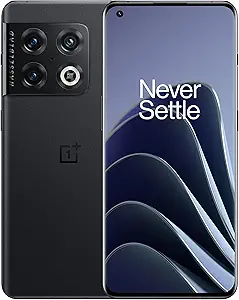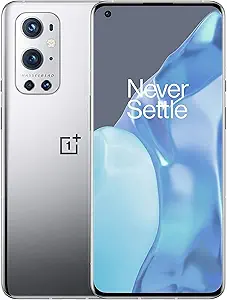








ZTE vs OnePlus: Overview
Comparing ZTE and OnePlus helps you determine which brand is best suited for your needs in Smartphones. Both brands offer strong choices depending on your budget and key feature requirements.
Key Features & Comparison
Evaluate factors such as build quality, warranty, customer satisfaction, and total value before making your final purchase choice between ZTE and OnePlus.
Affordability
When analyzing affordability, ZTE often presents a significantly lower barrier to entry across the global market, particularly within the budget and lower-midrange tiers under its Blade and retail-carrier sub-brands. ZTE excels at delivering basic, functional hardware at rock-bottom price points, frequently partnering with network operators to offer heavily subsidized or ultra-cheap prepaid smartphones. Even in the performance realm, ZTE's gaming-oriented sub-brand, RedMagic, undercuts most mainstream competitors by packing tier-one specifications into aggressively priced chassis, making top-tier processing power accessible to budget-conscious enthusiasts who are willing to overlook minor software and camera compromises.
OnePlus, by contrast, operates with an evolved definition of affordability rooted in the 'flagship killer' philosophy rather than entry-level budget pricing. While the OnePlus Nord line covers the midrange segment with competitive pricing, the brand's primary catalog centers on premium-tier value—offering 90% of a top-tier flagship experience for hundreds of dollars less than Apple or Samsung equivalents. OnePlus devices tend to cost more upfront than entry-level ZTE devices, but they provide significantly better long-term residual value, refined software support, and higher-grade materials, making OnePlus the superior choice for buyers seeking premium cost-to-performance efficiency rather than absolute lowest dollar expenditure.
Quality/Durability
From an engineering and build quality perspective, OnePlus maintains a distinctly superior standard across its lineup. The brand heavily utilizes premium materials such as Gorilla Glass Victus, aviation-grade aluminum frames, and proprietary textured glass finishes that provide both tactile elegance and resilience against everyday drops. Higher-end OnePlus flagships frequently carry official IP65 or IP68 ingress protection ratings, ensuring dependable resistance against dust and water immersion. Internally, OnePlus employs advanced dual-cell battery designs coupled with proprietary health management engines that guarantee battery retention above 80% capacity even after 1,600 charging cycles, providing buyers with long-term mechanical confidence.
ZTE displays a more fragmented approach to durability, heavily dictated by product tier and niche specialization. Its standard budget offerings rely heavily on polycarbonate construction that, while resilient against shattering, is prone to scuffs and lacks robust environmental sealing. On the other end of the spectrum, ZTE's specialized gaming lines incorporate robust metal architectures, but their inclusion of active physical cooling vents and micro-fans inevitably introduces vulnerabilities to lint, moisture, and dust penetration, fundamentally compromising ingress protection. While ZTE constructs structurally rigid frames in its flagship Nubia and RedMagic devices, OnePlus consistently delivers a more comprehensively sealed, durable, and polished industrial design.
Performance
Performance optimization represents the foundational identity of OnePlus, distinguished by the close integration of cutting-edge silicon with its proprietary OxygenOS platform. OnePlus systematically outfits its premier devices with Qualcomm Snapdragon 8-series processors paired with rapid LPDDR5X RAM and UFS 4.0 flash storage. What elevates OnePlus beyond raw silicon benchmarks is its software-level optimization—specifically features like the Trinity Engine—which manages CPU thread scheduling and background memory caching to prevent frame drops and thermal throttling. Furthermore, OnePlus revolutionizes usability with its proprietary SUPERVOOC charging architectures, routinely providing 80W to 100W charging capabilities that replenish full battery capacities in under thirty minutes.
ZTE takes a raw, brute-force engineering approach to performance, particularly through its Nubia and RedMagic hardware portfolios. While ZTE's everyday budget handsets utilize modest Unisoc or MediaTek silicon with pedestrian responsiveness, its enthusiast-tier devices are absolute benchmark powerhouses. ZTE frequently incorporates vapor chambers combined with internal centrifugal cooling fans, allowing their devices to sustain maximum clock speeds on flagship Snapdragon chipsets without thermal throttling during heavy 3D rendering. However, ZTE’s MyOS software skin lacks the fine-tuned fluidity, memory retention algorithms, and sustained long-term optimization found in OnePlus's OxygenOS, meaning ZTE offers raw peak gaming throughput while OnePlus provides a superior, cohesive, and fluid daily operational speed.
Camera Quality
In the imaging domain, OnePlus leverages an engineering partnership with legendary optics firm Hasselblad, resulting in sophisticated color calibration, natural skin tones, and refined dynamic range reproduction. OnePlus utilizes high-end Sony sensor hardware, such as the LYTIA series, supported by advanced optical image stabilization (OIS) and robust computational photography pipelines. Across high-contrast scenes, low-light nightscapes, and detailed portraiture, OnePlus consistently captures balanced, exposure-accurate photos with minimal grain and professional-grade bokeh falloff, placing it within striking distance of the industry's premier camera systems.
ZTE takes an unconventional and varied route with its camera engineering, marked by experimental hardware implementations rather than uniform imaging excellence. On flagship Nubia devices, ZTE boldly employs unique focal lengths—such as custom 35mm primary lenses—which street photography enthusiasts praise for natural perspective and sharpness. Additionally, ZTE has pioneered under-display front cameras to create notchless displays, though this innovation comes at the direct cost of soft, compromised selfie quality. Meanwhile, ZTE's gaming-centric models relegate camera setups to an afterthought, using midrange sensors with aggressive post-processing sharpening. Overall, while ZTE occasionally pushes optical boundaries, OnePlus delivers vastly more dependable, color-accurate, and universally competent imaging results.