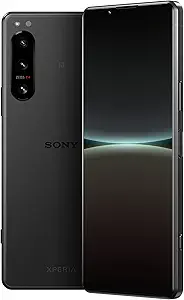
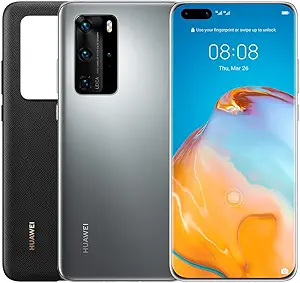
Sony vs Huawei: Overview
Comparing Sony and Huawei helps you determine which brand is best suited for your needs in Smartphones. Both brands offer strong choices depending on your budget and key feature requirements.
Key Features & Comparison
Evaluate factors such as build quality, warranty, customer satisfaction, and total value before making your final purchase choice between Sony and Huawei.
Affordability
When evaluating affordability, Huawei presents a vastly more diversified and aggressive pricing strategy across global markets. The Chinese manufacturer deliberately structures its lineup to span from highly economical entry-tier devices to ultra-premium flagships, often offering higher base-storage tiers, rapid charging accessories bundled in the box, and competitive hardware specifications at mid-range price brackets. While Huawei's modern pricing strategy on premium lines like the Pura and Mate series rivals the highest tiers of the industry, budget-conscious consumers still benefit from their sub-brands and lower-tier models, which deliver premium aesthetics and essential features at a fraction of flagship costs, though global buyers must factor in the software ecosystem compromises stemming from the absence of native Google Mobile Services.
Conversely, Sony adheres to an unapologetically premium and niche pricing model, rarely offering products that cater to budget-conscious consumers. The Xperia 1 and Xperia 5 series command high retail prices that rival or exceed the top-tier offerings of mainstream market leaders, while the mid-range Xperia 10 series often carries a price premium compared to identically specified competitors. Sony does not attempt to win market share through aggressive price-to-performance ratios or heavy discounting; instead, it targets enthusiast professionals and loyalists who are willing to pay top dollar for specialized multimedia capabilities, legacy I/O like the 3.5mm headphone jack, and dedicated camera hardware, making Sony significantly less affordable for the average consumer.
Quality/Durability
Huawei's hardware construction emphasizes high engineering tolerances, robust structural integrity, and distinct material finishes. Their flagships routinely utilize proprietary solutions like Kunlun Glass, which has established a stellar reputation in drop-testing for crack resistance and structural longevity compared to standard tempered glass alternatives. Huawei also incorporates IP68 water and dust ingress protection as standard across its flagship tiers, alongside sturdy aerospace-grade aluminum and titanium frames. Even within budget-oriented models, Huawei maintains rigid chassis builds that resist torsion and flex, signaling rigorous factory quality assurance and refined industrial design practices that withstand everyday environmental wear.
Sony stands as one of the pioneers of environmental resistance in consumer mobile technology, maintaining an unmatched reputation for minimalist, highly functional durability. Modern Xperia flagships uniquely combine both IP65 and IP68 certifications, ensuring defense against both continuous submersion and pressurized water jets. Sony opts for premium Corning Gorilla Glass Victus front and back panels paired with tactile, ribbed aluminum rails designed to resist both impacts and scuffs. Furthermore, Sony achieves water-tight integrity while retaining rare physical conveniences, such as tool-free SIM/microSD trays and 3.5mm audio jacks, showcasing an exceptional level of Japanese industrial engineering that prioritizes long-term mechanical reliability without compromising utility.
Performance
Huawei's performance trajectory is heavily defined by its silicon autonomy and the development of its proprietary Kirin chipsets alongside HarmonyOS. Due to geopolitical restrictions, Huawei relies on domestically fabricated Kirin processors, which, while exhibiting impressive system optimization and energy efficiency, technically trail the raw compute power and advanced semiconductor nodes of current Snapdragon or Apple silicon. Nevertheless, Huawei compensates for raw benchmark deficits through deeply integrated microkernel software architectures, neural processing unit (NPU) innovations, and exceptional cellular modem engineering, ensuring seamless daily multitasking and rock-solid connectivity, although high-end 3D gaming may see thermal throttling earlier than on leading competitor chips.
Sony, by contrast, outfits its flagship Xperia smartphones with the absolute latest Qualcomm Snapdragon flagship platforms, granting them class-leading raw computing power, cutting-edge GPU rendering capabilities, and modern 5G modem efficiencies. Sony complements this raw silicon with a nearly stock, bloatware-free Android implementation that minimizes system overhead and ensures immediate responsiveness. However, Sony’s sleek chassis and conservative thermal dissipation solutions have historically made its flagship devices prone to aggressive thermal throttling under sustained heavy workloads, such as continuous 4K 120fps video recording or extended graphical benchmarking, trading sustained peak compute performance for form-factor minimalism.
Camera Quality
Huawei operates as a dominant titan in computational photography, consistently setting industry benchmarks through its XMAGE imaging platform and custom sensor designs, such as RYYB color filter arrays. Huawei devices excel in extreme low-light environments, synthetic portrait rendering, and periscope zoom optics, automatically synthesizing multi-frame exposures to produce vivid, sharp, and dynamic imagery with virtually zero manual effort required from the user. Features like physically variable mechanical apertures on recent flagships give Huawei a formidable hardware foundation that works in synergy with complex machine learning algorithms, resulting in a point-and-shoot camera experience that rarely fails to capture optimal lighting, balanced highlights, and deep shadow detail.
Sony approaches mobile imaging from a completely different philosophy, directly borrowing sensor engineering and software interfaces from its prestigious Alpha professional camera division. Rather than relying on aggressive computational post-processing, artificial sharpening, or oversaturated HDR, Sony delivers natural color reproduction, true optical zoom transitions, and dedicated hardware two-stage shutter buttons. The inclusion of professional-grade apps like Photography Pro and Videography Pro grants enthusiasts manual control over ISO, shutter speed, and focus tracking, supplemented by class-leading real-time eye autofocus and 20–30fps burst shooting. For professionals and purists seeking raw control and realistic output, Sony is unparalleled, though casual users seeking instant, social-media-ready snapshots may find Huawei's computational automation far more forgiving.