
Samsung vs Xiaomi: Overview & Brand Philosophy
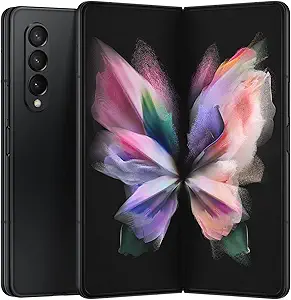
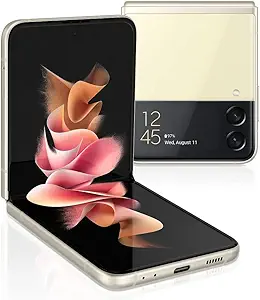
In the global smartphone landscape, few rivalries highlight contrasting technological philosophies as vividly as Samsung and Xiaomi. Samsung, the South Korean electronics conglomerate, has served as the pillar of the Android ecosystem for over a decade. Operating with unmatched vertical integration—manufacturing its own displays, memory modules, and imaging sensors—Samsung prioritizes mature refinement, enterprise-grade security, and universal carrier compatibility. Its flagship Galaxy S and Galaxy Z foldable lines represent premium engineering, while the expansive Galaxy A series caters to mainstream consumers seeking dependable everyday performance backed by global infrastructure.
Conversely, Xiaomi emerged from Beijing with a disruptive direct-to-consumer philosophy: delivering flagship-grade specifications at margins rarely exceeding five percent. Through its flagship Xiaomi series alongside value-oriented sub-brands like Redmi and POCO, Xiaomi has steadily transformed from a budget disruptor into a genuine technological titan. By collaborating with legacy photography giants like Leica and pioneering rapid-charging silicon-carbon battery chemistries, Xiaomi directly challenges traditional tier-one manufacturers by aggressively democratizing bleeding-edge hardware.
Ultimately, this competition reflects two distinct visions for mobile technology. Samsung represents the calculated, polished institution focused on long-term sustainability, extensive software support, and ecosystem cohesion. Xiaomi represents the fast-moving hardware innovator, constantly pushing technical thresholds in charging speed, sensor scale, and thermal dissipation while offering exceptional raw performance per dollar spent.
Key Differences & Technological Comparison
When evaluating these brands side by side, several fundamental hardware and software divergences emerge:
Display Technology and Structural Design: Samsung is the indisputable benchmark in mobile displays, supplying Dynamic AMOLED panels across the industry. Its flagship devices often feature exclusive anti-reflective glass solutions, industry-leading peak sustained brightness, and symmetrical, ergonomic chassis designs constructed from durable armor aluminum or titanium. Xiaomi counters with custom-ordered ultra-high PWM dimming OLED panels engineered to reduce visual fatigue, paired with proprietary shield glass and striking industrial designs that often incorporate ceramic backplates and vegan leather finishes.
Imaging Systems and Optics: Samsung relies heavily on computational photography, deploying ultra-high-resolution in-house ISOCELL sensors (up to 200MP) that emphasize vibrant dynamic range, dependable color balance, and class-leading digital and optical zoom stabilization. Xiaomi takes a hardware-first approach in its upper tier, partnering with Leica to co-engineer optical lenses, incorporating 1-inch-type Sony sensors, and utilizing physical stepless variable apertures that deliver organic optical bokeh, authentic depth, and exceptional low-light performance without excessive computational over-sharpening.
Software Architecture and Ecosystem: The software divide is striking. Samsung's One UI is renowned for stability, enterprise integration via Samsung Knox, functional desktop environments through Samsung DeX, and an unmatched commitment to seven years of major Android OS and security upgrades on flagship lines. Xiaomi's HyperOS (the evolution of MIUI) emphasizes hyper-smooth animations, low resource utilization, and deep connectivity with Xiaomi's vast smart-home and EV ecosystem. However, HyperOS historically exhibits greater regional fragmentation, aggressive background process termination, and pre-installed promotional applications on lower-tier devices.
Battery Life and Charging Capabilities: Battery strategy represents the sharpest technological split between the two brands. Samsung takes a conservative approach, limiting fast charging to 25W or 45W wired speeds to prioritize battery cycle longevity and thermal control. Xiaomi is an industry leader in hyper-fast charging, frequently deploying 67W, 90W, and 120W proprietary wired architectures alongside 50W wireless solutions that can fully replenish a high-capacity cell in under twenty minutes using specialized multi-pole battery designs.
Pros & Cons Comparison
Samsung: Strengths & Advantages
- Industry-leading software support policy providing up to seven years of major OS upgrades on premier devices.
- One UI delivers exceptional stability, enterprise Knox security, and advanced productivity suites like DeX.
- Superior global carrier availability, nationwide physical repair networks, and robust trade-in residual values.
- Uniform deployment of high-tier IP68 dust and water resistance across premium and upper-mid-range lines.
- Mature, cohesive hardware ecosystem spanning smartwatches, tablets, and consumer audio peripherals.
Samsung: Weaknesses & Limitations
- Significantly slower wired and wireless charging speeds compared to contemporary Asian competitors.
- Higher retail pricing relative to raw hardware specifications, particularly in budget and mid-tier segments.
- Aggressive computational processing can occasionally lead to oversaturated photos and shutter latency.
Xiaomi: Strengths & Advantages
- Unmatched price-to-performance ratio across entry-level, mid-range, and flagship price brackets.
- Cutting-edge optical systems featuring massive 1-inch sensors and customized Leica color science.
- Industry-dominating charging technology capable of complete battery replenishment in under half an hour.
- High-frequency PWM display dimming engineered to minimize eye strain in low-light environments.
- Broad smart-home interoperability through an extensive, integrated Internet of Things (IoT) catalog.
Xiaomi: Weaknesses & Limitations
- Virtually no official carrier presence or network optimization in the North American market.
- HyperOS features bloatware, system advertisements, and inconsistent UI behavior on budget tier models.
- Shorter software support lifecycles compared to Samsung's industry-leading update commitments.
Performance, Durability & Value Analysis
From a hardware durability and longevity standpoint, Samsung retains a clear competitive advantage. Samsung devices benefit from rigorous quality control standards, extensive IP68 water and dust ingress testing across multiple product tiers, and the use of the latest Corning Gorilla Glass formulations. Coupled with an industry-best policy of seven years of OS and security updates on flagship platforms, a premium Samsung handset is engineered to operate reliably across a multi-year ownership cycle. Furthermore, Samsung's widespread global presence ensures that replacement parts, authorized third-party service centers, and software patches remain accessible long after the original purchase date.
When assessing absolute value and price-to-performance metrics, Xiaomi remains historically unmatched. In mid-range and entry-level tiers, Xiaomi systematically offers higher refresh-rate displays, faster processors, superior primary camera hardware, and significantly faster charging rates than identically priced Samsung Galaxy A-series models. However, Xiaomi's lower upfront cost is partially balanced by steeper resale depreciation, shorter software update commitments (typically three to four years), and inconsistent global after-sales support. For consumers who upgrade their hardware every two to three years, Xiaomi delivers superior hardware value; for those planning four-to-six-year ownership cycles, Samsung's total cost of ownership is often justified through durability and software longevity.
Final Verdict: Which Brand Should You Choose?
Your choice between Samsung and Xiaomi should be dictated by your geographic location, your ownership timeline, and your performance priorities.
Choose Samsung if:
- You reside in North America or prioritize seamless carrier subsidization, trade-in programs, and local repair access.
- You plan to retain your smartphone for four to seven years and require guaranteed security and software updates.
- You require rock-solid business integration, enterprise data security (Knox), and desktop productivity tools (DeX).
- You prefer a clean, dependable operating system free of third-party promotional bloatware.
Choose Xiaomi if:
- You reside in Europe, Asia, or Latin America where global Xiaomi hardware variants are officially distributed and network-optimized.
- You demand the maximum possible processor, display, and camera specifications for your budget.
- You value ultra-fast charging speeds that eliminate overnight charging habits.
- You are a photography enthusiast seeking natural depth of field and advanced manual control via Leica-tuned optical hardware.
Affordability
When assessing sheer price-to-performance metrics, Xiaomi remains the industry benchmark for hardware-level affordability. By operating on razor-thin hardware profit margins and strategically deploying aggressive sub-brands like Redmi and POCO, Xiaomi consistently undercuts Samsung across virtually every consumer tier. In the highly contested sub-$400 market, a Xiaomi handset routinely delivers technical specifications typically reserved for upper tiers, including rapid fast-charging architectures (ranging from 67W to 120W), class-leading display luminance on 120Hz AMOLED panels, and silicon like upper-midrange Qualcomm Snapdragon or MediaTek Dimensity chipsets. Conversely, Samsung’s equivalent Galaxy A-series offerings command a noticeable brand premium, often compromising on silicon throughput with slower in-house Exynos processors, more conservative memory allocations, and legacy 25W wired charging speeds to protect the margins of its flagship Galaxy S tier.
The stark difference in upfront pricing is intrinsically tied to technical trade-offs and structural monetization strategies. Xiaomi subsidizes its aggressive retail pricing via software-level monetization, which historically manifests as pre-installed bloatware, system-level promotional notifications within HyperOS, and occasionally compromised thermal throttling solutions under sustained loads. Furthermore, Xiaomi often cuts costs in physical durability, deploying lower ingress protection ratings (frequently limited to splash-proof IP54) and less durable chassis materials. Samsung, by contrast, offsets its higher initial acquisition cost by providing a cleaner, ad-free One UI implementation, superior structural engineering, and comprehensive IP67 or IP68 water and dust resistance deep into its mid-range catalog. Additionally, Samsung outclasses Xiaomi in long-term firmware support, offering up to four to six years of guaranteed Android OS updates on mid-tier models, mitigating technical obsolescence.
Consequently, the affordability verdict diverges based on whether a consumer evaluates immediate purchasing power or long-term total cost of ownership. For buyers seeking the highest raw specification-per-dollar ratio—demanding superior gaming performance, rapid charging, and high-tier display hardware on a strict budget—Xiaomi represents an unrivaled value proposition. However, for users prioritizing software stability, minimal ecosystem friction, reliable after-sales repair networks, and high secondary-market resale value, Samsung’s elevated pricing amortizes favorably over several years of ownership, balancing its initial premium with extended device longevity.
Quality/Durability
When evaluating physical build quality and structural integrity, Samsung holds a commanding lead in manufacturing consistency and environmental resilience across multiple price tiers. Samsung’s flagship Galaxy devices consistently incorporate cutting-edge protection standards, utilizing proprietary Armor Aluminum or titanium chassis paired with the latest iterations of Corning Gorilla Glass (such as Gorilla Armor on the Ultra models, which drastically reduces micro-abrasions and optical reflections). Crucially, Samsung extends verified IP67 or IP68 water and dust resistance deep into its mid-range Galaxy A-series, establishing a baseline of ruggedness that protects against liquid ingress and environmental particulate wear. In contrast, Xiaomi reserves true industrial-grade resilience—such as ceramic backs, specialized "Dragon Crystal Glass," and complete IP68 submersion ratings—strictly for its premium numbered flagships (e.g., the Xiaomi 14 Pro and Ultra). Across its high-volume sub-brands, Redmi and POCO, Xiaomi frequently utilizes polycarbonate composite frames and compromises on weather-sealing, often providing only basic splash resistance (IP53 or IP54), which leaves these mid-range devices more susceptible to long-term physical degradation and moisture damage.
Underneath the surface, quality assurance and internal component durability further distinguish the two manufacturers. Following extensive historical overhauls of its quality control pipelines, Samsung enforces rigorous multi-point battery safety checks and conservative thermal dissipation curves, prioritizing the longevity of internal silicon and battery capacity retention over raw peak performance bursts. While this conservative approach occasionally limits sustained maximum clock speeds, it yields superior hardware stability over a three-to-five-year deployment window. Xiaomi, conversely, pushes technical envelopes with aggressive fast-charging protocols (ranging up to 120W and 210W) and maximum performance tuning. While technologically impressive, Xiaomi's high-wattage charging architectures place higher chemical stress on battery cells over time, and the brand has historically weathered isolated quality assurance anomalies in budget-to-mid tiers, such as motherboard thermal solder fatigue and inconsistent proximity sensor calibration. Nonetheless, Xiaomi’s top-tier flagships boast exemplary internal component curation, matching industry benchmarks with customized liquid-cooling vapor chambers and robust modular component layouts that aid physical repairability.
A modern assessment of smartphone durability must also factor in lifecycle longevity through sustained software support, where Samsung provides a definitive structural advantage. Samsung guarantees up to seven years of major Android OS upgrades and security patches for its flagship lines, backed by enterprise-grade Knox hardware-level security, ensuring that the hardware remains functional, secure, and usable well past standard hardware replacement cycles. Xiaomi has significantly narrowed this gap by offering four to five years of support on its flagship tier running the modernized HyperOS; however, software support across its extensive mid-range and budget portfolio remains fragmented and shorter in duration. For consumers prioritizing durable materials, verified ingress protection, and guaranteed software relevance that together maximize device lifespan, Samsung represents the lower-risk, higher-durability investment, while Xiaomi delivers competitive durability only when spending at its absolute top-tier price points.
Performance
When evaluating raw processing power and sustained hardware execution, Samsung and Xiaomi represent two fundamentally different philosophies of mobile engineering. Samsung generally adopts a calibrated, stability-first approach with its flagship Galaxy lineup, deploying customized "Snapdragon for Galaxy" platforms alongside its proprietary Exynos chipsets in select regions. Samsung excels in thermal mitigation and component synergy, utilizing advanced vapor chamber architectures that favor sustained, predictable performance over raw benchmark spikes. This conservative thermal throttling profile ensures that devices maintain low chassis temperatures and preserve long-term battery health, although it can lead to earlier framerate caps during marathon gaming sessions. Conversely, Xiaomi operates with a high-performance, envelope-pushing strategy, consistently leveraging top-tier Qualcomm Snapdragon and MediaTek Dimensity silicon across both its flagship and performance-focused sub-brands like POCO and Black Shark. Xiaomi tunes its devices with higher thermal limits and aggressive clock speeds, delivering superior peak GPU compute and raw synthetic benchmark scores that appeal directly to power users and mobile gamers seeking uncompromised frame rates.
The operational divide becomes even more apparent in their respective software skins and memory management pipelines. Samsung’s One UI is engineered for seamless multitasking and productivity, backed by mature background scheduling and hardware-level virtualization features like Samsung DeX. While One UI carries significant system overhead that historically manifested as occasional UI micro-stutters, modern iterations offer remarkably fluid animations and reliable background app retention without aggressively killing active services. In contrast, Xiaomi’s HyperOS (built on the foundation of MIUI) is designed with a lightweight core and reduced firmware footprint, yielding ultra-fast touch response times and rapid app launch speeds. However, this responsiveness is often achieved through notoriously ruthless RAM management algorithms that prematurely terminate background tasks to preserve system resources for active foreground processes. Furthermore, while Xiaomi's LiquidCool technology allows chips to run hot and fast, thermal dissipation across their mid-range lineup can be uneven, leading to more dramatic performance drop-offs once thermal saturation is reached compared to Samsung's uniform throttling curves.
Ultimately, the trade-off between the two brands hinges on the definition of performance across price tiers and device lifecycles. In the mid-range and budget segments, Xiaomi decisively outclasses Samsung by cascading near-flagship silicon, faster UFS storage standards, and high LPDDR5 RAM counts into accessible price brackets, where Samsung often compromises with underwhelming Exynos or lower-tier Snapdragon chips. At the premium tier, however, Samsung secures the advantage in long-term performance viability; its superior software driver maturity, extended system update commitments, and stable firmware releases ensure that a Galaxy flagship retains its day-one fluidity several years into ownership. Xiaomi offers exhilarating, raw horsepower per dollar and unmatched peak performance out of the box, whereas Samsung delivers refined, sustainable processing integrity and dependable productivity performance over the life of the device.
Camera Quality
At the engineering level, Samsung and Xiaomi approach mobile imaging through fundamentally contrasting hardware philosophies. Samsung relies heavily on its proprietary high-resolution ISOCELL sensors—frequently deploying massive 200MP pixel-binning arrays on flagships like the Galaxy S24 Ultra—complemented by sophisticated multi-lens periscope systems that excel at long-range optical zoom. In contrast, Xiaomi leans into maximum light-gathering physics through aggressive sensor real estate, partnering with Leica and outfitting its Ultra flagships with massive 1-inch-type sensors (such as the Sony LYT-900). While Samsung prioritizes versatile computational upscaling, periscope reach, and granular pixel-binning to maintain detail across disparate focal lengths, Xiaomi utilizes superior optical hardware with wider dynamic apertures and Leica summicron lenses to achieve authentic, hardware-level shallow depth-of-field and reduced reliance on digital bokeh simulation.
Color science and computational pipelines represent another clear divide between the two manufacturers. Samsung’s imaging algorithm traditionally targets consumer-pleasing, ready-to-share aesthetics characterized by vibrant saturation, aggressive exposure lift in deep shadows, and expansive HDR processing. While this produces strikingly uniform shots in harsh backlight, it can occasionally introduce digital noise reduction artifacts and over-sharpening, alongside a persistent susceptibility to shutter lag in fast-action scenarios. Xiaomi, steered by its Leica collaboration, offers distinct "Authentic" and "Vibrant" profiles that emphasize organic contrast, micro-textures, and moody vignettes without hyper-brightening dark areas. Backed by the Xiaomi Imaging Engine, capture latency is exceptionally low, allowing Xiaomi flagships to excel at street photography and high-speed motion where Samsung’s slower shutter response might produce motion blur.
From an ecosystem and video standpoint, the practical trade-offs become more nuanced. Samsung retains an edge in end-to-end consistency, delivering seamless focal switching, class-leading video stabilization across its ultra-wide and telephoto lenses, and superior front-facing camera tuning with full 4K/60fps parity. Its camera software interface is intuitively integrated with broader Android productivity tools and social platforms. Conversely, Xiaomi appeals heavily to photography purists and enthusiasts, offering robust 10-bit LOG video capture, multi-stop stepless aperture controls, and dedicated photography accessory grips. Ultimately, consumers prioritizing seamless video stability, extreme telephoto range, and dependable point-and-shoot computational reliability will favor Samsung, whereas those seeking tactile photographic control, superior low-light primary sensor physics, and authentic optical character will find Xiaomi superior.