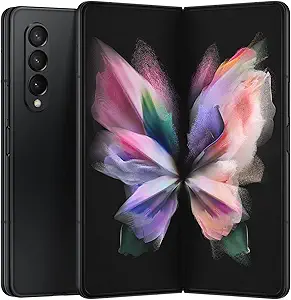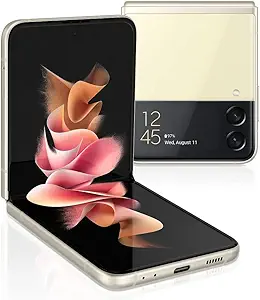






Samsung vs Nokia: Overview
Comparing Samsung and Nokia helps you determine which brand is best suited for your needs in Smartphones. Both brands offer strong choices depending on your budget and key feature requirements.
Key Features & Comparison
Evaluate factors such as build quality, warranty, customer satisfaction, and total value before making your final purchase choice between Samsung and Nokia.
Affordability
When evaluating affordability, Nokia (under HMD Global) has strategically anchored its entire modern smartphone lineup in the budget and lower-midrange tiers, prioritizing upfront cost-efficiency. Nokia devices, such as the G-series and C-series, deliver fundamental smartphone capabilities at aggressive entry-level price points, making them exceptionally attractive to price-conscious consumers and enterprise fleet buyers. By employing near-stock Android with minimal software bloat, Nokia extracts respectable utility from entry-level hardware without inflating retail pricing. However, this aggressive cost-cutting often manifests in modest component specifications, such as lower-tier MediaTek or Unisoc silicon, slower eMMC 5.1 storage, and standard 60Hz or entry 90Hz LCD panels.
Samsung approaches affordability through its expansive Galaxy A and Galaxy M series, offering a tiered ladder of devices that scales from basic budget to premium midrange. While Samsung's absolute lowest-cost devices may command a slight premium over comparable Nokia handsets, Samsung offers significantly superior value per dollar as you move up the price spectrum. Devices like the Galaxy A3x and A5x series introduce flagship-derived technologies—such as vibrant Super AMOLED 120Hz displays, robust stereo speakers, and ingress protection—down to sub-$400 price brackets. Furthermore, Samsung's industry-leading software commitment of up to four to six years of major OS and security updates on select budget-to-midrange models drastically enhances long-term value, offsetting higher initial purchase costs through extended device lifecycles.
Quality/Durability
Durability remains a cornerstone of the Nokia brand identity, an engineering ethos deliberately carried forward from its legacy days into modern HMD Global hardware. Nokia smartphones frequently feature robust polycarbonate unibody designs that absorb drops and mechanical shocks far better than brittle glass-backed alternatives. In recent years, Nokia has championed structural longevity through initiatives like QuickFix repairability, designing devices with easily removable back covers and standardized internal fasteners that allow users to replace cracked screens, degraded batteries, and faulty charging ports using basic tools and official iFixit guides. This focus on physical resilience and user-serviceability makes Nokia devices exceptionally rugged workhorses capable of enduring harsh daily conditions without requiring protective cases.
Samsung approaches build quality from a precision-engineering perspective, relying on sophisticated structural architectures, aerospace-grade aluminum frames, and cutting-edge protective materials like Corning Gorilla Glass Victus 2 across its premium and upper-midrange portfolios. Samsung's flagship Galaxy S devices set the industry benchmark for water and dust resistance with standardized IP68 ratings, offering complete submersion protection that most Nokia devices, which often top out at basic IP52 splash resistance, simply cannot match. While Samsung's complex, glass-sandwich construction and tightly sealed, adhesive-heavy assemblies make third-party or home repairs significantly more difficult and expensive, the sheer structural rigidity, tight manufacturing tolerances, and luxurious tactile refinement of modern Galaxy devices deliver an elevated sense of premium craftsmanship.
Performance
The performance dichotomy between the two brands reflects fundamentally different target demographics and hardware architectures. Nokia designs its smartphones strictly for daily utility, social connectivity, and basic media consumption. Powered predominantly by entry-level to mid-tier Qualcomm Snapdragon 4-series, MediaTek Dimensity, or Unisoc processors paired with modest RAM capacities, Nokia hardware handles basic multitasking competently thanks to a lightweight, clean Android interface. However, the hardware ceilings become apparent under demanding workloads; high-fidelity 3D gaming, sustained multitasking, and 4K computational video rendering lead to noticeable frame drops, thermal throttling, and UI stutter, as these devices simply lack the raw compute overhead and advanced cooling solutions required for intensive tasks.
Samsung, conversely, represents the pinnacle of mobile computing performance across its flagship tier while offering competitive throughput in its midrange. Leveraging top-tier Qualcomm Snapdragon 8-series chips alongside its proprietary Exynos processors, high-speed LPDDR5X RAM, and UFS 4.0 storage modules, Samsung devices deliver exceptional raw processing power and graphics capabilities. Advanced vapor chamber thermal dissipation systems ensure sustained performance during peak gaming, 8K video capture, and high-throughput data processing. Furthermore, Samsung elevates mobile productivity through software innovations like Samsung DeX, which transforms the smartphone into a fully functional desktop environment when connected to an external display, providing computational versatility that Nokia's hardware architecture cannot facilitate.
Camera Quality
In the imaging department, Nokia focuses on straightforward, utility-driven photography tailored to everyday social sharing and document scanning. While historically celebrated for pioneering computational and optical imaging through its legendary PureView and Zeiss partnerships, modern Nokia smartphones feature more conventional camera arrays. Contemporary models rely primarily on standard 50-megapixel primary sensors coupled with auxiliary depth or macro lenses that add minimal practical photographic versatility. In broad daylight, Nokia handsets produce natural color reproduction and commendable dynamic range; however, limited sensor sizes, rudimentary optical stabilization, and basic image signal processors (ISPs) result in softer textures, increased digital noise, and slower shutter response in challenging low-light environments.
Samsung stands as a dominant authority in computational photography and mobile optics, outclassing Nokia across virtually every imaging metric. High-end Galaxy devices incorporate massive, proprietary 200-megapixel sensors, sophisticated multi-frame processing pipelines, and dual-telephoto optical zoom systems featuring periscope lenses that provide crisp magnification up to 10x optically and 100x digitally. Samsung's advanced AI ISP and ProVisual Engine intelligently optimize dynamic range, skin tones, and low-light exposure through aggressive nightography algorithms. Even in the midrange Galaxy A-series, Samsung consistently equips primary lenses with Optical Image Stabilization (OIS) and high-resolution ultra-wide sensors, offering rich 4K video recording, cinematic stabilization, and robust manual controls that far exceed Nokia's straightforward camera interfaces.