Samsung vs Motorola: Overview & Brand Philosophy
The smartphone landscape has witnessed profound transformations over the last two decades, but few names carry the historic weight and market resonance of Samsung and Motorola. Samsung, the South Korean tech titan, approaches the smartphone market with an ethos of technological maximalism, vertical integration, and ecosystem expansion. As the perennial leader in global shipment volumes, Samsung positions its Galaxy line not merely as individual handheld devices, but as the command centers of an interconnected digital empire spanning home appliances, wearables, and personal computing.
In contrast, Motorola—a pioneer credited with inventing the handheld mobile phone and now operating as a subsidiary of Lenovo—champions a philosophy rooted in utilitarian ergonomics, uncluttered user experiences, and aggressive value delivery. While Motorola was once sidelined during the early boom of custom Android skins, the brand has staged a formidable resurgence. Its modern philosophy centers on democratizing premium design cues—such as vegan leather finishes and high-refresh-rate displays—down to accessible price points, while maintaining a clean, near-stock Android software experience that appeals to traditionalists and pragmatists alike.
These divergent philosophies yield two distinct user journeys. A Samsung smartphone is an engineering showcase: high-density silicon, proprietary display technology, and software running deep with feature redundancy and enterprise-grade security. A Motorola smartphone is a study in streamlined practical design: thoughtful gesture-based hardware controls, light software overhead, and targeted hardware choices designed to optimize price-to-performance metrics without unnecessary bloat.
Key Differences & Technological Comparison
At the architectural level, Samsung's most formidable advantage is its vertical integration. Because Samsung manufactures its own Dynamic AMOLED panels, memory modules, image sensors, and custom processors (Exynos, deployed alongside Qualcomm Snapdragon variants), its flagship Galaxy S and Galaxy Z lines consistently set industry standards for display brightness, color accuracy, and hardware synergy. Motorola, while sourcing exceptional pOLED panels from third-party manufacturers, typically focuses on tuning display refresh rates—often pushing 144Hz or 165Hz even on mid-range devices—to deliver perceived fluidity over raw peak nits.
The software divide is arguably the most decisive factor for consumers. Samsung’s One UI is a comprehensive, feature-dense operating system built atop Android. It offers expansive personalization, enterprise-ready data compartmentalization via Samsung Knox, and advanced productivity suites like Samsung DeX (which converts your phone into a full desktop environment when connected to an external monitor). Motorola employs "Hello UI" (formerly MyUX), which stays remarkably true to Google's Material You design language. Motorola complements this clean baseline with genuinely intuitive, hardware-level shortcuts—such as the double-chop to toggle the flashlight or the quick-twist to launch the camera—delivering speed and simplicity without the cognitive load of nested menus.
In the camera department, Samsung prioritizes computational photography, multi-frame synthesis, and class-leading optical zoom systems. Flagships like the Ultra series utilize proprietary periscope telephoto lenses and 200-megapixel sensors to capture unmatched detail and dynamic range. Motorola has significantly improved its imaging pipeline through partnerships with Pantone for color calibration and the deployment of optical image stabilization (OIS) across lower price tiers, but its algorithmic processing still tends to struggle under complex low-light conditions and fast-moving subjects compared to Samsung's refined post-processing.
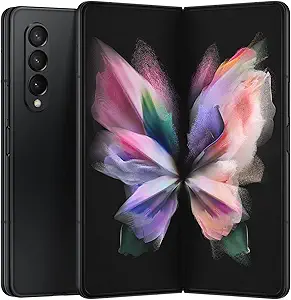
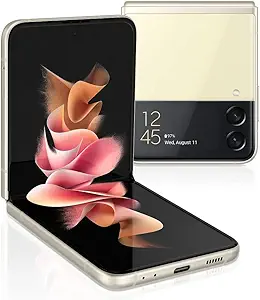
When assessing form factors and innovation, both brands heavily contest the foldable market. Samsung’s Galaxy Z Fold and Z Flip series represent the engineering gold standard for structural rigidity, water resistance (with IP48 ratings), and long-term hinge durability. Motorola’s Razr series, however, has consistently forced Samsung to innovate by pioneering larger, fully functional external cover screens and nearly crease-free teardrop hinge designs that fold entirely flush without panel gaps.
Pros & Cons Comparison
Samsung: Pros
- Industry-Leading Software Support: Select flagships now receive up to seven years of major Android OS and security updates.
- Unmatched Display Engineering: Proprietary Dynamic AMOLED 2X panels lead the market in outdoor visibility, HDR processing, and color fidelity.
- Advanced Productivity Ecosystem: Robust integration through Samsung DeX, S-Pen stylus support, and seamless pairing with Galaxy Book and Tab devices.
- Enterprise-Grade Security: Hardware-isolated security via Samsung Knox provides best-in-class defense against malware and device tampering.
Samsung: Cons
- Software Redundancy: Heavy duplication of core apps (two app stores, two browsers, two messaging clients) leads to out-of-the-box clutter.
- Conservative Charging Speeds: Wired charging protocols generally peak at 25W or 45W, lagging significantly behind industry fast-charging curves.
- Premium Price Premium: Flagship and upper mid-range models carry high initial costs with slower entry-level price deprecation.
Motorola: Pros
- Clean, Bloat-Free Interface: Near-stock Android implementation ensures fluid transitions, minimal background resource drain, and intuitive use.
- Superior Value in Mid-and-Budget Tiers: Exceptional price-to-performance ratio, often bundling high-refresh displays and premium materials for under $400.
- Practical Gesture Controls: Hardware-mapped gestures (chop-for-flashlight, twist-for-camera) remain the gold standard for real-world utility.
- Aggressive Fast Charging: Mid-range and flagship devices frequently ship with high-wattage TurboPower chargers (up to 68W or 125W) included in the retail box.
Motorola: Cons
- Inconsistent Software Support: Historically slower OS rollouts and shorter support lifecycles (often capped at 1 to 3 OS updates depending on the model tier).
- Secondary Camera Performance: Ultrawide and auxiliary macro sensors often exhibit noticeable dynamic range drop-offs compared to primary lenses.
- Variable Resale Value: Motorola devices tend to depreciate more rapidly on secondary markets compared to equivalent Samsung hardware.
Performance, Durability & Value Analysis
From a hardware durability standpoint, Samsung holds a distinct structural edge across flagship and upper-tier segments. By investing heavily in proprietary Armor Aluminum frames, Gorilla Glass Victus 2, and rigorous IP68 dust-and-water ingress protection across virtually its entire mid-to-high catalog, Samsung devices are explicitly built for multi-year lifecycles. Motorola has countered effectively by adopting IP68 ratings on its upper-tier Edge devices and utilizing resilient vegan-leather rear plates that resist impact shattering far better than glass. However, Motorola's budget-focused Moto G line frequently relies on water-repellent nano-coatings rather than fully sealed submersibility, requiring greater user vigilance in harsh environments.
The calculation of long-term value ultimately depends on device lifecycle management. Samsung demands a higher upfront capital investment, but it amortizes that cost through exceptionally long software support windows, broad carrier promotions, and strong trade-in equity down the line. Motorola delivers immense day-one value: consumers regularly obtain flagship-adjacent specs—such as 144Hz displays, rapid silicon, and included high-speed charging bricks—at hundreds of dollars below Samsung's entry point. For buyers who replace their devices every two to three years, Motorola provides unrivaled economic efficiency; for those planning to keep a phone operational for five years or more, Samsung’s support architecture makes it the more secure financial choice.
Final Verdict: Which Brand Should You Choose?
Your choice between Samsung and Motorola should be guided by your prioritized balance between software longevity, ecosystem integration, and pure hardware-to-price utility.
Choose Samsung if: You view a smartphone as a five-to-seven-year productivity investment; you require best-in-class telephoto cameras; you manage sensitive corporate data requiring hardware-level encryption; or you already own other Galaxy ecosystem peripherals. Power users, mobile photographers, and enterprise professionals will find Samsung's technical sophistication, stylus support, and display prowess well worth the price premium.
Choose Motorola if: You prioritize day-to-day usability, crave an uncluttered operating system that respects Android fundamentals, and demand the absolute maximum hardware capability your money can buy under $600. Commuters, students, and pragmatic buyers who appreciate blisteringly fast charging, practical physical shortcuts, and modern industrial design without the bloatware will find Motorola an extraordinarily compelling, budget-conscious champion.
Affordability
When evaluating affordability, Motorola and Samsung approach the budget-to-mid-range smartphone segment with fundamentally different engineering philosophies and value propositions. Motorola has practically mastered the sub-$300 market with its Moto G and Moto E series, prioritizing functional hardware economy. Instead of chasing high-cost proprietary technologies, Motorola integrates near-stock Android software with dependable, lower-cost MediaTek and Qualcomm Snapdragon 400-to-600 series processors. This lightweight software footprint allows Motorola to deliver remarkably smooth daily performance on devices with modest RAM configurations. Conversely, Samsung’s entry-level and mid-range strategy, anchored by the Galaxy A-series, focuses on bringing flagship-derived hardware elements down to approachable price points. Samsung leverages its supply chain supremacy to equip budget devices with superior Super AMOLED displays, higher megapixel multi-camera arrays, and longer-term ingress protection (IP ratings)—features rarely matched by Motorola at identical pricing tiers.
The primary trade-offs between the two brands emerge in software longevity versus upfront cost savings. Motorola frequently dominates the pure "dollars-to-specs" ratio at the point of sale, often offering 5,000 mAh batteries, high refresh rate LCD or pOLED screens, and included in-box accessories like fast chargers and protective cases that Samsung routinely omits. However, Motorola compromises significantly on post-purchase lifecycle value; its budget devices often receive only a single major Android OS upgrade and infrequent bi-monthly or quarterly security patches. Samsung demands a slightly higher upfront premium for comparable memory and storage configurations, but compensates with industry-leading support, typically promising up to four generations of OS upgrades and five years of security maintenance even on affordable Galaxy A-tier phones. Furthermore, Samsung's One UI provides a richer ecosystem integration, though it is more resource-heavy on lower-end chipsets compared to Motorola's bloat-free interface.
Ultimately, determining the more affordable brand depends on the consumer's definition of value—initial expenditure versus multi-year total cost of ownership. For buyers seeking the absolute lowest barrier to entry with capable, no-nonsense hardware and clean day-to-day usability right out of the box, Motorola is the definitive champion of upfront frugality. However, for consumers willing to spend marginally more to secure hardware resilience, superior display engineering, and software viability that prevents the need for an upgrade every two years, Samsung’s mid-range portfolio represents the more financially sound long-term investment.
Quality/Durability
When evaluating engineering quality and structural resilience, Samsung consistently establishes industry benchmarks, particularly within the premium and mid-tier segments. Samsung leverages cutting-edge materials across its flagship Galaxy S and Z series, utilizing high-grade Armor Aluminum frames, Gorilla Glass Victus 2, and rigorous IP68 dust and water resistance ratings. Their component integration—ranging from industry-leading Dynamic AMOLED displays to custom-tuned haptics—exhibits exceptional tolerance and precision. In the foldable space, Samsung’s engineered dual-rail hinges and Ultra Thin Glass (UTG) showcase superior structural longevity compared to competitors. Furthermore, Samsung pairs this physical prowess with market-leading long-term software support, offering up to seven years of major OS and security updates on recent flagships, ensuring the device remains technically viable and secure well beyond standard consumer upgrade cycles.
Motorola approaches durability through a more utilitarian, cost-effective engineering philosophy, prioritizing practical toughness, particularly in its budget and mid-range Moto G series. While Motorola frequently relies on polycarbonate chassis rather than treated metals and glass, these composite builds often absorb kinetic drops better than brittle glass alternatives, reducing the likelihood of catastrophic cracks. However, Motorola compromises on environmental sealing; where Samsung offers comprehensive ingress protection, Motorola often provides only a water-repellent nanocoating (IP52 to IP54), leaving devices vulnerable to actual submersion. On its high-end Razr foldables, Motorola has innovated impressive zero-gap teardrop hinges that reduce display creasing, yet these units still trail Samsung's foldables in long-term particulate and moisture ingress defense.
The trade-off between the two brands centers on long-term premium endurance versus immediate, cost-conscious survivability. Samsung devices demand a higher initial investment but deliver unparalleled fit, finish, ingress protection, and long-term operating system support that collectively ensure the phone survives both physical wear and technical obsolescence over a multi-year lifespan. Motorola offers admirable, functional shock resistance in its unpretentious, plastic-dominated budget lineup, but falls considerably short in water resistance, flagship hinge longevity, and software commitment—frequently abandoning devices after just one to three updates. For consumers prioritizing verified structural sealing and multi-year endurance, Samsung remains the superior choice, while Motorola delivers acceptable, knock-about durability for budget-conscious users.
Performance
When evaluating performance, Samsung generally holds the upper hand at the premium tier, engineering its devices with cutting-edge Silicon and high-end thermal solutions. Flagship models, such as the Galaxy S-series and the Z Fold line, leverage customized Qualcomm processors—often branded as "Snapdragon for Galaxy"—which feature higher clock speeds than standard chips, paired with ultra-fast UFS 4.0 storage and up to 16GB of LPDDR5X RAM. Samsung’s engineering prowess shines in sustained performance and heavy multitasking, where sophisticated vapor chamber cooling systems prevent early thermal throttling during intensive tasks like 4K video rendering and high-framerate 3D gaming. Furthermore, Samsung's DeX desktop interface uniquely capitalizes on this raw horsepower, transforming the phone into a full-fledged workstation. However, on budget and lower mid-range devices, Samsung’s reliance on in-house Exynos processors can yield inconsistent performance, occasionally resulting in micro-stutters and increased battery drain under sustained stress.
Motorola approaches performance with a philosophy centered on software efficiency and agility, largely powered by its lightweight "My UX" interface. Unlike Samsung's feature-dense and occasionally resource-heavy One UI, Motorola's software closely mirrors stock Android, allowing its smartphones to deliver exceptionally fluid day-to-day navigation and responsive app launching with less overhead. In the flagship arena, such as the Edge+ series, Motorola deploys top-tier Snapdragon chipsets that readily match Samsung’s raw benchmarks for everyday utility and gaming, often sweetening the deal with blazing-fast 165Hz display refresh rates. Where Motorola truly excels is in the budget-to-mid-range territory; devices like the Moto G series are fine-tuned to extract every ounce of performance from modest hardware, frequently outperforming comparably priced Samsung Galaxy A-series phones in interface fluidity and sustained basic tasks without succumbing to bloatware-induced slowdowns.
The practical trade-off between the two brands ultimately hinges on depth of computing power versus lightweight responsiveness. Samsung is the definitive choice for power users who demand the highest ceiling of hardware optimization, superior sustained peak performance under heavy graphics workloads, and seamless desktop-level productivity, bolstered by an industry-leading commitment to seven years of performance-maintaining software updates. Conversely, Motorola is the superior choice for users seeking unencumbered, lag-free daily operation straight out of the box, particularly within mid-tier and budget brackets where clean software preserves the lifespan of less powerful silicon. While Motorola trades away Samsung’s extensive ecosystem features and deep thermal headroom, it rewards consumers with nimble, bloat-free performance and exceptional hardware-to-price value.
Camera Quality
When evaluating camera engineering quality and optical performance, Samsung consistently commands an industry-leading position, whereas Motorola positions its imaging systems around practical, budget-conscious utility. Samsung’s flagship Galaxy S-series devices showcase top-tier hardware integration, featuring custom high-resolution ISOCELL sensors (reaching up to 200MP), expansive dynamic range, and sophisticated multi-lens periscope telephoto systems delivering up to 10x optical zoom. In contrast, Motorola, even within its premium Edge and Razr lineups, leans toward off-the-shelf sensors paired with less complex secondary lenses, often trading dedicated high-magnification telephotos for macro or ultrawide combinations. Samsung's optical image stabilization (OIS) systems are substantially more robust across diverse lighting environments, ensuring crisp detail preservation and low motion blur, while Motorola’s hardware frequently relies more heavily on electronic stabilization (EIS) outside of primary sensors, resulting in softer edge fidelity and less reliable handheld night photography.
The divergence between the two brands becomes even sharper in algorithmic computational photography and feature versatility. Samsung’s proprietary image signal processing (ISP) aggressively champions vibrant color saturation, deep contrast, and advanced multi-frame HDR synthesis that appeals to mainstream consumers and content creators desiring ready-to-share social media imagery. Samsung also delivers a remarkably comprehensive software suite, incorporating robust Pro visual controls, 8K video capture, Expert RAW integration, and intelligent object-erasure capabilities. Motorola champions a more subdued, natural color profile with minimal software interference, but it struggles with consistency; shutter lag is a persistent issue in low-light conditions, leading to missed action shots, and its HDR algorithms occasionally blow out specular highlights. Motorola does incorporate clever utility features, such as its signature double-wrist-twist quick capture gesture and clean, stock-like camera interfaces, but it noticeably lags behind Samsung in low-light portrait isolation, dynamic range processing speed, and sustained video bitrate stability.
From a practical consumer standpoint, the trade-offs come down to baseline expectations versus cutting-edge imaging demands. Samsung provides a cohesive, high-performing camera ecosystem that maintains competitive quality across ultra-flagship down to mid-range Galaxy A-series devices, making it the superior choice for users who prioritize versatile focal lengths, dependable low-light performance, and cinematic video stabilization. Motorola delivers adequate, functional camera setups tailored for casual daylight snapshots, document scanning, and standard social sharing, reflecting cost efficiencies that keep its retail pricing highly competitive. Ultimately, consumers prioritizing creative control, zoom fidelity, and dependable point-and-shoot reliability in challenging environments will find Samsung well worth the premium, while Motorola serves value-driven buyers content with straightforward, daylight-optimized imaging.