
Samsung vs Google: Overview
Comparing Samsung and Google helps you determine which brand is best suited for your needs in Smartphones. Both brands offer strong choices depending on your budget and key feature requirements.
Key Features & Comparison
Evaluate factors such as build quality, warranty, customer satisfaction, and total value before making your final purchase choice between Samsung and Google.
Affordability
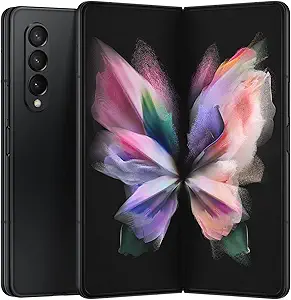
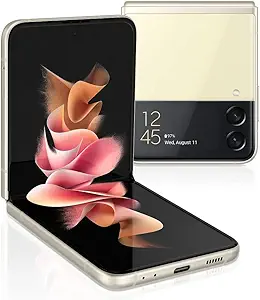
When analyzing affordability, Samsung presents a vastly wider spectrum of price points, catering to entry-level buyers up to ultra-premium luxury segments. Samsung's portfolio spans the budget-friendly Galaxy A series, the mid-tier Galaxy FE line, and the flagship Galaxy S and Z Fold/Flip series. This massive range allows consumers to find a Samsung device at virtually every $100 increment between $150 and $1,800. Furthermore, Samsung's aggressive carrier partnerships and ubiquitous trade-in promotions frequently lower the barrier to entry for their flagship devices, making high-end hardware accessible through structured financing and subsidized contracts.
Google approaches affordability with a more concentrated, value-driven strategy centered on aggressive price-to-performance ratios. Google’s lineup strictly targets mid-range and premium consumers, spearheaded by the budget-friendly A-series (such as the Pixel 7a or 8a) and the flagship Pixel and Pixel Pro models. Rather than matching Samsung’s ultra-budget offerings, Google focuses on delivering flagship-tier computational photography and clean Android software at launch prices that consistently undercut Samsung's comparable Galaxy S flagships by $100 to $200. Consequently, while Samsung offers broader accessibility across socioeconomic tiers, Google frequently delivers superior feature density per dollar in the sub-flagship and standard flagship brackets.
Quality/Durability
Samsung has established an exceptionally high standard for structural engineering and material durability across its product ecosystem. Utilizing proprietary innovations like Armor Aluminum frames, Gorilla Glass Victus 2, and advanced IP68 water- and dust-resistance ratings, Samsung flagships demonstrate outstanding resistance to physical wear and environmental exposure. Even in the fragile realm of foldables, Samsung leads the industry with ultra-thin glass (UTG) engineering, redesigned hinge mechanisms, and water resistance that competitors struggle to emulate. The manufacturing tolerance and fit-and-finish of a Galaxy S device reflect decades of refined supply chain dominance and industrial manufacturing expertise.
Google has made dramatic strides in its industrial design language, shifting from earlier utilitarian builds to distinctive, premium aesthetic identities highlighted by the signature camera visor. Current Pixel flagships match industry baselines with IP68 certification and aerospace-grade aluminum or polished metal enclosures. However, Google has historically faced minor quality assurance variances across production batches, including issues such as adhesive degradation, volume button detachment, and glass shatter vulnerabilities on early camera bars. While Google’s commitment to seven years of software and parts availability elevates its long-term lifecycle durability, Samsung retains the advantage in sheer hardware refinement and physical resilience.
Performance
In raw computing benchmarks and high-stress processing workloads, Samsung holds a definitive hardware advantage. Samsung equips its premium Galaxy flagships with customized, overclocked Qualcomm Snapdragon platforms (and select Exynos chips in regional variants) paired with cutting-edge UFS 4.0 storage and up to 16GB of rapid LPDDR5X RAM. This silicon architecture results in class-leading single-core, multi-core, and graphical GPU outputs, making Samsung devices powerhouse options for mobile gaming, high-framerate rendering, and intensive multitasking via Samsung DeX desktop mode. Furthermore, Samsung's aggressive vapor chamber cooling solutions maintain sustained peak performance over extended usage cycles.
Google diverges philosophically by deprioritizing benchmark brute force in favor of specialized, on-device intelligence via its custom Tensor silicon. Co-developed with machine learning architecture at its core, the Google Tensor chip optimizes Tensor Processing Units (TPUs) for real-time speech recognition, live translation, and computational photography rather than sustained 3D gaming. As a result, Pixel phones offer an exceptionally fluid day-to-day user experience characterized by seamless Google AI integration, but they exhibit lower sustained peak performance, thermal throttling under intensive graphic loads, and inferior power efficiency compared to Samsung's Snapdragon implementations.
Camera Quality
Samsung’s camera philosophy relies heavily on maximalist hardware integration and cutting-edge optical versatility. High-end Galaxy devices, notably the Ultra models, champion raw sensor resolution up to 200 megapixels, complex periscope telephoto configurations offering 3x and 5x optical (and up to 100x digital) zoom, and expansive manual controls via the Expert RAW ecosystem. Samsung's image processing signature emphasizes vibrant color saturation, brightened shadow exposures, and aggressive sharpening, producing striking, social-media-ready images straight out of the camera. The video capture capabilities are equally robust, offering 8K recording and superior pro-grade stabilization across diverse lighting conditions.
Google takes the antithetical approach, dominating mobile imaging through peerless computational algorithms and machine learning rather than pure sensor scale. Pixel cameras rely on advanced HDR+ pipelines, Real Tone color science, and sophisticated AI reconstruction tools like Magic Eraser, Best Take, and Photo Unblur. Google’s processing produces remarkably natural contrast, unmatched dynamic range in challenging lighting, and the most accurate skin tones in the industry. For spontaneous point-and-shoot photography—particularly involving rapid motion, low ambient light, or candid portraiture—Google’s software intelligence consistently yields higher keeper rates than Samsung's sometimes inconsistent shutter lag.