Samsung vs BLU: Overview
Comparing Samsung and BLU helps you determine which brand is best suited for your needs in Smartphones. Both brands offer strong choices depending on your budget and key feature requirements.
Key Features & Comparison
Evaluate factors such as build quality, warranty, customer satisfaction, and total value before making your final purchase choice between Samsung and BLU.
Affordability
When evaluating affordability, BLU operates almost exclusively as a budget-first disruptor, engineering unlocked devices tailored to cost-conscious consumers. The brand's primary strategic advantage lies in delivering modern aesthetic silhouettes, large battery capacities, and functional baseline hardware at rock-bottom price tiers that rarely exceed a few hundred dollars. By stripping away flagship-tier research and development, cutting out premium industrial finishes, and leveraging aggressive price-to-spec ratios, BLU makes entry-level smartphone ownership accessible without binding carrier contracts or prohibitive upfront investments. For shoppers seeking the absolute lowest financial barrier to entry for standard tasks like browsing, communication, and basic media streaming, BLU presents an aggressive value proposition.
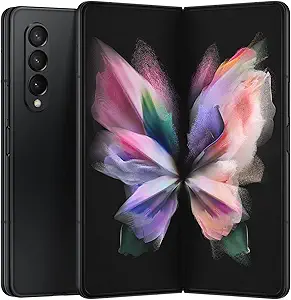
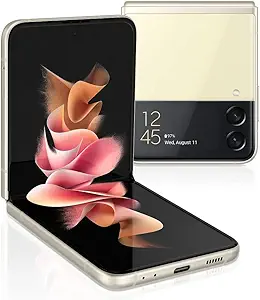
Samsung approaches affordability through a dramatically broader, tiered portfolio that spans from the budget-conscious Galaxy A-series up to the four-figure ultra-premium S-series and Z-foldables. While Samsung cannot compete with BLU at the absolute bottom price floor dollar-for-dollar, its entry-level and mid-range offerings provide significantly higher long-term value. Samsung offsets higher initial costs through superior post-purchase support, extensive global warranty networks, regular promotional financing, and guaranteed multi-year operating system and security updates. Consequently, while BLU offers immediate upfront savings, Samsung delivers a more financially resilient investment through sustained trade-in value, device longevity, and software stability over time.
Quality/Durability
Samsung represents the industry benchmark for hardware resilience and manufacturing excellence, consistently deploying top-tier industrial materials across its lineup. Higher-end Galaxy devices incorporate custom Armor Aluminum frames, Gorilla Glass Victus front and rear panels, and rigorous IP68 dust- and water-resistance ratings that ensure survival against immersion and severe drops. Even within the more modest Galaxy A-series, Samsung maintains tight structural tolerances, reinforced chassis designs, and dependable dust and splash resistance (often IP67). This structural integrity is paired with industry-leading post-purchase engineering, including up to seven years of firmware patches, ensuring that the physical hardware is complemented by enduring software stability and security.
In contrast, BLU’s manufacturing process relies heavily on cost-efficient composite plastics, basic structural skeletons, and entry-level glass protection, typically older iterations of Gorilla Glass or untreated soda-lime glass. Official ingress protection (IP ratings) is virtually nonexistent across BLU's catalog, leaving sensitive internal components vulnerable to moisture, rain, and fine dust particles. While their exterior designs successfully emulate modern flagship trends with gradient finishes and multi-camera islands, the structural rigidity under torsional stress and long-term drop resistance lag significantly behind Samsung. Additionally, BLU’s inconsistent software update cadence means devices often suffer from unresolved system vulnerabilities and premature software obsolescence, sharply limiting their viable functional lifespan.
Performance
The performance delta between the two manufacturers highlights the fundamental divide between bleeding-edge silicon engineering and cost-capped component sourcing. Samsung's upper-tier smartphones utilize flagship Qualcomm Snapdragon and proprietary Exynos processors, integrated with high-speed LPDDR5X RAM and ultra-fast UFS 4.0 storage modules. This cutting-edge silicon architecture effortlessly handles intensive multi-tasking, enterprise-level productivity environments like Samsung DeX, sustained 3D mobile gaming, and hardware-accelerated on-device generative AI features. Furthermore, Samsung's proprietary thermal management systems, incorporating broad vapor chambers, ensure that peak clock speeds are sustained under continuous workloads without aggressive thermal throttling.
Conversely, BLU sources lower-tier silicon architectures, predominantly leveraging entry-level MediaTek Helio and entry-tier Unisoc chipsets paired with slower eMMC 5.1 or lower-generation UFS storage. While these configurations adequately facilitate basic smartphone operations—such as social media navigation, voice calls, standard video playback, and lightweight messaging—they struggle under heavy concurrent computational demands. Users frequently encounter frame drops, extended application launch latencies, and thermal constraints during prolonged usage or graphically intensive tasks. For pragmatic, light users, BLU provides sufficient throughput, but it lacks the computational headroom, advanced GPU rendering, and sophisticated thermal dissipation demanded by power users.
Camera Quality
Samsung is globally recognized as an imaging powerhouse, heavily investing in bespoke sensor development, multi-lens versatility, and sophisticated computational photography algorithms. Flagship Galaxy models boast high-resolution primary sensors up to 200 megapixels, physical Optical Image Stabilization (OIS), and dedicated periscope telephoto optics delivering up to 10x optical magnification. Samsung’s image signal processors (ISPs) dynamically blend multi-frame exposures with advanced neural processing units (NPUs) to deliver exceptional dynamic range, ultra-clean low-light Nightography performance, and color-accurate 8K video capture with robust gyro-based electronic stabilization. Even Samsung's mid-tier models benefit directly from this trickled-down image processing pipeline, ensuring reliable point-and-shoot consistency.
BLU’s camera systems, by comparison, are engineered strictly for utility rather than professional-grade content creation. While marketing specifications often highlight multi-sensor arrays and high megapixel counts, the secondary and tertiary lenses are typically low-resolution macro or depth sensors with minimal real-world utility. Lacking hardware-level optical stabilization, BLU devices are heavily susceptible to motion blur and exhibit noticeable digital noise and aggressive detail smearing in low-light environments. The onboard computational photography engines lack the processing power to manage complex high-contrast dynamic scenes effectively, resulting in blown-out highlights or muddy shadows. BLU cameras are fully adequate for quick social snaps and practical documentation in daylight, but they fall far short of Samsung’s imaging fidelity and video versatility.