Asus vs Samsung: Overview & Brand Philosophy
In the fiercely competitive smartphone landscape, Asus and Samsung represent two vastly different approaches to engineering, market positioning, and consumer appeal. Samsung stands as the undisputed titan of the Android ecosystem, commanding a massive global market share through an exhaustive, vertically integrated product catalog. From budget-friendly Galaxy A-series handsets to cutting-edge foldable displays and ultra-premium Galaxy S flagships, Samsung's philosophy centers on mass-market ubiquity, ecosystem synergy, and pioneering mainstream technological trends like dynamic AMOLED panels and generative artificial intelligence.
Conversely, Asus operates as a disciplined, specialized challenger brand. Rather than attempting to saturate every tier of the global market, the Taiwanese hardware veteran focuses squarely on enthusiast-driven niches. Asus channels its engineering pedigree into two distinct smartphone identities: the Republic of Gamers (ROG) Phone series, which dictates the gold standard for dedicated mobile gaming hardware, and the Zenfone series, which has earned critical acclaim for packing flagship internals into compact, ergonomically superior form factors. Asus's philosophy prioritizes raw performance, thermal headroom, utilitarian hardware features, and minimalist software.
Ultimately, choosing between Samsung and Asus is a decision between bespoke engineering tailored to specialized workflows and an all-encompassing, highly polished ecosystem designed to serve everyone. While Samsung strives to be the default digital companion for the global populace, Asus builds high-performance tools for consumers who feel underserved by mainstream design compromises.
Key Differences & Technological Comparison
The foundational divergence between these two manufacturers manifests primarily in hardware prioritization, display technology, and software implementation:
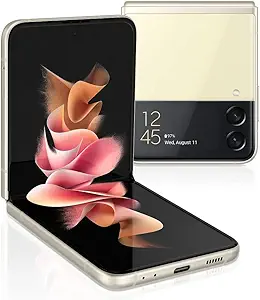
Display and Form Factor: Samsung manufactures its own industry-leading Dynamic AMOLED 2X displays, characterized by exceptional peak brightness, vivid color calibration, and dynamic refresh rates scaling from 1Hz to 120Hz for optimal battery conservation. Furthermore, Samsung leads the industry in flexible form factors with the Galaxy Z Fold and Z Flip lines. Asus, while sourcing high-grade AMOLED panels from Samsung Display, tunes its screens for extreme responsiveness. ROG devices boast refresh rates up to 165Hz or 185Hz paired with ultra-high touch sampling rates (up to 720Hz) to minimize input latency. While Samsung pushes larger screens and foldables, Asus remains one of the few brands offering high-performance compact flagships via the standard Zenfone line.
Performance and Thermal Architecture: While both brands deploy top-tier Qualcomm Snapdragon silicon in their premium models (with Samsung occasionally leveraging in-house Exynos processors in select global regions), their sustained performance differs dramatically. Samsung optimizes its thermal throttling profiles for burst performance and safe external chassis temperatures, prioritizing slim aesthetic profiles over massive vapor chambers. Asus, especially within the ROG series, engineers expansive multi-layer thermal designs utilizing graphite sheets, boron nitride, rapid-cycle vapor chambers, and optional active external cooling fans (AeroActive Cooler). This allows Asus devices to sustain peak clock speeds indefinitely without aggressive thermal throttling.
Camera Systems: Samsung holds a decisive advantage in camera versatility and computational photography. The Galaxy S Ultra series is renowned for its multi-sensor arrays featuring up to 200MP primary sensors, dedicated 3x and 5x periscope telephoto lenses, and class-leading image signal processing (ISP). Asus adopts a more utilitarian approach: while Zenfone devices feature innovative 6-axis hybrid gimbal stabilization that excels at run-and-gun video recording, their still photography pipelines, telephoto reach, and low-light scene reconstruction lack the refinement and versatility of Samsung’s computational suite.
Software and Ecosystem Support: Samsung’s One UI is a feature-rich, deeply integrated platform offering productivity suites like Samsung DeX (desktop mode), Knox security, and tight continuity with Galaxy tablets, smartwatches, and laptops. Samsung also leads Android longevity with up to seven years of major OS and security upgrades. Asus implements ZenUI/ROG UI, a clean interface closely mirroring stock Android with subtle, enthusiast-oriented customizations (such as granular battery charging limiters and manual performance toggles). However, Asus typically offers only two to four years of software updates, falling significantly behind Samsung's long-term commitment.
Pros & Cons Comparison
Asus Smartphones
- Pros:
- Unrivaled sustained gaming performance and class-leading internal cooling solutions.
- Enthusiast-grade hardware inclusions like dual USB-C ports, ultrasonic shoulder triggers, and 3.5mm headphone jacks on select models.
- Clean, bloatware-free Android interface with deep system-level customization.
- Innovative physical stabilization hardware (6-Axis Hybrid Gimbal Stabilizer).
- Exceptional battery endurance paired with advanced battery health preservation software.
- Cons:
- Limited software support window (typically 2 major OS upgrades and 4 years of security patches).
- Camera versatility lags behind competitors, especially concerning telephoto zoom performance.
- No foldable form factors or expansive ecosystem accessories (smartwatches/tablets).
- Limited global carrier availability and retail distribution compared to tier-one brands.
Samsung Smartphones
- Pros:
- Market-leading software lifecycle with up to 7 years of Android OS and security updates.
- World-class camera systems offering superior computational photography and industry-standard zoom optics.
- Mature, cross-device ecosystem supported by enterprise-grade security (Samsung Knox) and desktop productivity (Samsung DeX).
- Diverse portfolio spanning accessible budget devices to mature foldable flagships.
- Broad carrier support, ubiquitous trade-in programs, and extensive third-party accessory ecosystems.
- Cons:
- One UI comes preloaded with duplicate applications and services (bloatware).
- Conservative charging speeds (typically capped between 25W and 45W) without bundled chargers.
- Aggressive thermal throttling under prolonged, heavy gaming workloads compared to dedicated gaming phones.
- Inconsistent processor deployment in certain global regions (Snapdragon vs. Exynos).
Performance, Durability & Value Analysis
When evaluating hardware longevity and build durability, both manufacturers construct their premium devices using aerospace-grade aluminum frames and Corning Gorilla Glass Victus 2, achieving robust IP68 dust-and-water resistance ratings across standard flagship lines. However, Samsung edges ahead in long-term reliability due to its extensive service network, globally available replacement components, and structural maturity in water-resistant engineering. Asus devices, while structurally dense and exceptionally well-machined, present greater post-warranty repair hurdles due to more complex internal architectures (especially the modular bypass venting on modern ROG models) and a smaller global repair footprint.
In terms of monetary value, your capital investment yields fundamentally different returns between the two brands. Samsung offers superior residual value: its smartphones depreciate at a slower rate than Asus handsets, command higher trade-in values via direct-to-consumer programs, and provide lower total cost of ownership over five to seven years due to sustained software utility. Asus, on the other hand, provides higher immediate hardware-per-dollar metrics for specialized performance: you receive faster touch digitization, massive battery capacities (often up to 6,000 mAh), included high-wattage fast chargers in many regions, and unthrottled processing performance that outperforms similarly priced standard Galaxy hardware during intensive tasks.
Final Verdict: Which Brand Should You Choose?
The decision between Samsung and Asus hinges on whether your priorities skew toward specialized performance or all-around everyday excellence:
Choose Asus if: You are a competitive mobile gamer, tech enthusiast, or power user who demands unthrottled processing speed, extensive thermal headroom, and clean software. If you consider hardware controls like ultrasonic AirTriggers indispensable, value physical headphone jacks and dual charging ports, or desire a high-performance compact smartphone without the weight of a heavy software skin, Asus (particularly the ROG Phone or standard Zenfone) is built explicitly for your needs.
Choose Samsung if: You prioritize an exceptional camera system, multi-year software longevity, and seamless device interoperability. If you want a device that captures stunning family portraits in challenging light, integrates seamlessly with your work laptop via DeX, promises up to seven years of feature updates, or explores transformative form factors like the Galaxy Z Fold series, Samsung is the definitive, industry-backed choice.
Affordability
When evaluating affordability, Samsung and Asus approach the smartphone market through fundamentally divergent commercial strategies. Samsung utilizes an expansive, tiered ecosystem driven by massive economies of scale. Its entry-level and mid-range Galaxy A-series democratize flagship hardware innovations, offering high-refresh-rate Super AMOLED panels, multi-lens camera arrays, and competitive battery life at aggressive, accessible price points. However, the trade-off at the budget end lies in inconsistent processor performance, plastic chassis engineering, and the presence of pre-installed bloatware. Conversely, Asus entirely abandons the sub-$500 budget market to focus strictly on mid-to-high-tier enthusiast devices through its flagship Zenfone and gaming-centric ROG Phone lineups. While this deliberate lack of entry-level offerings eliminates Asus from true low-cost budget discussions, the brand excels in raw price-to-performance metrics within the upper-tier brackets, typically undercutting Samsung’s Galaxy S-series flagships by hundreds of dollars while delivering comparable—or superior—silicon specifications.
From an engineering and feature-per-dollar perspective, Asus provides immense hardware value for power users who would otherwise be priced out by Samsung's premium flagship tiers. A Zenfone or ROG Phone routinely bundles cutting-edge Qualcomm Snapdragon processors, higher base RAM allocations, advanced thermal vapor chambers, and niche features like 3.5mm headphone jacks and capacitive shoulder triggers at prices significantly lower than a comparative Galaxy Ultra model. Samsung counters this with a broader, long-term definition of affordability: superior total cost of ownership. Samsung’s class-leading commitment of up to seven years of Android OS and security updates substantially outclasses Asus’s standard two-to-four-year policy, drastically reducing annual ownership costs and mitigating rapid depreciation. Furthermore, Samsung's global logistics infrastructure ensures cheaper repairs, ubiquitous accessory ecosystems, and aggressive carrier trade-in subsidies that often make high-end Galaxy devices artificially more affordable out-of-pocket than Asus's unlocked, carrier-limited alternatives.
Ultimately, determining the more affordable brand depends on the consumer’s initial capital versus their product lifecycle expectations. Samsung wins decisively on absolute accessibility, offering reliable, warrantied smartphones for under $200 while also providing robust long-term value via resale stability and protracted software support. Asus, on the other hand, represents the champion of targeted performance affordability. Consumers who refuse to pay the four-figure "luxury tax" of modern mainstream flagships will find Asus capable of delivering peak processing power, gaming utility, and clean software ergonomics at a far more palatable, mid-flagship price tag, provided they accept shorter software longevity and limited regional carrier incentives.
Quality/Durability
When evaluating build quality and long-term durability, Samsung sets an exceptionally high industry benchmark through rigorous manufacturing standards and the widespread integration of premium structural materials. Across its flagship Galaxy S and Z series, Samsung utilizes proprietary Armor Aluminum frames alongside the latest Corning Gorilla Glass Victus 2 or Gorilla Armor—the latter significantly minimizing micro-scratches and surface reflections on top-tier models. Furthermore, Samsung demonstrates structural superiority with its consistent application of IP68 dust and water resistance across both its flagship tier and mid-range Galaxy A-series. Even within the structurally complex foldable category, Samsung’s engineered dual-rail hinges and IP48 ratings reflect a level of mechanical resilience and environmental sealing that few competitors can match, providing consumers with exceptional structural confidence over multi-year ownership cycles.
Asus approaches quality and durability through a specialized, niche-driven engineering philosophy, bifurcated between its ultra-compact Zenfone line and the aggressively built ROG Phone gaming series. The ROG lineup exhibits heavy-duty engineering designed to withstand physical strain, featuring robust chassis designs, internal vapor chambers, and dual USB-C ports reinforced for long-term lateral stress. However, practical trade-offs emerge when comparing Asus to Samsung's uniform structural integrity. Many ROG Phones utilize active internal cooling vents, motorized aero-valves, or exposed ports that complicate environmental sealing; while recent iterations have achieved commendable IP68 ratings, earlier iterations or accessory-dependent configurations historically compromised on liquid ingress protection. Moreover, Asus often relies on softer polycarbonate blends or textured composite finishes on its Zenfone rear panels, which resist shattering upon impact but are inherently more prone to cosmetic scuffing and abrasion compared to Samsung's hardened glass backs.
The decisive differentiator in the quality and durability assessment lies in long-term platform resilience and post-purchase component reliability. Samsung dominates the longevity equation by offering up to seven years of major Android OS and security updates on its flagship devices, supported by an expansive global supply chain that makes official battery replacements and display repairs straightforward. In contrast, Asus typically limits software support to two to four years, significantly capping the functional lifespan of otherwise capable hardware. Coupled with Asus's smaller market footprint—which makes acquiring authentic replacement parts and specialized repair services substantially more difficult—Samsung provides the superior overall investment in terms of sustained material endurance, environmental protection, and multi-year product reliability.
Performance
When evaluating smartphone performance, Samsung and Asus approach system engineering from distinctly different philosophical standpoints. Samsung targets a broad consumer base, emphasizing balanced, sustained power and deep hardware-software integration across its Galaxy lineup. Flagship devices, like the Galaxy S series, leverage custom-tuned Qualcomm Snapdragon chips (and proprietary Exynos silicon in select global markets) paired with Samsung's One UI. This setup is engineered for seamless multitasking, power efficiency, and long-term operating system stability. In contrast, Asus—particularly through its Republic of Gamers (ROG) line and the compact Zenfone series—approaches performance with an enthusiast-first, raw-throughput mindset. Asus devices regularly top synthetic benchmark leaderboards by extracting the absolute maximum clock speeds from Qualcomm’s elite silicon, complemented by cutting-edge LPDDR5X RAM and UFS 4.0 storage configured with aggressive scheduler kernels that favor instant responsiveness over conservative power draws.
The technical divergence is most pronounced in thermal management and thermal throttling behavior. Samsung relies on refined, ultra-thin internal vapor chambers designed to fit into slim, water-resistant chassis, which inevitably leads to earlier and more pronounced thermal throttling during prolonged, heavy workloads to protect battery health and maintain comfortable skin temperatures. Asus, conversely, engineers class-leading thermal solutions, employing rapid-dissipation graphite sheets, internal copper vapor layers, and, in the ROG line, dedicated mechanical cooling pathways compatible with active clip-on external coolers (the AeroActive Cooler). This active thermal architecture allows Asus phones to sustain peak GPU and CPU clock rates during demanding scenarios like 3D gaming and video rendering without the aggressive performance degradation seen in mainstream flagships. Furthermore, Asus provides users with granular, PC-grade software controls (via Armoury Crate) to adjust CPU thresholds, GPU frequencies, and fan speeds manually.
Ultimately, the performance trade-offs highlight different consumer priorities. Samsung delivers exceptional day-to-day burst performance, superior machine learning integration for on-device AI tasks, and remarkable everyday optimization with minimal battery drain during idle states. However, power users may find its thermal throttling ceilings somewhat restrictive. Asus offers unmatched sustained power, higher frame-rate stability, and bespoke gaming features like programmable ultrasonic shoulder triggers, making it the superior technical choice for competitive mobile gamers and hardware enthusiasts. Yet, this aggressive tuning comes at the expense of ergonomic bulk, reduced long-term software support timelines, and erratic battery longevity when running in unconstrained performance modes.
Camera Quality
When evaluating smartphone camera quality, Samsung operates as an undisputed industry titan, engineering versatile and class-leading camera systems, whereas Asus approaches imaging with an unconventional, niche-driven philosophy. Samsung’s flagship Galaxy S-series utilizes cutting-edge, proprietary ISOCELL sensors—scaling up to 200 megapixels—paired with state-of-the-art periscope zoom optics that offer true optical magnification from 3x up to 10x, extending digitally to 100x. Asus, on the other hand, targets distinct consumer profiles with its Zenfone and ROG (Republic of Gamers) lineups. Rather than chasing extreme zoom, Asus’s engineering triumph is its hardware-level 6-Axis Hybrid Gimbal Stabilizer, which mechanically compensates for camera shake far more effectively than traditional optical image stabilization (OIS). However, Asus typically utilizes off-the-shelf Sony sensors and frequently omits dedicated telephoto lenses or incorporates modest ones, heavily restricting optical reach and versatility compared to Samsung's sprawling hardware arrays.
The computational photography pipeline and resulting color science further delineate these two brands. Samsung is celebrated for its crowd-pleasing image processing: photos exhibit rich dynamic range, punchy color saturation, and striking HDR performance that excels in both challenging backlit environments and extreme low light through aggressive Nightography algorithms. Asus adopts a more restrained, true-to-life color science that minimizes artificial sharpening and preserves natural textures. While this yields authentic, DSLR-like frames in ideal lighting, Asus struggles in unpredictable high-contrast scenarios, often lagging behind Samsung in edge detection for portrait mode and computational shadow recovery. In video capture, Asus's gimbal tech creates an ultra-smooth, action-cam-like experience for handheld run-and-gun footage, but Samsung dominates overall video fidelity by delivering superior 8K stabilization, seamless multi-lens switching at 4K 60fps, and robust pro-grade manual video controls.
Ultimately, the practical trade-offs come down to specialized stabilization versus comprehensive photographic supremacy. Asus provides a uniquely capable, compact tool for mobile vloggers and action-oriented shooters who prioritize mechanical stabilization, compact forms, and natural color grading over telephoto zoom. Conversely, Samsung delivers an all-encompassing, foolproof camera suite that consistently outclasses Asus in sensor size, telephoto capability, software optimization, and low-light dependability. For everyday consumers and mobile photography enthusiasts who demand the highest tier of imaging flexibility, Samsung remains the far superior, feature-rich choice.