







OnePlus vs Xiaomi: Overview & Brand Philosophy
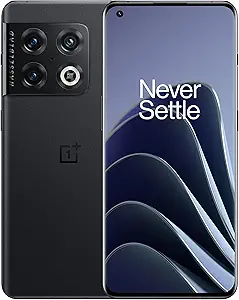
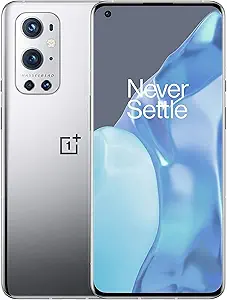
The smartphone arena has seen monumental shifts over the past decade, driven in large part by ambitious Chinese manufacturers challenging the traditional Samsung and Apple duopoly. Among these disruptors, OnePlus and Xiaomi stand as two titans with fundamentally divergent philosophies. OnePlus entered the market under the enthusiast banner of "Never Settle," initially targeting tech-savvy users with flagship specifications at mid-range pricing. Over the years, OnePlus has integrated deeply within the BBK Electronics ecosystem (alongside Oppo), pivoting from an agile indie underdog to a refined, mainstream premium brand focused on fluid software, ergonomic industrial design, and ultra-fast charging.
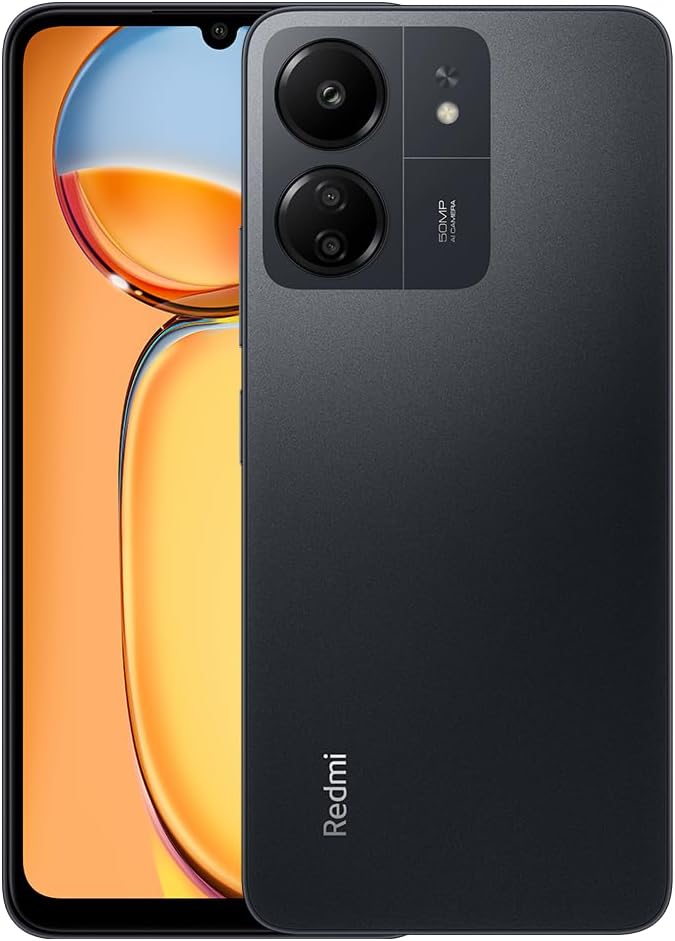
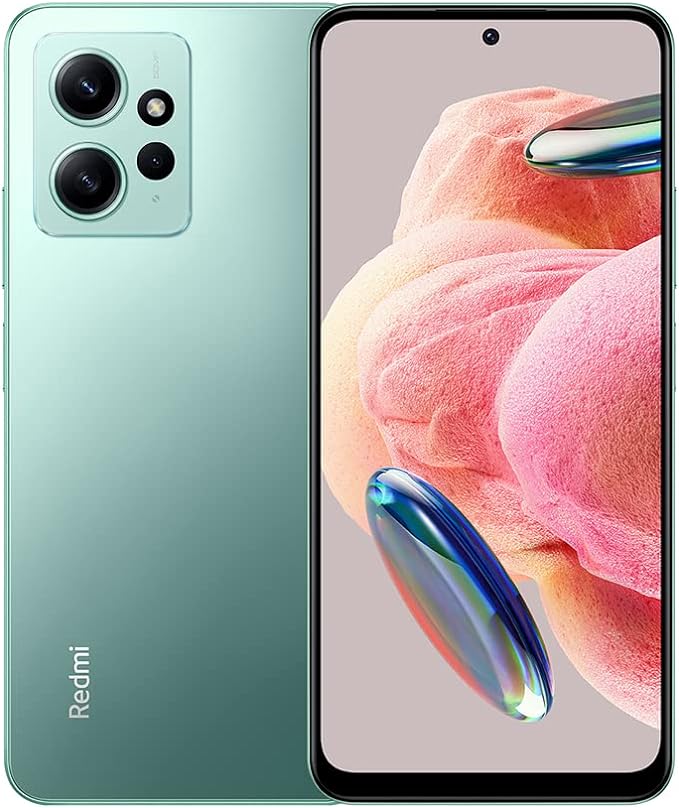
In contrast, Xiaomi was founded on a broader, hardware-democratizing mission: bringing high-end innovation to everyone at razor-thin margins. Unlike OnePlus's historically narrow, boutique product line, Xiaomi operates as a sprawling consumer electronics juggernaut. Through its core brand and sub-brands like Redmi and POCO, Xiaomi blanket-covers every price bracket from entry-level budget handsets to ultra-premium, photography-centric flagships. Xiaomi's philosophy emphasizes feature abundance, raw hardware value, and deep integration into a massive smart-home IoT ecosystem powered by its new HyperOS architecture.
Key Differences & Technological Comparison
While both brands source cutting-edge silicon from Qualcomm and MediaTek and feature high-refresh-rate AMOLED displays, their technological execution diverges significantly across user experience, camera tuning, and software architecture.
Operating System and User Experience
The software environment is perhaps the most decisive differentiator between these manufacturers. OnePlus employs OxygenOS, which has evolved into a variant of Oppo's ColorOS codebase. Despite this consolidation, OxygenOS retains a clean, fluid user interface that closely mirrors stock Android aesthetics while offering high-performance optimizations like the Trinity Engine. It is largely devoid of aggressive system-level advertising, prioritizing snappy animations and minimalist utility.
Xiaomi has transitioned from its longstanding MIUI skin to HyperOS, a low-level rebuilt operating system designed for cross-device interconnectivity. HyperOS is exceptionally feature-dense, highly customizable, and optimized for smooth multitasking. However, particularly in its budget and mid-range tiers, Xiaomi’s interface can feel bloated with pre-installed applications and occasional contextual advertisements, although its flagship iterations offer a cleaner, premium experience.
Camera Systems and Optical Engineering
Mobile imaging illustrates another key philosophical split. OnePlus has partnered with legendary Swedish camera house Hasselblad to fine-tune its image processing. The resulting color science emphasizes natural skin tones, balanced dynamic range, and authentic color accuracy rather than hyper-saturation. Its hardware utilizes premium Sony sensors with refined periscope zoom implementations on flagship tiers.
Xiaomi, on the other hand, has partnered with Leica to push the physical limits of mobile optics. Xiaomi’s flagship devices frequently deploy massive 1-inch type image sensors, stepless variable apertures, and dual photographic styles (Leica Authentic and Leica Vibrant). Xiaomi leans heavily into optical hardware supremacy and artistic, high-contrast imagery, making its top-tier devices a favorite among serious mobile photographers.
Battery Architecture and Fast Charging
Both brands represent the global standard for charging technology, leaving Western competitors far behind. OnePlus utilizes proprietary SuperVOOC charging, ranging from 80W to 100W wired speeds along with 50W AirVOOC wireless solutions, emphasizing thermal management by keeping charging circuitry inside the power adapter. Xiaomi counters with its HyperCharge protocol, frequently pushing boundaries up to 120W wired and 50W wireless charging using custom Surge P-series charging chipsets, capable of fully replenishing a depleted battery in under twenty minutes.
Pros & Cons Comparison
OnePlus
Pros
- Clean, highly optimized OxygenOS interface with fewer bloatware intrusions.
- Iconic physical Alert Slider for quick, tactile sound-profile switching.
- Consistent, natural color tuning via the Hasselblad camera partnership.
- Exceptional battery efficiency paired with rapid, cool-running SuperVOOC charging.
- Excellent ergonomics and lightweight, refined industrial design.
Cons
- Camera consistency on mid-range Nord devices can be hit-or-miss.
- Loss of the original "stock Android" identity due to ColorOS code sharing.
- Slightly narrower ecosystem integration compared to Xiaomi's smart devices.
Xiaomi
Pros
- Unbeatable price-to-performance ratio across entry-level and mid-range segments.
- Industry-leading camera hardware, 1-inch sensors, and Leica optical integration on flagships.
- Seamless ecosystem interoperability across smart home and lifestyle hardware via HyperOS.
- Ultra-fast 120W+ charging capabilities on mainstream models.
- Inclusion of legacy utility features like infrared blasters on most models.
Cons
- HyperOS carries pre-installed bloatware and occasional system ads in budget brackets.
- Heavier, more polarizing software design compared to western-centric interfaces.
- Software update rollout schedules can be fragmented across its vast portfolio.
Performance, Durability & Value Analysis
From an architectural standpoint, both OnePlus and Xiaomi deliver peak performance. Flagship offerings from both houses systematically max out synthetic benchmarks, driven by top-tier cooling systems and aggressive RAM management. However, long-term durability reveals nuanced distinctions. OnePlus places a major emphasis on sustained smooth operation, historically securing TÜV SÜD 48- or 36-Month Fluency Certifications to ensure software responsiveness remains crisp years down the line. Build quality across OnePlus devices is uniformly robust, using aerospace-grade aluminum and Gorilla Glass Victus formulations.
Xiaomi provides an extraordinary value proposition, effectively redefining what consumers can expect at mid-range price points through its Redmi and POCO portfolios. At identical price tiers, Xiaomi almost universally delivers higher-tier chipsets, brighter panels, and larger battery capacities than its rivals. However, the long-term reliability curve shows variability: while Xiaomi's flagships are engineered to supreme IP68 standards with ceramic and nano-tech vegan leathers, its budget-focused lines occasionally exhibit thermal throttling and inconsistent software patch deployment after the second year of ownership.
Final Verdict: Which Brand Should You Choose?
Choosing between OnePlus and Xiaomi ultimately comes down to whether you prioritize refined daily usability or raw, feature-packed hardware value.
Choose OnePlus if: You value an uncluttered, fluid software experience, clean day-to-day ergonomics, and a balanced camera system that renders realistic colors. OnePlus is the ideal brand for users seeking a streamlined, premium Android experience that bridges the gap between hardware power and software simplicity without intrusive clutter.
Choose Xiaomi if: You want the absolute maximum hardware specification for your dollar, or you are an enthusiast seeking cutting-edge camera hardware (such as 1-inch sensors and Leica optical character). Xiaomi is also the clear winner for users heavily invested in a broader smart-home ecosystem or those shopping aggressively in the sub-flagship and budget categories, where Xiaomi's value proposition remains virtually peerless.
Affordability
When evaluating affordability, OnePlus and Xiaomi take fundamentally divergent approaches to engineering and price-to-performance architecture. Xiaomi operates on razor-thin hardware margins, fundamentally dominating the entry-to-midrange segments through its Redmi and POCO sub-brands. From a pure bill-of-materials perspective, Xiaomi’s technical strength lies in deploying high-tier specifications—such as 120Hz AMOLED displays, 200MP Samsung ISOCELL sensors, and massive 5,000mAh+ silicon-carbon batteries—at price points where competitors still cut hardware corners. However, the trade-off for this extreme affordability is often localized to software optimization, thermal management, and long-term chassis durability, where cheaper structural plastics are substituted for aluminum alloys to keep retail costs extraordinarily low.
OnePlus, having transitioned from its original "flagship killer" roots into a more conventional tier-structured OEM under the Oppo umbrella, defines affordability primarily within the upper-midrange and sub-flagship space. The brand’s budget play, realized through the Nord lineup and its numerical "R" series (such as the 12R), foregoes ultra-budget price brackets entirely to maintain a higher threshold of engineering quality. OnePlus prioritizes core tactile and performance metrics: industry-leading thermal dissipation systems, flagship-tier Qualcomm silicon, advanced haptics, and premium aluminum-glass structural sandwiches. While a consumer pays a higher entry price for a OnePlus device compared to a base-tier Xiaomi, the value proposition leans into a cleaner software environment (OxygenOS) relatively unburdened by the system-level advertisements and bloatware that monetize and subsidize Xiaomi’s ultra-cheap hardware.
Ultimately, the affordability calculus favors Xiaomi for outright economic accessibility, whereas OnePlus triumphs in long-term value retention. Xiaomi provides the lowest barrier of entry for cutting-edge specs on paper, making it the superior choice for buyers working with strictly capped budgets under the $350 threshold. Conversely, OnePlus represents a smarter financial investment for consumers willing to spend slightly more ($400 to $600) to secure hardware that exhibits superior build tolerances, consistent fast-charging speeds via proprietary SuperVOOC architectures, and extended software support lifecycles that prevent forced upgrade obsolescence down the line.
Quality/Durability
When evaluating structural engineering and build quality, OnePlus and Xiaomi take diverging approaches dictated by their core brand philosophies. OnePlus historically emphasizes a cohesive, premium tactile experience, utilizing robust materials such as aerospace-grade aluminum frames, specialized matte-textured Gorilla Glass backs, and tactilely refined alert sliders. Their devices are manufactured within BBK Electronics' centralized, tightly monitored assembly pipelines, resulting in precise chassis tolerances, consistent seam sealing, and minimal panel flex even on their mid-range Nord lineup. Xiaomi, conversely, focuses on high-spec component density and high-end material experimentation. On its flagship tiers, Xiaomi frequently incorporates advanced materials like nano-tech vegan leather, ceramic chassis plates, and proprietary Dragon Crystal Glass, offering exceptional scratch resistance and surface hardness. However, because Xiaomi relies heavily on third-party Original Design Manufacturers (ODMs) for its sprawling Redmi and POCO budget sub-brands, build consistency and structural rigidity vary noticeably across its portfolio compared to OnePlus's more uniform catalog.
In terms of environmental durability and technical protection ratings, the brands exhibit critical trade-offs. Xiaomi has aggressively standardized IP68 and IP69 dust and water resistance across its top-tier flagships, outperforming many competitors in high-pressure wash-down and liquid submersion scenarios. OnePlus, by contrast, has often reserved full IP68 certification for select regional carrier variants to cut consumer costs, frequently equipping standard unlocked models with only splash resistance (IP54 or IP65). However, OnePlus counteracts this with unique engineering innovations like "Aqua Touch" technology, which alters capacitive touch sampling algorithms to keep the display fully responsive even when coated in water or operated with wet fingers. Furthermore, OnePlus typically incorporates dual-cell battery architectures engineered specifically to mitigate thermal stress during ultra-fast 80W–100W SuperVOOC charging, preserving battery capacity over extended discharge cycles more effectively than Xiaomi's thermally demanding single-cell 120W HyperCharge implementations.
Practical long-term durability extends beyond external hardware into software stability, thermal degradation, and internal component longevity. OnePlus benefits from a mature cooling infrastructure, frequently utilizing massive cryo-velocity vapor chambers and dual-vapor systems that efficiently dissipate heat away from the logic board, significantly extending the operating lifespan of the SoC and flash storage. Its software interface, OxygenOS, also maintains exceptional fluidity over multi-year spans with minimal performance decay. Xiaomi's software ecosystem (HyperOS/MIUI) presents a double-edged sword: while Xiaomi guarantees extensive Android updates on par with OnePlus, its heavily layered custom skins are prone to micro-stutters and memory overhead as the device ages. Ultimately, consumers seeking dependable structural cohesion, superior sustained thermal control, and unified software longevity will find OnePlus the more durable daily driver, whereas Xiaomi remains the prime choice for buyers demanding cutting-edge chassis materials, superior out-of-the-box liquid ingress ratings, and the absolute highest tier of drop-resistant glass technology.
Performance
When evaluating performance, both OnePlus and Xiaomi routinely equip their flagship and upper-midrange devices with top-tier silicon—primarily Qualcomm’s latest Snapdragon 8-series processors alongside LPDDR5X RAM and UFS 4.0 storage. However, their underlying engineering philosophies diverge significantly in how raw compute is translated into daily usage. OnePlus approaches performance through a prism of relentless fluid responsiveness and system-level optimization via OxygenOS. Utilizing proprietary performance suites like the "Trinity Engine," OnePlus focuses heavily on CPU micro-architecture scheduling, RAM virtualization, and display touch-response rates. This results in an operating environment that feels exceptionally fast, lightweight, and cohesive, prioritizing frame-rate consistency over raw, short-burst benchmark supremacy. Consequently, OnePlus devices often deliver a more reliable experience for everyday multitasking, app-launch speeds, and sustained baseline performance without aggressive app-killing in the background.
Conversely, Xiaomi—through its flagship Mi series and gaming-adjacent sub-brands like POCO and Black Shark—often adopts a more brute-force engineering strategy. Xiaomi's devices, running the resource-dense HyperOS (formerly MIUI), are frequently tuned out of the box to achieve record-shattering peak scores in synthetic benchmarks like Geekbench and AnTuTu. To sustain this high-octane output, Xiaomi heavily invests in sophisticated internal thermal architectures, frequently deploying massive multi-layered vapor chambers and liquid-cooling loops. In demanding 3D gaming titles, high-end Xiaomi handsets frequently outperform OnePlus by maintaining higher graphic fidelities and uncapped peak frame rates for longer durations. Furthermore, Xiaomi's lower-tier devices generally pack superior compute power per dollar than comparable Nord-series OnePlus devices, making Xiaomi the undisputed champion for pure silicon-per-dollar value.
The practical trade-offs ultimately center on the balance between sustained thermal efficiency and software overhead. Xiaomi’s push for extreme peak output can lead to noticeable thermal throttling during extended sessions without external cooling, alongside an operating system that, while feature-rich, introduces micro-stutters and more aggressive battery-saving RAM management compared to OxygenOS. OnePlus trades away some of that absolute graphical headroom and synthetic benchmark dominance for superior thermal stability, lower power draw, and a consistently smooth, jitter-free user experience over years of use. For mobile gamers and spec-sheet purists demanding maximum raw power and gaming capability, Xiaomi holds the edge; for users prioritizing consistent thermal discipline, sustained software fluidness, and refined memory retention, OnePlus remains the more balanced daily performer.
Camera Quality
When evaluating camera engineering quality, OnePlus and Xiaomi take fundamentally different philosophical paths, largely shaped by their strategic imaging partnerships and sensor choices. OnePlus relies heavily on its co-engineering alliance with Hasselblad, focusing on natural color calibration, skin tone accuracy, and refined computational exposure. In its flagship lineup, OnePlus generally pairs capable, mid-to-large Sony sensors with advanced 13-channel multi-spectral color sensors to deliver realistic, true-to-life images with exceptional tonal balance and restrained sharpening. In contrast, Xiaomi adopts an aggressive hardware-first approach, often in partnership with Leica. Xiaomi leads the industry in raw optical hardware, frequently integrating massive 1-inch type primary sensors (such as the Sony LYT-900), mechanical stepless variable apertures, and complex dual-periscope zoom arrays. Powered by Leica's distinct color profiles—"Leica Authentic" for dramatic contrast and vignetting, and "Leica Vibrant" for saturated, punchy outputs—Xiaomi treats mobile photography with a more classical, fine-art photographic tuning that emphasizes natural optical depth-of-field over flat digital processing.
In terms of practical performance and feature sets, each brand introduces distinct technical strengths paired with specific trade-offs. Xiaomi excels in advanced optical reach, low-light raw detail, and versatility; its high-end telephoto systems (utilizing floating lens elements for telemacro capabilities) consistently outperform OnePlus at long-range zoom and close-up focus, while the massive light-gathering capabilities of its main sensors produce cleaner, less noisy nighttime images. However, the trade-off for Xiaomi users is a noticeably bulkier camera module that creates ergonomic imbalance, alongside a camera interface that can feel overly complex for casual point-and-shoot users. OnePlus offers a more refined, predictable daily experience with rapid shutter response, minimal shutter lag, and class-leading portrait rendering that realistically separates subjects without aggressive edge-clipping. The limitation for OnePlus lies in its secondary sensor scaling; while its primary camera matches elite competitors, its ultra-wide and tertiary telephoto cameras historically utilize smaller sensors that struggle with dynamic range and fine detail in challenging lighting conditions.
Ultimately, the choice between OnePlus and Xiaomi boils down to whether a consumer values calibrated realism and simplicity or cutting-edge optical hardware and creative flexibility. OnePlus provides an exceptionally dependable, color-accurate point-and-shoot experience tailored for social sharing, reliable indoor portraits, and seamless video capture, making it ideal for the mainstream consumer who dislikes the artificial look of heavy HDR processing. Xiaomi, particularly within its Ultra and Pro series, is the superior choice for mobile photography enthusiasts and power users who crave DSLR-like hardware mechanics, rich optical bokeh, superior telephoto fidelity, and expressive contrast. While OnePlus delivers consistent, polished everyday imaging, Xiaomi pushes the technical boundaries of what smartphone sensors and glass are capable of achieving.