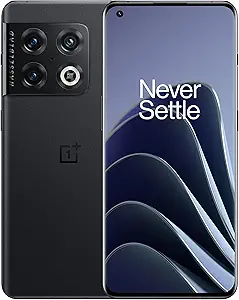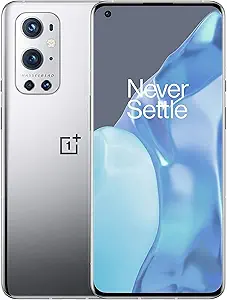







OnePlus vs VIVO: Overview
Comparing OnePlus and VIVO helps you determine which brand is best suited for your needs in Smartphones. Both brands offer strong choices depending on your budget and key feature requirements.
Key Features & Comparison
Evaluate factors such as build quality, warranty, customer satisfaction, and total value before making your final purchase choice between OnePlus and VIVO.
Affordability
When analyzing the cost-to-value proposition of both brands, OnePlus and VIVO adopt distinctly different pricing strategies across their global portfolios. Historically recognized as the premier "flagship killer," OnePlus has structured its lineup to provide aggressive pricing in the mid-range and upper mid-range segments through its Nord and numerical series. While the company's tier-one flagship devices have steadily climbed into premium price territory, they consistently undercut legacy competitors like Samsung and Apple while matching essential hardware specifications. OnePlus focuses heavily on stripped-down value, maximizing high-impact performance metrics like processing power and proprietary rapid charging while omitting niche features like periscope zooms or ultra-premium chassis materials to keep retail prices accessible to value-conscious tech enthusiasts.
In contrast, VIVO approaches affordability through sheer market saturation and vast component diversification, spanning from ultra-budget Y-series handsets to the ultra-premium X-series tier. VIVO dominates the lower-tier budget market where OnePlus rarely competes, offering an extensive selection of sub-$250 devices that appeal heavily to emerging markets. However, at the high end, VIVO's flagship devices often command higher retail prices than equivalent OnePlus models due to substantial investments in specialized imaging chips and optical engineering. For consumers seeking raw, dependable hardware value in the mid-range and entry-flagship space, OnePlus generally delivers a more focused, high-return investment, whereas VIVO provides exceptional affordability and breadth strictly in the ultra-budget and entry-level tiers.
Quality/Durability
OnePlus emphasizes a refined, minimalist structural approach, utilizing robust aluminum frames, tactile matte glass backs, and premium components like the iconic three-stage alert slider. In modern iterations, OnePlus has solidified its hardware durability by standardizing high-grade Corning Gorilla Glass Victus formulations and integrating comprehensive IP68 or IP65 water and dust resistance ratings across its flagship and sub-flagship models. The brand's internal chassis design places a heavy emphasis on structural rigidity and heat dissipation, preventing long-term solder degradation from thermal stress caused by their 80W to 100W SuperVOOC fast-charging systems. Furthermore, battery longevity is bolstered by proprietary battery health algorithms that preserve cell integrity across thousands of charge cycles.
VIVO matches this physical durability while demonstrating exceptional engineering resilience in complex, specialized moving parts, particularly in their folding lines and advanced camera stabilization systems. High-end VIVO devices often feature IP68/IP69 ingress protection, alongside unique material choices such as high-tensile vegan leather and specialized ceramic camera rings that resist abrasive everyday wear. However, VIVO’s extensive budget portfolio does not consistently meet the same stringent build metrics, relying more heavily on polycarbonate unibodies and basic splash resistance. For long-term hardware durability at a flagship level, both brands compete closely, but OnePlus delivers a more universally uniform standard of premium structural engineering across its narrower, more curated product catalog.
Performance
Performance represents the core identity of OnePlus, driven by a longstanding commitment to fluid, uncompromised speed. The brand consistently integrates top-tier Qualcomm Snapdragon silicon, paired with generous allocations of high-bandwidth LPDDR5X RAM and UFS 4.0 flash storage. OnePlus enhances this foundation with proprietary memory-management engines and large-surface vapor-chamber cooling, ensuring sustained peak clock speeds without severe thermal throttling during intensive tasks such as high-framerate mobile gaming. OxygenOS—despite its underlying shared codebase with ColorOS—remains finely tuned for low touch latency, blistering app-launch animations, and efficient multitasking, making everyday navigation feel exceptionally responsive and smooth.
VIVO takes a diversified, dual-flagship approach to silicon, effectively deploying both Qualcomm Snapdragon and MediaTek Dimensity top-tier processors across its high-end lineup. VIVO’s sustained performance is exceptionally robust, frequently rivaling or outperforming OnePlus in raw computational benchmarks when backed by custom coprocessors like the V-series imaging and computing chips, which offload complex processing tasks. Nevertheless, VIVO’s Funtouch OS and OriginOS interfaces can feel heavier than OxygenOS, occasionally bogged down by superfluous background services and aggressive background app management. While both brands easily master resource-heavy tasks and intense gaming workloads, OnePlus retains an edge in delivering a cleaner, more consistently frictionless user interface optimized for raw tactile speed.
Camera Quality
In the camera department, OnePlus partners with the Swedish optical heritage brand Hasselblad to refine its mobile imaging architecture. The primary focus of this collaboration centers on natural color calibration, intuitive skin-tone rendering, and an interface that mirrors professional Hasselblad medium-format camera aesthetics. OnePlus flagships employ large Sony imaging sensors that perform admirably in standard dynamic range scenarios, offering balanced contrast, fast autofocus, and pleasing computational portraiture. However, OnePlus has traditionally trailed top-tier imaging champions when it comes to telephoto magnification reach, extreme low-light artifact reduction, and multi-lens chromatic consistency across ultra-wide and zoom transitions.
VIVO, on the other hand, stands as one of the undisputed industry titans in mobile optical engineering, largely propelled by its technical partnership with ZEISS. Utilizing customized large-format sensors—including 1-inch type primary sensors—and pioneering innovations like physical gimbal stabilization and ZEISS T* lens coatings, VIVO flagships virtually eliminate lens flare and micro-jitter. Supported by proprietary custom ISP chips, VIVO devices consistently capture superior dynamic range, class-leading low-light detail, and unmatched periscope telephoto performance. While OnePlus provides a reliable, naturally tuned camera system suitable for everyday photography, VIVO undeniably outclasses it in cutting-edge optical versatility, advanced video stabilization, and specialized computational photography.