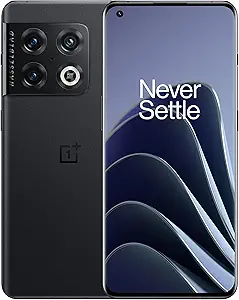








OnePlus vs Realme: Overview & Brand Philosophy
In the fiercely competitive global smartphone arena, few corporate lineages are as intriguing as the shared ancestry between OnePlus and Realme. Both brands operate under the expansive umbrella of BBK Electronics, sharing supply chains, manufacturing facilities, and baseline engineering blueprints. However, their brand philosophies, market positioning, and target audiences have evolved along distinctly different trajectories. OnePlus emerged in 2013 with a disruptive "Never Settle" ethos, initially targeting Android purists and enthusiasts with its "flagship killer" concept—offering premier silicon and clean software at half the cost of legacy incumbents. Over the past decade, OnePlus has steadily matured, pivoting from a boutique enthusiast brand into a fully fledged premium contender that directly battles Samsung and Apple in the upper-midrange and flagship tiers.
Conversely, Realme was forged in 2018 as an offshoot aimed directly at capturing the youth demographic and hyper-competitive budget markets. Born from an agile, digital-first strategy, Realme quickly carved out a reputation for aggressive democratization of high-end specs. By integrating features such as high-refresh-rate displays, ultra-fast charging capabilities, and high-megapixel sensors into accessible entry-level and mid-range devices, Realme bypassed conventional market timelines. Its brand philosophy centers on "Dare to Leap," a mantra reflected in its trendsetting, often bold industrial designs, experimental aesthetics, and uncompromising cost-to-performance ratio that primarily appeals to students, gig workers, and budget-conscious tech adopters.
Today, the relationship between these two brands represents a sophisticated internal segmentation strategy. OnePlus increasingly aligns itself with refined elegance, industrial durability, flagship imaging partnerships (such as Hasselblad), and executive appeal. Realme, on the other hand, operates as a high-velocity disruptor, rapidly cycling through product lines to bring flagship-adjacent innovations down to price points where OnePlus rarely competes. Understanding this dynamic is crucial for consumers navigating the crowded landscape between premium refinement and uncompromising budget efficiency.
Key Differences & Technological Comparison
While both brands frequently cross-pollinate core hardware platforms, the tangible differences in display technology, camera processing, software skinning, and industrial build quality create distinct user experiences.
Design and Build Quality: OnePlus predominantly utilizes premium materials across its lineup. Its flagship and upper-tier 'R' series devices routinely feature Gorilla Glass Victus front and rear, matte frosted finishes, and rigid aluminum frames, complemented by premium ingress protection (IP68/IP65 certifications). A long-standing staple of OnePlus hardware is the physical Alert Slider, a hardware switch that remains an enthusiast favorite. In contrast, Realme relies more heavily on polycarbonates, engineered plastics, and faux leather finishes to minimize bill-of-materials costs. While Realme often experiments with daring, fashion-forward designs—including collaborations with industrial designers and pop-culture franchises—the tactile feeling is decidedly consumer-grade rather than luxurious.
Software Architecture and User Experience: The software division between the two brands has grown increasingly subtle yet remains a pivotal differentiator. OnePlus devices run OxygenOS, while Realme devices utilize Realme UI. Both operating systems now share a unified codebase developed around ColorOS. However, the tuning differs substantially. OxygenOS prioritizes a fluid, minimalist, and ad-free experience, emphasizing smooth animations via its Aquamorphic design framework. Realme UI, while equally fast and packed with granular customization options, is significantly burdened by pre-installed bloatware, aggressive push notifications, and localized promotional content—particularly in the entry-level to mid-tier price brackets.
Camera Systems and Computational Imaging: Photography represents one of the widest gulfs between the two manufacturers. OnePlus invests heavily in its flagship tier through its multi-year partnership with legendary camera maker Hasselblad, leveraging dedicated color science, natural color calibration, and advanced periscope telephoto optics. Conversely, Realme leans heavily into raw megapixel marketing (such as 108MP and 200MP sensors) that use heavy pixel-binning and aggressive algorithmic sharpening. While Realme captures punchy, social-media-ready images with high dynamic range in broad daylight, OnePlus maintains superior low-light performance, natural depth of field, color fidelity, and video stabilization.
Charging Ecosystem and Battery Tech: Both brands excel beyond Western competitors in charging speeds, utilizing variants of BBK’s proprietary low-voltage, high-current charging architecture (SuperVOOC). However, Realme frequently uses its platform as a testing ground for record-breaking laboratory speeds, regularly commercializing 150W and 240W charging systems that can fully replenish a battery in under 15 minutes. OnePlus balances this spectrum by pairing robust 80W–100W wired charging with 50W proprietary wireless charging and sophisticated battery-health monitoring chips, optimizing for both speed and cellular longevity over multi-year cycles.
Pros & Cons Comparison
OnePlus Pros
- Superior build materials including aluminum frames, premium glass, and higher IP ratings for water resistance.
- Clean, ad-free software experience with OxygenOS featuring smoother animations and minimal bloatware.
- Hasselblad-tuned imaging systems deliver superior color fidelity, natural skin tones, and excellent periscope telephoto performance.
- Iconic physical Alert Slider provides instantaneous, tactile notification management.
- Better long-term software support schedules, offering up to four major Android OS updates on flagship tiers.
OnePlus Cons
- Higher average selling price, gradually drifting away from its original ultra-budget roots.
- Gradual dilution of unique software identity due to the shared ColorOS codebase.
- Mid-range 'Nord' devices often omit the alert slider and flagship-grade haptics.
Realme Pros
- Unmatched cost-to-performance ratio in the sub-$400 and entry-level categories.
- Pioneering fast-charging technologies that lead the commercial smartphone industry (up to 240W).
- High-refresh-rate AMOLED displays and high-megapixel cameras made accessible at exceptionally low price points.
- Bold, adventurous aesthetic designs featuring textured finishes and vegan leather backs.
- Generous out-of-the-box packaging, routinely including protective cases and maximum-wattage charging bricks.
Realme Cons
- Realme UI contains noticeable bloatware, third-party app recommendations, and system notifications.
- Heavy reliance on polycarbonate frames and lower-grade protective glass compromises structural drop durability.
- Auxiliary camera sensors (macro and depth lenses) are frequently low-quality additions to boost spec sheets.
- Shorter software support lifecycles, with budget models frequently limited to one or two OS updates.
Performance, Durability & Value Analysis
From an absolute performance standpoint, both brands extract maximum utility out of Qualcomm Snapdragon and MediaTek Dimensity silicon. However, their sustained performance pipelines diverge. OnePlus equips its devices with expansive, multi-layered vapor chambers, graphite heat dissipation sheets, and meticulously tuned thermal throttling profiles. As a result, OnePlus phones excel in prolonged, high-intensity processing tasks such as extended 3D gaming or 4K video recording without severe thermal drops. Realme devices often post equally impressive short-burst benchmark scores, but their more compact cooling designs and plastic chassis can lead to quicker thermal saturation, resulting in aggressive frame-rate throttling under continuous stress.
When measuring structural longevity and long-term value retention, OnePlus commands a distinct advantage. The brand's use of high-grade aluminum alloys, reinforced glass assemblies, and official dust/water ingress certifications makes them far more resilient against mechanical drops, environmental wear, and the rigors of multi-year usage. Furthermore, OnePlus models consistently maintain stronger secondary-market resale value due to their cross-regional recognition and extended software update commitments. Realme, while unmatched in raw, "day-one" bang-for-your-buck value, exhibits faster depreciation. Its cost-cutting measures—manifested in softer plastics, lower-grade display coatings prone to micro-scratches, and shorter software support windows—mean a Realme device is generally engineered for a two- to three-year lifecycle, whereas a flagship OnePlus device can comfortably serve a user for four to five years.
Final Verdict: Which Brand Should You Choose?
The decision between OnePlus and Realme ultimately hinges on your fiscal ceiling, your expectations for software purity, and the duration you intend to keep your device.
Choose OnePlus if: You are shopping in the upper-midrange to premium tier ($500 to $1,000+) and demand an executive-level smartphone experience. If you prioritize sophisticated industrial design, structural water resistance, long-term software stability without invasive ads, natural photographic rendering, and the convenience of rapid wireless charging alongside an alert slider, OnePlus is well worth the premium investment.
Choose Realme if: Your budget sits strictly below the $400 threshold, or you prioritize maximum raw hardware specifications per dollar spent. If your goal is to acquire a buttery-smooth 120Hz display, multi-day battery endurance, and class-shattering wired charging speeds without overpaying for luxury materials or legacy branding, Realme delivers the undisputed best value proposition on the contemporary market.
Affordability
When evaluating affordability, OnePlus and Realme approach cost-efficiency from fundamentally different market tiers, despite both sharing access to BBK Electronics' shared supply chain and manufacturing innovations. OnePlus historically built its reputation as a "flagship killer," but the brand has gradually transitioned into the premium and upper-mid-range territory. Its mainstream numbered series commands top-tier pricing, meaning OnePlus's modern definition of affordability primarily lives within its sub-brand, the Nord lineup, and occasional "R" tier devices. Within this bracket, OnePlus leverages its engineering prowess to deliver high-end refinement at a slightly reduced cost, offering flagship-adjacent haptics, premium aluminum and glass materials, robust thermal architecture, and optimized OxygenOS software. However, the trade-off is clear: genuine affordability from OnePlus often requires buyers to settle for older processors or omitted features like IP water-resistance ratings and wireless charging, with few to no options available in the true entry-level price bracket.
Conversely, Realme is engineered from the ground up to dominate aggressive budget-to-midrange price points, functioning as a price-to-performance disruptor. Realme excels at democratizing high-end hardware specifications, often introducing 120Hz AMOLED displays, high-wattage SuperVOOC fast charging, and large megapixel-count camera sensors into sub-$300 and sub-$200 smartphones long before competitors. The practical trade-offs required to achieve this aggressive pricing are found in long-term engineering compromises: Realme devices heavily rely on polycarbonate unibodies and plastic frames, lower-grade display protection like standard Gorilla Glass 3 or Dragontrail, and a heavier software skin (Realme UI) that often integrates bloatware and sponsored recommendations to offset hardware margins. Additionally, while OnePlus typically guarantees longer Android OS update lifecycles, Realme's lower price brackets often translate to shorter software support windows and less consistent long-term optimization.
Ultimately, the affordability comparison between these two brands comes down to baseline price thresholds versus holistic long-term value. For consumers operating on strict, sub-$300 budgets, Realme is the undeniable victor, offering unprecedented raw feature density, exceptional battery longevity, and rapid charging speeds that outclass similarly priced alternatives. OnePlus, meanwhile, redefines affordability as long-term value retention in the $350-to-$600 space; its devices yield a noticeably more polished daily experience, superior build longevity, cleaner software, and sustained resale value. Buyers seeking the lowest possible point of entry without sacrificing modern display and charging tech should prioritize Realme, whereas those willing to spend a bit more to avoid plastic construction and ad-supported software will find OnePlus to be the more enduring, value-conscious investment.
Quality/Durability
When evaluating build quality and long-term durability, OnePlus holds a definitive advantage, rooted in its premium-tier heritage and superior engineering standards. OnePlus consistently employs higher-grade materials, such as Corning Gorilla Glass Victus 2 on the front and rear panels, paired with precision-machined aluminum frames on its flagship models. This robust structural design delivers superior torsional rigidity, effectively minimizing flex under stress. Furthermore, OnePlus invests heavily in environmental resistance, often securing official IP65 or IP68 ratings for dust and water protection, alongside proprietary features like "Aqua Touch" technology that ensures reliable display responsiveness even when drenched. The internal architecture also reflects superior thermal management, utilizing expansive, multi-layered vapor chambers that mitigate heat degradation over years of heavy use, directly contributing to extended component longevity.
Realme, while exceptionally competitive in the budget and mid-range tiers, approaches durability with calculated compromises to keep price points low. The brand leans heavily into polycarbonate composite frames and plastic backs, often styled to mimic frosted glass or metal. While modern structural plastics absorb drop impacts surprisingly well without shattering, they are far more susceptible to deep scuffs, frame warping over time, and degradation of aesthetic coatings. In terms of ingress protection, Realme frequently caps its certifications at splash-proof baseline ratings like IP54 or relies on internal silicone gaskets without official IP testing, leaving devices vulnerable to accidental water submersion. While Realme’s GT series makes strides toward premium alloy builds and advanced cooling, its broader lineup demonstrates looser manufacturing tolerances and lower drop-test thresholds compared to OnePlus hardware.
The practical trade-off between the two brands centers on upfront investment versus long-term resilience. OnePlus devices are engineered to endure multi-year life cycles, supported by higher structural integrity, superior water sealing, and battery health engines engineered to retain 80% capacity after 1,600 charging cycles. Realme offers durable enough devices for users with shorter upgrade cycles (two to three years) who utilize protective cases to offset scratch-prone plastics, providing exceptional internal performance-per-dollar at the cost of structural premiumness. For consumers prioritizing structural longevity, tactile refinement, and high-level protection against environmental hazards, OnePlus remains the objectively sturdier choice.
Performance
When evaluating sustained processing power and hardware integration, OnePlus generally maintains an engineering edge over Realme, despite both brands operating under the broader BBK Electronics corporate umbrella. OnePlus historically aligns its performance identity with high-end fluidity, optimizing its devices using Qualcomm’s premier Snapdragon 8-series silicon, paired with aggressive RAM-management algorithms and proprietary thermal management systems like Cryo-velocity vapor chambers. This flagship-first approach translates to superior peak performance, sustained frame rates during demanding 3D gaming, and minimal thermal throttling over prolonged use. Realme, by contrast, adopts a more fragmented, cost-to-performance strategy. While its GT-series flagship devices feature top-tier silicon that rivals OnePlus on paper, the brand relies more heavily on tuned MediaTek Dimensity processors across its broader portfolio, delivering exceptional bursts of speed and benchmark scores for lower price points, but occasionally falling short in long-term driver optimization and sustained graphical stability.
The practical differentiation in performance becomes most apparent in day-to-day software execution and long-term device responsiveness. OnePlus utilizes OxygenOS, which—despite its structural convergence with ColorOS—is fine-tuned with a higher emphasis on haptic feedback precision, touch-sampling responsiveness, and animations specifically calibrated to give an impression of instantaneous speed. Realme’s Realme UI, while feature-dense and versatile, often carries more background service bloat and ambient notifications that can introduce micro-stutters over years of ownership, especially on mid-range hardware. Furthermore, OnePlus typically incorporates faster storage and memory standards, such as UFS 4.0 and LPDDR5X, earlier and more consistently across its lineup. While a budget-conscious consumer will find Realme's raw power-per-dollar ratio unmatched for casual multitasking and light gaming, power users seeking maximum sustained performance, superior heat dissipation, and long-term OS fluency will find OnePlus the technically superior investment.
Camera Quality
When evaluating camera engineering quality, OnePlus and Realme reflect distinct strategic priorities despite sharing the same parent manufacturing ecosystem under BBK Electronics. OnePlus positions its imaging architecture closer to the flagship tier, highlighted by its multi-year partnership with legendary camera maker Hasselblad. This collaboration yields sophisticated color science, featuring natural tonality, authentic skin tones, and superior dynamic range management through advanced computational photography pipelines. Flagship OnePlus devices typically integrate premium Sony sensors with optical image stabilization (OIS) across multiple focal lengths, alongside dedicated periscope telephoto lenses that excel in high-resolution optical zoom. In contrast, Realme targets cost-effective performance, relying heavily on aggressive in-sensor cropping and ultra-high megapixel counts—frequently deploying 108MP or 200MP Samsung ISOCELL sensors on upper-midrange models—to simulate zoom capabilities without the prohibitive cost of dedicated periscope hardware.
In real-world application, the technical strengths and processing philosophies of each brand cater to fundamentally different user demographics. OnePlus camera systems lean toward naturalistic rendering, excelling in low-light environments via proprietary Nightscape algorithms that retain shadow detail and texture without over-brightening the scene. Its Hasselblad Master Mode gives enthusiast photographers granular RAW control, calibrated shutter response, and accurate color profiling for post-production flexibility. Realme cameras, conversely, are engineered for immediacy and social media readiness. The imaging pipeline prioritizes hyper-vibrant saturation, heavily lifted shadows, and prominent digital sharpening out of the box, often augmented by niche consumer features like dedicated "Street Photography" modes, dynamic artistic filters, and heavy AI-driven beautification. While this yields visually striking, ready-to-post shots in daylight, Realme devices tend to suffer from inconsistent white balance across different lenses, noticeable edge distortion on ultra-wide sensors, and a proliferation of low-utility auxiliary macro or depth sensors on their more budget-conscious models.
Ultimately, the practical trade-off between the two brands hinges on fidelity versus price-to-performance value. OnePlus delivers a more mature, consistent, and versatile imaging suite with higher-tier video capabilities—such as 4K recording across multiple lenses with superior stabilization and Dolby Vision capture—making it the objectively superior choice for mobile creators and photography purists willing to pay a premium. Realme represents exceptional computational value, capturing surprisingly detailed daylight imagery and sharp portraits for a fraction of the cost, but it sacrifices consistency, low-light fidelity, and auxiliary lens quality. Consumers prioritizing optical zoom integrity, accurate color balance, and advanced videography will favor OnePlus, whereas buyers seeking punchy, instantly shareable imagery at an aggressive price point will find Realme's camera systems more than capable.