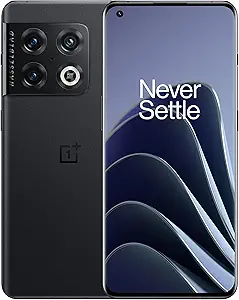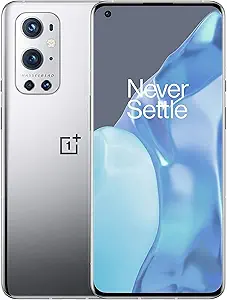









OnePlus vs Nokia: Overview
Comparing OnePlus and Nokia helps you determine which brand is best suited for your needs in Smartphones. Both brands offer strong choices depending on your budget and key feature requirements.
Key Features & Comparison
Evaluate factors such as build quality, warranty, customer satisfaction, and total value before making your final purchase choice between OnePlus and Nokia.
Affordability
When evaluating affordability, Nokia and OnePlus target distinct segments of the pricing spectrum with fundamentally different value propositions. Under HMD Global, Nokia has focused primarily on entry-level and lower-midrange tiers, offering devices like the C and G-series that carry accessible price tags often falling under the $200 to $300 threshold. These smartphones are engineered to provide essential modern smartphone capabilities—such as reliable cellular connectivity, standard web browsing, and multi-day battery life—without the premium markups associated with advanced processing nodes or expensive display panels. For budget-conscious consumers, enterprise deployments, or first-time smartphone adopters, Nokia delivers high utilitarian value per dollar spent at the absolute bottom of the market.
Conversely, OnePlus occupies a higher price bracket, operating primarily in the midrange, upper-midrange, and flagship-killer spaces through its Nord and numbered flagship lineups. While OnePlus devices rarely compete at the sub-$200 entry point where Nokia thrives, they offer significantly higher performance-per-dollar ratios in the $400 to $900 price bracket. Buyers choosing OnePlus benefit from flagship-grade chipsets, high-refresh-rate AMOLED displays, and class-leading fast charging technologies that are absent from Nokia's budget portfolio. Therefore, while Nokia wins in absolute affordability by requiring minimal upfront capital, OnePlus represents superior long-term hardware value for users who demand advanced multimedia capabilities and future-proofed hardware specifications without paying top-tier four-figure prices.
Quality/Durability
Build quality and physical longevity have historically served as the cornerstone of Nokia’s brand identity, and the modern lineup reflects this heritage through robust structural engineering. Even in its budget-oriented plastic-backed models, Nokia emphasizes drop resistance, torsional rigidity, and resilience against daily wear and tear. Furthermore, Nokia has invested heavily in sustainable, user-repairable designs through devices like the G22 and G42, which feature QuickFix design partnerships with iFixit. This enables consumers to easily replace cracked screens, degraded batteries, and bent charging ports using standard tools. In addition, Nokia’s ruggedized 'XR' line incorporates MIL-STD-810H military certification and IP68 water and dust ingress protection, setting an exceptional standard for sheer survival in hostile environments.
OnePlus approaches quality from an aesthetic and luxury-oriented engineering perspective, focusing on premium tactile feedback rather than utilitarian ruggedness. Most OnePlus mid-to-high-tier handsets feature precision-machined aluminum frames, curved Gorilla Glass Victus or ceramic-coated panels, and refined haptic motors that convey a distinctly high-end finish. However, OnePlus has a more varied track record regarding ingress protection, historically offering lower IP ratings (such as IP54 or IP65) on its midrange and standard models to keep manufacturing costs lower, reserving IP68 primarily for Pro variants. While OnePlus hardware feels far more luxurious and modern in the hand, Nokia generally holds the advantage in pure structural endurance, drop survivability, and ease of physical repair over years of ownership.
Performance
In raw computing capability and system throughput, OnePlus holds a commanding lead over Nokia across virtually every tier of comparison. OnePlus has built its reputation on the mantra of 'Fast and Smooth,' equipping its flagship and Nord devices with class-leading silicon from Qualcomm and MediaTek, such as the Snapdragon 8-series and Dimensity 9000-series processors. Coupled with ultra-fast UFS 3.1 or 4.0 storage and up to 16GB of LPDDR5X RAM, OnePlus devices effortlessly handle resource-intensive tasks, such as 3D graphics rendering, sustained high-framerate gaming, and seamless multitasking. Their OxygenOS skin is specifically optimized with proprietary scheduling algorithms to reduce latency and maximize the responsiveness of high-refresh-rate (90Hz to 120Hz) displays.
In contrast, Nokia’s approach to performance is conservative and strictly tailored to everyday baseline functionality. Most modern Nokia smartphones utilize entry-level processors from Unisoc, lower-tier MediaTek Helio platforms, or modest Qualcomm Snapdragon 400/600-series chips paired with standard eMMC 5.1 storage. While Nokia’s adoption of near-stock Android (often through Android One) eliminates unwanted bloatware and background overhead, the modest underlying silicon is easily overwhelmed by demanding workloads, heavy web browsing with multiple tabs, or modern mobile gaming. Nokia delivers reliable, steady performance for calls, messaging, GPS navigation, and basic media streaming, but OnePlus is the definitive victor for users seeking elite processing power, gaming agility, and sustained speed.
Camera Quality
Camera quality reveals a distinct gap in optical engineering, sensor hardware, and computational photography sophistication between the two brands. OnePlus benefits substantially from its multi-year partnership with legendary camera manufacturer Hasselblad, which refines color science, white balance, and tone mapping across its flagship releases. OnePlus devices integrate large, modern image sensors from Sony (such as the LYT and IMX series) equipped with Optical Image Stabilization (OIS), dedicated periscope telephoto lenses, and wide ultrawide sensors with macro functionality. Driven by robust image signal processors (ISPs), OnePlus cameras excel in dynamic range management, low-light night-mode photography, and cinematic 4K/8K video recording, producing sharp, vibrant, and visually striking imagery.
Nokia, having moved away from its legacy Carl Zeiss partnerships on its mainstream models, equips its current lineup with more basic imaging hardware designed for functional utility rather than artistic excellence. While higher-end Nokia models offer 50MP main sensors, they are frequently paired with low-resolution secondary depth and macro sensors rather than capable telephoto or ultrawide glass. Without advanced computational photography pipelines or high-end ISP support, Nokia devices perform adequately in bright daylight but struggle notably in challenging lighting, yielding higher digital noise, slower autofocus, and limited dynamic range. For capturing quick documents, utilitarian snapshots, and well-lit family moments, Nokia is sufficient, but OnePlus provides a significantly more versatile and professional imaging system.