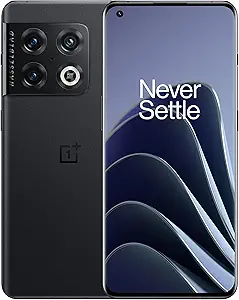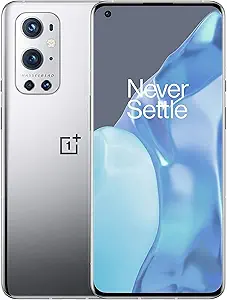








OnePlus vs Honor: Overview
Comparing OnePlus and Honor helps you determine which brand is best suited for your needs in Smartphones. Both brands offer strong choices depending on your budget and key feature requirements.
Key Features & Comparison
Evaluate factors such as build quality, warranty, customer satisfaction, and total value before making your final purchase choice between OnePlus and Honor.
Affordability
When analyzing affordability, OnePlus retains a legacy rooted in the "flagship killer" philosophy, though its catalog has expanded to encompass diverse pricing tiers. Its flagship number series typically undercuts premium competitors like Samsung and Apple while delivering top-tier core specifications. To capture budget-conscious consumers, the OnePlus Nord sub-brand targets the mid-range segment, focusing aggressively on price-to-performance metrics, ultra-fast charging capabilities, and streamlined software. However, OnePlus's gradual elevation into the premium tier has made its absolute flagship models significantly more expensive than their predecessors, narrowing the price advantage that originally defined the brand.
Honor approaches affordability from an aggressive volume-and-value perspective, largely shaped by its heritage under Huawei and subsequent independent market expansion. The brand operates across a broader spectrum of price points, from the entry-level X series to the mid-tier Number series and the ultra-premium Magic series. Honor frequently introduces high-end hardware innovations—such as curved OLED panels, robust battery architectures, and advanced biometric sensors—down into lower-priced brackets faster than OnePlus does. Consequently, consumers seeking maximum hardware specifications per dollar often find more variety and aggressive price competition in Honor's budget and mid-tier portfolios.
Quality/Durability
OnePlus emphasizes structural integrity and refined industrial design, typically employing aircraft-grade aluminum frames combined with Corning Gorilla Glass Victus formulations on its flagship tiers. The brand has increasingly prioritized standardized durability metrics, with recent flagship models achieving formal IP65 or IP68 dust-and-water ingress protection ratings. OnePlus also introduces pragmatic usability enhancements such as "Aqua Touch" algorithms, which ensure capacitive touch accuracy remains operational when the screen is exposed to moisture. However, certain mid-range Nord devices make cost-cutting concessions through composite plastic mid-frames, representing a durability trade-off compared to full metal unibody designs.
Honor places a remarkable engineering focus on impact resistance and structural resilience, particularly exemplified by its "Ultra-Bounce Anti-Drop" display architecture and proprietary NanoCrystal Shield glass on select Magic series models. Honor’s hardware is designed to disperse shock across multiple internal absorption layers, frequently outperforming conventional tempered glass in drop tests. Furthermore, Honor has demonstrated exceptional durability engineering in its foldable Magic V series, utilizing titanium hinges and specialized carbon-fiber components to maintain longevity despite ultra-thin profiles. Both brands offer solid ingress protection, but Honor often leads in physical drop survivability across both mid-range and foldable categories.
Performance
Performance has historically been the primary cornerstone of the OnePlus brand identity. By integrating the latest Qualcomm Snapdragon flagship processors with large allocations of LPDDR5X RAM and UFS 4.0 storage, OnePlus devices deliver benchmark-topping raw processing speeds. The user experience is further augmented by OxygenOS, which is engineered with proprietary memory management and CPU scheduling frameworks like the "Trinity Engine." This architecture guarantees sustained high frame rates during intensive gaming sessions and prolonged multi-tasking without aggressive thermal throttling, appealing directly to power users and mobile gaming enthusiasts.
Honor delivers comparable flagship throughput via top-tier Snapdragon silicon in its Magic line, while leveraging MediaTek Dimensity processors across various mid-tier devices to balance cost and output. Performance on Honor devices is managed through MagicOS, which employs AI-driven resource allocation via its OS Turbo engines. While Honor devices match OnePlus in everyday responsiveness, app retention, and baseline benchmarks, MagicOS tends to enforce more conservative thermal profiles, occasionally throttling peak sustained clock speeds earlier than OxygenOS to preserve thermal comfort and battery longevity. Conversely, Honor often integrates larger silicon-carbon battery cells, offering superior sustained battery performance under heavy workloads.
Camera Quality
OnePlus addresses photography through a high-profile hardware and color-science collaboration with Hasselblad. Flagship OnePlus smartphones rely on custom Sony LYT sensors, sophisticated computational HDR algorithms, and specialized optical lenses designed to minimize chromatic aberration. The Hasselblad tuning delivers exceptional natural color reproduction, authentic skin tones, and distinct portrait bokeh rendering that avoids excessive artificial sharpening. While OnePlus excels in wide and ultrawide dynamic range under natural daylight, its periscope telephoto performance at extreme digital zoom lengths can exhibit minor noise and soft texture rendering compared to dedicated super-zoom imaging devices.
Honor leverages an advanced computational photography pipeline known as the "Falcon Camera System," prioritizing light intake, high shutter speeds, and AI motion-sensing capture. Utilizing large, custom-engineered sensor architectures with wide physical apertures, Honor excels at freezing high-speed action and capturing exceptional low-light scenes with minimal luminance noise. In zoom performance, Honor's high-resolution periscope telephoto arrays combined with AI upscaling deliver sharp, detailed imagery that often rivals or exceeds OnePlus at focal lengths beyond 10x. The primary trade-off is Honor's color processing, which occasionally leans toward heightened saturation and algorithmic processing compared to OnePlus's more neutral calibration.