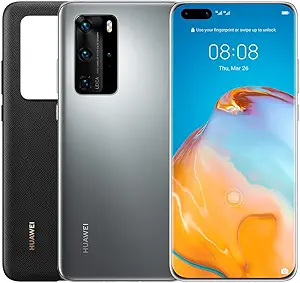
Huawei vs TCL: Overview
Comparing Huawei and TCL helps you determine which brand is best suited for your needs in Smartphones. Both brands offer strong choices depending on your budget and key feature requirements.
Key Features & Comparison
Evaluate factors such as build quality, warranty, customer satisfaction, and total value before making your final purchase choice between Huawei and TCL.
Affordability
When evaluating affordability, TCL explicitly anchors its smartphone strategy in the budget and lower-midrange tiers, positioning itself as a value-first manufacturer. TCL leverages its extensive vertical integration—particularly in display manufacturing through its CSOT subsidiary—to deliver modern smartphone features like high refresh rates and NXTPAPER technology at price points that undercut legacy competitors. Most TCL handsets retail well within the accessible sub-$300 bracket, making them exceptionally appealing to price-conscious consumers, prepaid carrier subscribers, and those seeking functional secondary devices without committing to heavy financial outlays.
Huawei, by contrast, operates with the pricing architecture of a tier-one global technology powerhouse, spanning from the mid-tier Nova series to ultra-premium Mate and Pura flagship flagships that easily exceed the thousand-dollar mark. While Huawei does produce affordable models within its Enjoy lineup, these entry-level devices are often secondary to its high-margin flagship pursuits. Consequently, consumers shopping strictly by price-to-spec ratio in the entry-level bracket will find TCL vastly more accessible, whereas Huawei justifies its significantly steeper pricing through proprietary innovation, advanced industrial design, and industry-leading hardware engineering.
Quality/Durability
In terms of structural engineering and material durability, Huawei demonstrates an uncompromising commitment to premium fabrication. The brand frequently introduces cutting-edge material innovations, such as its proprietary Kunlun Glass, which boasts exceptional drop resistance compared to standard reinforced glass, and aircraft-grade aluminum or titanium alloy chassis. Furthermore, Huawei consistently certifies its upper-tier smartphones with robust IP68 dust and water ingress protection, providing superior longevity against harsh real-world environments. The tactile feedback, seam tolerances, and structural rigidity of Huawei handsets place them in the highest echelon of mobile hardware refinement.
TCL approaches build quality with practical pragmatism, primarily utilizing polycarbonate frames and textured composite backs to keep manufacturing costs low. While these materials are structurally resilient against cracking compared to glass sandwiches, they lack the scratch resistance and premium tactile sensation found on Huawei devices. TCL devices generally offer modest environmental protection, frequently limited to basic IP52 splash resistance or no official ingress rating at all. While TCL constructs durable, reliable daily drivers capable of withstanding standard handling, Huawei significantly outperforms it in overall material resilience, engineering tolerances, and premium durability standards.
Performance
Huawei’s performance trajectory is shaped by proprietary silicon design, navigating the technical landscape via its HiSilicon Kirin system-on-chip architectures alongside tailored HarmonyOS software. While geopolitical export restrictions have impacted Huawei's access to the bleeding-edge nanometer fabrication nodes seen in Western market silicon, the brand compensates with aggressive software optimization. HarmonyOS provides fluid micro-animations, exceptional memory management, and seamless multi-device continuity within the Huawei ecosystem. However, international users must still navigate the critical trade-off of lacking native Google Mobile Services (GMS), which heavily impacts ecosystem performance outside of mainland China.
TCL relies almost universally on entry-to-mid-range silicon sourced from MediaTek (such as the Helio and Dimensity series) and Qualcomm’s budget Snapdragon 4 and 6 tiers. These processors are tuned for basic social media browsing, media consumption, and general multitasking rather than sustained high-frame-rate 3D gaming or intensive compute tasks. Despite hardware performance ceilings, TCL holds a major advantage for global consumers by offering clean Android builds complete with native GMS integration out of the box. While Huawei wins handily in sheer processing headroom, graphical throughput, and sophisticated thermal dissipation, TCL delivers an uncomplicated software experience tailored for everyday utility.
Camera Quality
Huawei is universally recognized as a pioneer in mobile photography, consistently occupying the top tiers of international benchmark rankings. Across its Pura and Mate series, Huawei deploys revolutionary imaging technologies, including Ultra Lighting variable aperture lenses, high-transmission RYYB sensor arrays, and periscope telephoto systems backed by the proprietary XMAGE imaging engine. These systems excel in extreme low-light environments, capture dynamic range with DSLR-like fidelity, and produce authentic optical bokeh that digital filters struggle to replicate. Huawei's imaging suite is built for both casual mobile users and demanding mobile photographers who require manual RAW controls and top-tier zoom capabilities.
TCL’s photographic capabilities are engineered around baseline everyday utility rather than benchmark-shattering optics. TCL smartphones typically feature high-megapixel primary sensors coupled with secondary macro or depth units, often prioritizing software-driven post-processing through its NXTVISION engine to enhance color vibrancy and contrast. While TCL devices produce crisp, social-media-ready images under optimal daylight conditions, they struggle in challenging environments, frequently suffering from slow shutter response, digital noise in low light, and limited dynamic range. For consumers seeking world-class imaging innovations, Huawei is miles ahead of TCL, which confines its optical ambitions to functional, consumer-grade photography.