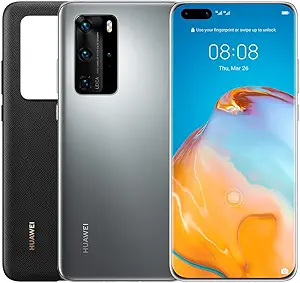
Huawei vs Motorola: Overview
Comparing Huawei and Motorola helps you determine which brand is best suited for your needs in Smartphones. Both brands offer strong choices depending on your budget and key feature requirements.
Key Features & Comparison
Evaluate factors such as build quality, warranty, customer satisfaction, and total value before making your final purchase choice between Huawei and Motorola.
Affordability
When analyzing affordability, Motorola holds a distinct competitive edge, particularly across North American, European, and Latin American value segments. Motorola’s core strategy revolves around dominating the budget-to-midrange market with its expansive Moto G, Moto E, and mainstream Edge lineups. These devices are engineered to maximize cost-per-performance, often delivering clean Android software experiences, 5G connectivity, and high-refresh-rate displays well under the price thresholds established by premium competitors. Motorola frequently offers aggressive promotions, carrier subsidies, and steep depreciation discounts, making their hardware readily accessible to consumers seeking functional modern smartphones without a heavy financial commitment.
Huawei, by contrast, operates predominantly in the upper-midrange and ultra-premium tiers, especially within its domestic Chinese and select international markets. While Huawei does manufacture accessible devices under its Nova and Enjoy series, its pricing architecture is significantly elevated due to heavy investments in bespoke silicon, proprietary camera modules, and satellite communications. Furthermore, because Huawei products are largely absent from Western carrier networks and face supply chain constraints due to trade sanctions, the brand rarely benefits from consumer-friendly trade-in incentives or low-cost carrier financing outside of Asia. For purely budget-conscious buyers, Motorola offers substantially higher value and widespread accessibility across low price points.
Quality/Durability
Huawei has long maintained a reputation for industrial design and structural resilience that rivals the highest tiers of consumer electronics. Flagship devices in the Pura and Mate series feature bespoke engineering feats, such as Kunlun Glass—a proprietary microcrystalline glass matrix specifically formulated to resist drops and shattering far better than industry-standard tempered glass. Huawei backs this up with precise aerospace-grade aluminum or titanium framing, sophisticated ceramic backplates, and robust IP68 water and dust resistance ratings across its flagship portfolio. Even their folding phones, such as the Mate X series, display some of the industry's most refined drop-shaped waterdrop hinges, prioritizing structural longevity alongside ultra-thin profiles.
Motorola approaches durability with a more utilitarian mindset, achieving solid durability at lower price tiers through practical material choices. In its budget and mid-tier Moto G devices, Motorola utilizes structural polycarbonate that absorbs shock effectively, coupled with water-repellent P2i nano-coatings that protect against splashes and light rain, though true IP68 immersion ratings are typically reserved for upper-tier Edge models. While premium devices like the Motorola Razr series showcase impressive hinge engineering and Gorilla Glass integration, overall structural stiffness, drop resistance, and thermal tolerance generally trail Huawei’s rigorous, high-cost manufacturing tolerances. Huawei wins on absolute build quality and specialized resilience materials, whereas Motorola provides functional, everyday durability suitable for its price category.
Performance
Performance benchmarks between these two brands reveal divergent hardware philosophies shaped by geopolitical and architectural realities. Motorola relies almost exclusively on Qualcomm Snapdragon and MediaTek Dimensity chipsets, granting its lineup direct access to leading-edge manufacturing nodes (such as TSMC's 4nm and 3nm processes). This ensures that flagship devices like the Edge+ deliver top-tier CPU and GPU efficiency, modern Adreno graphical computing, and native global 5G bands. Furthermore, Motorola's lightweight Hello UX interface remains remarkably close to stock Android, placing minimal computational strain on the system memory, resulting in fluid navigation, reliable thermal management, and rapid app loading times across all price segments.
Huawei, operating under severe trade embargoes, has had to engineer around technological bottlenecks, relying on domestic HiSilicon Kirin silicon fabricated on older, less power-efficient architecture. While Kirin processors exhibit remarkable system-level optimization through HarmonyOS—demonstrating ultra-smooth app transitions, intelligent background resource management, and sophisticated neural processing—they inevitably fall behind current Snapdragon flagships in raw synthetic computing and thermal efficiency during prolonged gaming workloads. Additionally, the lack of native Google Mobile Services (GMS) outside China imposes performance and convenience penalties for users reliant on Google APIs. For cutting-edge computational horsepower, efficiency, and seamless application support, Motorola currently holds the upper hand.
Camera Quality
In the realm of mobile photography, Huawei stands as an undisputed titan of the industry, consistently redefining the boundaries of smartphone imaging. Through its proprietary XMAGE imaging platform, Huawei flagships combine massive 1-inch-type sensors with physical, mechanically variable apertures that allow genuine optical depth-of-field control and unparalleled low-light exposure. Their periscope telephoto implementations, advanced multispectral sensors, and computational color science yield industry-leading dynamic range, exceptional texture retention, and lifelike skin tones. Whether capturing nightscapes, telephoto macro shots, or high-contrast street scenes, Huawei's hardware and algorithmic photography regularly outclass almost every competitor on the market.
Motorola’s camera systems, while significantly improved in recent generations of the Edge and Razr series, are calibrated primarily for casual, everyday photography. Motorola often adopts high-megapixel sensors—such as 50MP and 200MP binned units—which produce sharp, colorful, and social-media-ready images under optimal lighting conditions. However, Motorola’s computational processing frequently struggles in challenging scenarios, exhibiting more aggressive noise reduction, less reliable optical image stabilization, and occasional autofocus hunting in low-light environments compared to Huawei. While Motorola provides more than adequate photographic capabilities for mainstream consumers, Huawei offers an elite, professional-grade imaging studio that remains vastly superior in versatility, sensor optics, and fine-detail rendering.