Samsung vs Honor: Overview & Brand Philosophy
The global smartphone landscape is defined by distinct corporate philosophies, and few comparisons highlight this contrast better than Samsung versus Honor. South Korean tech titan Samsung has long held the mantle of market leader, pioneering advancements across the entire spectrum from entry-level Galaxy A devices to boundary-pushing Galaxy Z foldables and productivity-focused Galaxy S flagships. Samsung's ethos centers on ecosystem maturity, enterprise-grade security, cutting-edge display technology, and software longevity. The brand appeals to mainstream and enterprise consumers who prioritize stability, extensive customer support, and continuous refinement over experimental design.
Conversely, Honor represents a revitalized force in modern mobile hardware. Following its divestment from former parent company Huawei in late 2020, Honor emerged as an independent entity with full access to global supply chains, including Qualcomm silicon, Google Mobile Services (GMS), and Sony camera sensors. Honor's brand philosophy is aggressively hardware-forward, seeking to out-engineer legacy players by delivering class-leading ergonomics, ground-breaking battery chemistry, superior high-frequency pulse-width modulation (PWM) display dimming, and thin-profile foldable mechanics. By targeting value-driven tech enthusiasts and premium buyers alike, Honor aims to disrupt the status quo through bold design iterations.
Key Differences & Technological Comparison
While both brands leverage Android, their execution of mobile technology diverges significantly across several core vectors:
- Display Engineering & Eye Care: Samsung is the industry benchmark for raw panel quality through its Dynamic AMOLED 2X technology, offering peerless brightness levels, exceptional color calibration, and anti-reflective coatings (such as Gorilla Glass Armor). However, Honor has carved out a decisive niche in eye-health innovation. Honor champions ultra-high frequency PWM dimming (often reaching 3,840Hz to 4,320Hz), dramatically reducing visual fatigue and headaches for light-sensitive users, an area where Samsung's panels have historically lagged.
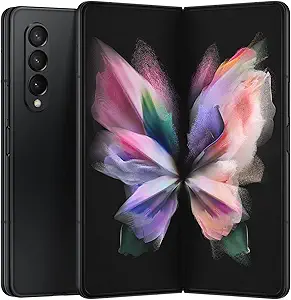
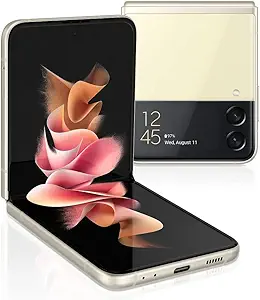
- Form Factor & Foldable Tech: Samsung pioneered mass-market foldables with the Galaxy Z Fold and Flip series, backed by water resistance and robust software optimization (One UI multitasking). Nonetheless, Honor has leapfrogged Samsung in structural engineering. Devices like the Magic V series showcase silicon-carbon battery technology and advanced titanium hinges, achieving foldables that match standard bar phones in thickness and weight without sacrificing battery capacity.
- Software Ecosystem & AI Integration: Samsung’s One UI is arguably the most sophisticated Android skin available, featuring comprehensive desktop environments via Samsung DeX, Knox security infrastructure, and deep integration with the broader SmartThings and Windows ecosystems. Honor's MagicOS continues to evolve away from its EMUI roots, focusing heavily on intentional cross-device continuity (MagicRing) and contextual, on-device AI features designed to anticipate user tasks, though it lacks the broad global app ecosystem maturity of Samsung.
- Camera Philosophy: Samsung relies heavily on computational photography with a bias toward saturated, vibrant color profiles, high-resolution primary sensors (up to 200MP), and industry-standard periscope zoom capabilities. Honor emphasizes rapid-capture mechanics (Falcon Camera system), sports motion sensing, and exceptional light capture powered by custom large-format sensors and computational light-gathering algorithms.
Pros & Cons Comparison
Samsung: Advantages
- Unmatched Software Support: Industry-leading longevity with up to seven years of major OS and security updates on flagship tiers.
- Samsung DeX: Transforms the smartphone into a fully capable desktop interface when plugged into a monitor.
- Ecosystem Cohesion: Seamless interoperability between Galaxy Watches, Galaxy Buds, Galaxy Tabs, and smart home appliances.
- Global Availability & Trade-in Programs: Widespread retail presence, dedicated service centers, and high trade-in valuations worldwide.
Samsung: Disadvantages
- Conservative Charging Speeds: Peak charging rates remain largely capped between 25W and 45W, falling far behind market trends.
- Thicker, Heavier Foldables: Foldable devices exhibit more prominent display creases and bulkier chassis than competitors.
- Low-Frequency Display Dimming: Prolonged screen use in dark environments can cause eye strain due to lower PWM rates.
Honor: Advantages
- Class-Leading Hardware Ergonomics: Thinner profiles, lighter materials, and virtually creaseless foldable designs.
- Pioneering Battery Tech: Silicon-carbon battery integration allows higher energy density and improved cold-weather endurance.
- Eye-Comfort Innovation: Industry-highest PWM dimming rates and circadian night display options.
- Rapid Charging Capabilities: Consistently offers fast wired (up to 100W+) and wireless charging across flagship and mid-range tiers.
Honor: Disadvantages
- Software Update Longevity: OS support typically spans four to five years, falling short of Samsung's current commitments.
- Global Inconsistency: Variable market availability, particularly in North America where distribution is largely through gray-market importers.
- Secondary Software Polish: MagicOS, while clean, still carries minor aesthetic remnants of older EMUI versions and occasional notification management quirks.
Performance, Durability & Value Analysis
From a raw performance and durability standpoint, both manufacturers utilize tier-one internal hardware, primarily relying on flagship Qualcomm Snapdragon and MediaTek Dimensity chipsets. Long-term durability metrics, however, show divergent strengths. Samsung holds a clear advantage in environmental protection and structural longevity. The integration of IP68 ingress resistance across almost all mid-range and premium Galaxy tiers, coupled with custom Corning glass armor and an expansive global repair network, makes Samsung a safer choice for multi-year physical ownership. Resale value also favors Samsung heavily, as third-party buyback programs consistently offer predictable depreciation curves.
Honor captures ground through sheer value-per-spec efficiency, particularly in its sub-flagship Numbers series and Magic Lite tiers. Consumers frequently receive higher refresh rate screens, greater internal RAM/storage capacities, and faster bundled chargers at significantly lower price points than equivalent Samsung Galaxy A or FE models. While Honor's premium line challenges Samsung on price parity, the hardware advantage—specifically in battery capacity and form factor elegance—frequently offsets the lower trade-in residual value for buyers who prioritize everyday hardware excellence over future resale returns.
Final Verdict: Which Brand Should You Choose?
Your choice between Honor and Samsung ultimately pivots on whether you value long-term ecosystem security or next-generation hardware engineering.
Choose Samsung if: You are seeking a dependable, long-term investment backed by guaranteed seven-year software support, robust build security, and proven trade-in stability. Samsung is the ideal option for users entrenched in professional enterprise workflows requiring tools like Samsung DeX, and those living in regions (such as North America) where carrier financing and instant repair support are critical.
Choose Honor if: You want cutting-edge hardware innovations today. If you are sensitive to screen flicker, demand rapid battery replenishment, and desire the thinnest, most aesthetically advanced foldables or camera phones on the market, Honor is unmatched. For consumers in Europe, Asia, and the Middle East looking to maximize hardware specifications per dollar spent, Honor delivers an elite experience that routinely outclasses traditional market benchmarks.
Affordability
When evaluating affordability, Samsung and Honor operate under fundamentally different value-engineering strategies that impact hardware quality and feature distribution across their smartphone portfolios. Samsung leverages immense economies of scale to dominate the budget and mid-range tiers through its Galaxy A-series. However, Samsung often applies strict hardware segmentation to preserve the profit margins of its flagship lines. At entry-level and lower-mid-tier price points, consumers frequently encounter practical trade-offs: low-cost Samsung devices may feature slower plastic chassis, entry-level Exynos or MediaTek chipsets, conservative charging speeds (typically capped at 15W to 25W), and omitted in-box chargers. In contrast, Samsung's primary affordability strength lies in software longevity; by offering up to four to six years of Android OS and security updates even on accessible devices, Samsung amortizes the device’s cost over a significantly longer lifecycle, ensuring higher residual resale value and long-term cost-efficiency.
Honor, by comparison, champions an aggressive "flagship killer" hardware philosophy aimed at maximizing short-term technical specifications per dollar. In the sub-$300 and sub-$500 segments—exemplified by the Honor X and Number series—the brand consistently undercuts Samsung by equipping devices with superior baseline components. Consumers routinely gain access to high-frequency PWM-dimmed curved AMOLED displays, premium glass finishes, ultra-fast charging architectures (frequently 66W to 100W with power adapters included), and higher baseline RAM and storage allocations. Where Samsung reserves thin bezels and advanced silicon for higher tiers, Honor trickles advanced engineering—such as silicon-carbon battery technology and high-resolution main camera sensors—down to competitive price points, providing immediate, tangible feature sets that outclass Samsung’s equivalently priced offerings.
The definitive trade-off between the two brands regarding affordability comes down to upfront specification density versus long-term software support. Honor clearly wins the transactional value battle, providing superior build aesthetics, faster processing silicon, and richer out-of-the-box accessories for a lower initial investment. However, Honor’s post-purchase software commitment remains shorter, and MagicOS typically suffers from steeper software depreciation and lower aftermarket trade-in values. Samsung asks for a slight premium on hardware capability at budget tiers, but counterbalances this with robust IP ratings, global repair infrastructure, and enterprise-grade software maintenance that stretches the consumer’s investment over multiple years. Budget-conscious buyers demanding immediate performance and premium hardware specs will find better raw affordability in Honor, while those prioritizing operational longevity and ecosystem support will find Samsung’s higher total cost of ownership more justifiable.
Quality/Durability
When evaluating structural engineering and build quality, Samsung establishes an industry benchmark through the deployment of cutting-edge materials and stringent manufacturing tolerances. Flagship Galaxy devices routinely utilize proprietary Armor Aluminum or titanium frames paired with Corning’s latest Gorilla Glass Victus 2 or Gorilla Armor, the latter of which significantly reduces micro-scratches and ambient reflections. Furthermore, Samsung provides reliable ingress protection across its lineup, with high-end models boasting certified IP68 water and dust resistance, and its foldable series achieving pioneering water-resistance ratings. In contrast, Honor heavily focuses on proprietary impact technologies, best demonstrated by its "Ultra-Bounce Anti-Drop" architecture and NanoCrystal Shield glass. Honor's engineering emphasizes shock absorption and kinetic dissipation, often allowing devices like the Magic series to survive face-first drops onto hard surfaces better than conventionally rigid flagships, though Honor occasionally lags behind in widespread, certified ingress protection on its mid-range tiers.
The technical trade-offs between the two brands become pronounced when considering long-term durability, hardware degradation, and mechanical reliability. Samsung’s primary advantage lies in its proven hinge mechanics for foldables, high-grade display encapsulation, and industry-leading software longevity, which guarantees up to seven years of firmware support on top-tier devices to ensure the software remains as robust as the physical chassis. However, Samsung’s lithium-ion battery lifespans, while stabilized against degradation, adhere to conservative charging profiles. Honor counters this with superior battery longevity technologies, integrating silicon-carbon anodes that offer higher energy densities and enhanced cold-weather resilience, paired with aggressive multi-cell thermal management. Honor's foldables, such as the Magic V series, feature ultra-durable titanium-alloy, gearless hinges that rival or exceed Samsung in fold-cycle tolerances and crease minimization, though the brand occasionally compromises on uniform scratch resistance across its curved display edges.
Ultimately, the choice between Samsung and Honor regarding quality and durability hinges on whether a consumer prioritizes standardized environmental protection or physical kinetic resilience. Samsung delivers an exceptionally cohesive, premium package characterized by consistent structural rigidity, superior ingress sealing, and long-term hardware-software ecosystem stability. Honor represents a vanguard of specialized resilience, excelling in drop survivability, structural weight-to-strength ratios, and advanced battery chemistries. While Honor provides outstanding day-to-day shatter protection and innovative mechanical designs, Samsung remains the more comprehensively durable investment for users who demand proven environmental weatherproofing and long-term component reliability.
Performance
When evaluating performance, Samsung leverages a tiered engineering strategy dictated by its dual-chipset approach and proprietary optimization layers. In its flagship Galaxy S series, Samsung incorporates top-tier Qualcomm silicon—such as custom-tuned "Snapdragon for Galaxy" platforms boasting elevated clock speeds—while reserving its in-house Exynos processors for specific global regions and mid-range devices. Samsung’s One UI is exceptionally feature-rich, providing advanced multitasking workflows through DeX, secure enterprise processing via Knox, and extensive background utility handling. However, this feature density introduces technical trade-offs: sustained workloads and graphics-intensive gaming can trigger aggressive thermal throttling to preserve battery health and prevent chassis overheating, resulting in occasional frame drops during prolonged peak execution compared to more thermally aggressive rivals.
Conversely, Honor prioritizes hardware throughput, sustained gaming frame rates, and aggressive thermal dissipation, largely driven by its GPU Turbo X software optimization suite. In its flagship Magic series, Honor exclusively employs flagship Qualcomm Snapdragon platforms paired with expansive vapor chambers and ultra-fast LPDDR5X RAM and UFS 4.0 storage architectures. MagicOS is significantly lighter than Samsung's One UI, focusing resources on low-latency touch response, sustained dynamic frame rates, and instantaneous app cold-launching. Honor's scheduler aggressively favors foreground performance, allowing devices to run closer to their thermal thresholds for longer durations without noticeable performance regression. The trade-off is an occasional propensity for higher chassis temperatures under sustained stress and a software layer that less aggressively sustains dozens of suspended background processes compared to Samsung's memory retention architecture.
Ultimately, the performance dichotomy between Samsung and Honor comes down to enterprise-grade versatility versus raw sustained efficiency. Samsung delivers an unmatched, mature computing ecosystem capable of turning a phone into a desktop workstation, with high computational bursts optimized for generative AI and heavy productivity, albeit tempered by conservative thermal envelopes and localized Exynos-versus-Snapdragon disparities. Honor excels in hardware-to-silicon extraction, offering a more uniform flagship silicon strategy worldwide, superior sustained graphics stability for demanding gamers, and fewer baseline resource overheads. Users seeking predictable, sustained frame rates and rapid thermal recovery will find Honor technically superior, while users requiring deep hardware virtualization, complex multi-window workflows, and robust security processing will benefit from Samsung’s comprehensive processing pipeline.
Camera Quality
When evaluating smartphone camera quality, Samsung and Honor represent two contrasting philosophies in optical engineering and computational photography. Samsung’s flagship imaging pipeline, particularly on its Ultra series, relies heavily on proprietary ISOCELL high-megapixel sensors—often scaling up to 200MP—paired with exceptionally sophisticated multi-frame processing. This yields images with class-leading dynamic range, vibrant color saturation, and razor-sharp detail in well-lit conditions. Furthermore, Samsung remains the industry benchmark for optical versatility, offering dual-telephoto systems (3x and 5x optical periscopes) that provide unmatched consistency across focal lengths and unrivaled long-range zoom capabilities. In contrast, Honor approaches imaging through radical hardware-first innovation, often utilizing customized large-format sensors such as the 1-inch-type or ultra-large Sony sensors, complemented by its proprietary Honor Image Engine. Honor excels distinctively in physical light gathering, shallow depth-of-field, and motion capture; features like the "Falcon Camera" system leverage hardware-level AI autofocus to freeze fast action with zero shutter lag, outperforming Samsung in capturing erratic subjects like pets or moving children.
The practical trade-offs between the two brands become most apparent in color science, low-light handling, and video performance. Samsung's processing prioritizes consumer appeal with slightly boosted contrast and vibrant skies, though it can sometimes be guilty of aggressive edge sharpening and slower shutter response in dim environments, which occasionally leads to motion blur. However, Samsung dominates in video capture, providing seamless lens-switching, superior 8K stabilization, and cleaner audio isolation. Honor, conversely, leans toward a more photographic aesthetic with its high-end portrait modes (such as the Harcourt studio simulations), rendering natural skin tones, smooth micro-contrast, and authentic optical bokeh without digital fringing. While Honor’s Night Mode leverages its physically wider apertures to capture clean, low-noise low-light images without needing excessive exposure times, its telephoto performance degrades faster than Samsung's past the 10x hybrid threshold. Ultimately, Samsung offers the more dependable, versatile all-around imaging tool for content creators and zoom enthusiasts, while Honor delivers superior single-frame speed, natural depth, and studio-grade portraiture for dedicated still photographers.