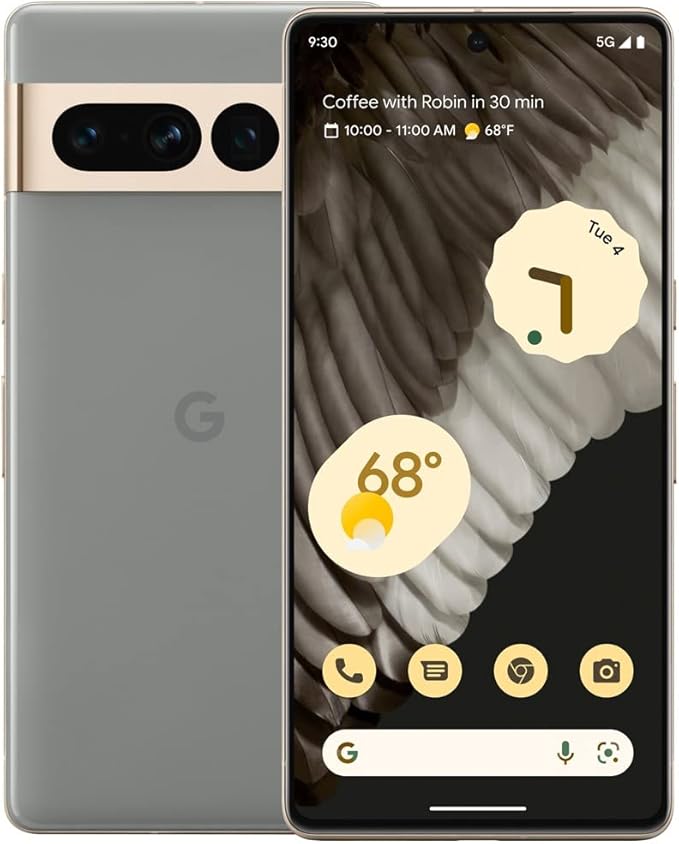
Google vs Sony: Overview
Comparing Google and Sony helps you determine which brand is best suited for your needs in Smartphones. Both brands offer strong choices depending on your budget and key feature requirements.
Key Features & Comparison
Evaluate factors such as build quality, warranty, customer satisfaction, and total value before making your final purchase choice between Google and Sony.
Affordability
When evaluating affordability, Google and Sony target fundamentally different consumer segments with contrasting pricing strategies. Google has firmly positioned its Pixel lineup as a champion of value, offering flagship-tier experiences at pricing structures that consistently undercut legacy competitors. Through its mid-range A-series, such as the Pixel 7a and 8a, Google delivers class-leading computational photography, solid displays, and long-term software support at accessible price points. Even its premium Pro models generally launch below the four-figure thresholds typical of ultra-premium competitors, ensuring that buyers across diverse budgets can find a compelling, cost-effective entry point into the Android ecosystem.
Conversely, Sony treats its smartphone division largely as a high-end boutique enterprise, deliberately avoiding the budget and mainstream mid-range market segments. The flagship Xperia 1 series frequently commands prices well above standard flagships, rivaling the most expensive ultra-tier devices on the market, while the more compact Xperia 5 series still sits squarely in the premium bracket. While Sony justifies these steep price tags with specialized hardware—including professional-grade audio jacks, dedicated micro-SD expansion, and sophisticated camera optics—the brand offers very little for price-conscious consumers. Consequently, Google easily claims the advantage in terms of sheer accessibility and price-to-performance value, whereas Sony remains an uncompromising, high-cost investment for niche enthusiasts.
Quality/Durability
In terms of physical engineering and build durability, both Google and Sony offer premium craftsmanship, though their executions reflect divergent design philosophies. Sony adheres to a utilitarian, minimalist Japanese aesthetic characterized by flat matte edges, textured glass backs, and a distinct lack of display cutouts or notches. Sony has long been a pioneer in water and dust resistance, reliably equipping its devices with dual IP65 and IP68 certifications. Furthermore, Xperia devices retain highly practical hardware features like tool-less SIM trays and 3.5mm headphone ports without compromising their structural integrity or environmental sealing, making them exceptionally resilient tools for professional environments.
Google has made notable strides in build quality over recent generations, evolving from quirky two-tone plastic-accented shells to a refined sandwich of Gorilla Glass Victus 2 and recycled aluminum anchored by its signature camera visor. The Pixel lineup boasts robust IP68 ingress protection and substantial drop resistance, matching modern flagship standards. However, Google occasionally experiences minor quality control inconsistencies across production batches, ranging from paint peeling on polished frames to optical glass vulnerabilities on the camera bar. While Google delivers sleek, modern aesthetics that satisfy daily durability needs, Sony often edges ahead in raw structural refinement, tactile resilience, and specialized hardware protection.
Performance
Performance reveals a sharp technical divergence between Sony’s reliance on off-the-shelf supremacy and Google’s dedication to custom silicon. Sony typically equips its Xperia flagships with the latest flagship Qualcomm Snapdragon processors, pairing them with generous RAM configurations and stock-like, lightweight Android software. This hardware foundation ensures top-tier raw CPU and GPU throughput, rendering Sony devices exceptional for sustained 3D gaming, intensive emulation, and high-bitrate media playback. Coupled with advanced thermal management features like Heat Suppression power control—which bypasses the battery during gaming to reduce heat—Sony provides stable, uncompromising peak hardware performance.
Google approaches system performance from an architectural standpoint centered on machine learning and artificial intelligence via its custom Tensor chips. Developed in partnership with Samsung, Tensor processors intentionally trade peak synthetic benchmark scores and heavy gaming efficiency for specialized on-device AI capabilities. This enables exclusive software features like near-instant speech recognition, real-time live translation, and advanced on-device photo manipulation. While Google’s interface feels remarkably fluid and responsive in day-to-day navigation, it can run warmer under heavy graphics loads and lacks the raw compute muscle of Sony’s Snapdragon engines. Users prioritizing raw processing power and gaming will favor Sony, whereas those seeking intelligent background automation and seamless software features will prefer Google.
Camera Quality
The camera comparison between Google and Sony represents the quintessential clash between automated computational imaging and manual optical engineering. Google’s Pixel camera system is renowned as the gold standard of point-and-shoot photography. Leveraging sophisticated machine-learning pipelines, Google’s software instantly balances extreme dynamic range, resolves deep shadow details, and delivers lifelike skin tones via its Real Tone algorithms. Night Sight and Super Res Zoom effortlessly compensate for difficult lighting and hardware limits, allowing casual users to consistently capture gallery-worthy, publication-ready images with zero manual intervention.
Sony, drawing directly from its Alpha professional mirrorless camera division, takes a purist approach tailored to serious photography enthusiasts. Xperia flagships feature cutting-edge optical hardware, including true continuous optical zoom lenses and high-speed stacked sensors capable of tracking autofocus at up to 30 frames per second with real-time eye tracking for humans and animals. Rather than heavily post-processing shots, Sony’s Photography Pro and Cinematography Pro apps provide extensive manual controls, producing natural, filmic images with realistic colors and unprocessed textures. While Sony's automatic mode can struggle with harsh dynamic range compared to Google's computational wizardry, it provides unmatched manual flexibility and pristine video production capabilities for creators who know how to wield pro-grade camera settings.